Travel cards: Tokyo vs. London

NB: this post is largely incorrect… at least in the fact that actually the systems are much more similar and becoming even more so. I am not going to change the post (because being wrong is part of research and learning), but will direct you to a more recent post here.

Tokyo and London both have pre-paid smart card systems for travel on public transport. They look superficially similar but also have crucial differences.
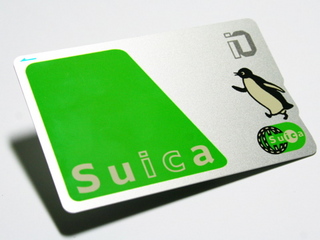
JR East's Suica card

In fact, first of all, there are several smart cards from different railway companies in Japan. Each of main privatised regional railway companies has one: the most common in Tokyo are the Suica card operated by JR Higashi (East Japan Railways) and the Pasmo card issued by a collection of smaller private railway companies as well as the TOEI subway, bus and Tokyo Metro systems. JR NIshi (JR West) and JR Toukai (JR Central) also have their own cards, ICOCA and TOICA respectively. They are all now pretty much interchangeable and Suica, which is the oldest system in operation since 2001, in particular can now be used for other kinds of payments in station shops and the ubiquitous Lawson chain of konbini (convenience stores) elsewhere in the city. It also now has a keitai denwa (mobile phone) enabled version in which the card is virtually present as a piece of phone software.

Great! It’s convenient, costs no more than buying tickets separately and if you forgot to bring any cash for your morning paper, you can use Suica for that too.

So, just like London’s Oyster card then?

Well, no.

TfL's Oyster card
TfL's Oyster card

The Oyster card, issued by Transport for London, looks pretty much the same and operates along similar technological lines, but because it also requires the user to register using a verifiable name, address and telephone number, with which the card is then associated, it is effectively also a tracking system, which is gradually producing an enormous database of movement surveillance. And of course this has not gone unnoticed to the UK’s police and security services who have reserved the right to mine this database for reasons of ‘national security’ and detection of crime. If you lose your card or have it stolen, then not only do you lose your £3 deposit, you’d better tell the authorities too or you might end up having some criminal activity associated with your name on the database.

Suica cards, on the other hand, can be bought from any ticket machine, require no deposit and no registration, and it doesn’t matter if you lose them, or leave the country, even for several years.

Tokyo and London’s transport systems have both experienced terrorist attacks so there’s no particular reason why Japan’s authorities shouldn’t have demanded a similar database (if you accept the UK’s reasoning). Tokyo also has a far more extensive, complex and multiply-owned transport infrastructure. Surely this must inevitably lead to an insecure and out-of-control system where disaster is inevitable.

So in which of the two cities does the transport system work far more efficiently? And where is that you are actually less likely to be a victim of crime, and feel safer?

I’ll give you a clue – it isn’t London.

MI5 in all kinds of trouble…

The British internal security service, MI5, has found itself in all kinds of trouble this week. First there was the report of the inquiry into the intelligence aspects of the 7/7 bombings in London. Although the report ‘cleared’ MI5 of wrongdoing (which was hardly unexpected!), it is clear that there was a catalogue of intelligence failures resulting from aspects as varied as a lack of funding, poor communication between MI5 and police, and simple mistake in judging the seriousness of the activities of those who came to the notice of MI5, particularly the two eventual bombers, Mohammed Sidique Khan and Shehzad Tanweer.

Then today, there have been serious allegations made in The Independent of the MI5 trying recruitment by blackmail on young British Muslims. Basically the modus operandi was to approach the potential informant and tell them that they were suspected of terrorist activities or terrorist sympathies, but that if they cooperated with MI5 then this would be overlooked. However if they refused then their ‘terrorist connections’ would be made more widely known.

All of this, as if it needed pointing out again, leads to the the clear conclusion that the security services need better and more transparent oversight, as well as clearer direction, and yes, perhaps more money (if they can behave themselves). The point is that properly controlled and justified targeted surveillance of genuine suspects (like Khan and Tanweer) is exactly what a security service should do, whereas mass preemptive surveillance (a la Met Police) or random blackmail is not. In fact the latter would tend to be counterproductive as in general, they will increase distrust in government and in particular, drive more young Muslims towards extremism.

Another US court says police GPS tracking does need a warrant

The complex landscape of the US judicial system has thrown up a ruling on the police use of GPS tracking devices completely at odds with the recent ruling handed down by the appeals court in Wisconsin. The New York appeals court ruled 4-3 that police GPS tracking should require a warrant. Judge Lipmann’s words on the case, quoted by the New York Times,  are particularly interesting as it appears that he wa taking a long view of potential harm in making his decision. He said:

“One need only consider what the police may learn, practically effortlessly, from planting a single device. The whole of a person’s progress through the world, into both public and private spatial spheres, can be charted and recorded over lengthy periods possibly limited only by the need to change the transmitting unit’s batteries. Disclosed in the data retrieved from the transmitting unit, nearly instantaneously with the press of a button on the highly portable receiving unit, will be trips the indisputably private nature of which takes little imagination to conjure: trips to the psychiatrist, the plastic surgeon, the abortion clinic, the AIDS treatment center, the strip club, the criminal defense attorney, the by-the-hour motel, the union meeting, the mosque, synagogue or church, the gay bar and on and on. What the technology yields and records with breathtaking quality and quantity, is a highly detailed profile, not simply of where we go, but by easy inference, of our associations — political, religious, amicable and amorous, to name only a few — and of the pattern of our professional and avocational pursuits. When multiple GPS devices are utilized, even more precisely resolved inferences about our activities are possible. And, with GPS becoming an increasingly routine feature in cars and cell phones, it will be possible to tell from the technology with ever increasing precision who we are and are not with, when we are and are not with them, and what we do and do not carry on our persons — to mention just a few of the highly feasible empirical configurations.”

This long term thinking has to be applauded. Sometimes imagination is necessary in the law, and particularly when the issue is one of socio-technical changes. The technological determinism of ‘if it exists, then it must be used’ is a way of thinking that has to be challenged. The question now for the USA is if either of these case or others will find their way to the federal courts. Until then, US citizens and police do not really know where they stand and the constitutional questions remain open.

US court rules GPS tracking is the same as the naked eye

CNET’s ‘Technically Incorrect’ blog leads me to a rather disturbing story in the Chicago Tribune last week about a ruling from a court in Wisconsin, USA. The judges in the appeal court decided that police use of covert GPS tracking devices is equivalent to the naked eye and therefore is not covered by US constitutional prohibitions (in the 4th amendment) on search and seizure. Whilst the local representative claimed that “GPS tracking is an effective means of protecting public safety”, ACLU argued that in fact this is an unwarranted extension of surveillance powers: “the idea that you can go and attach anything you want to somebody else’s property without any court supervision, that’s wrong.”

Now the case itself involved a man suspected of stalking, itself a form of surveillance and not something anyone would want to encourage or defend, however, once again, ends do not justify the means, particularly when the implications of the use of such means are so profound. The ruling illustrates the widespread inability of judges (and lawmakers more broadly) to deal effectively the way in which new technologies change the game or perhaps the inability of constitutional protections to protect effectively in an age of vastly improved technologies of visibility.

In fact the judges in this case themselves expressed some disquiet about their ruling. I can sympathise with them – it is far from obvious how to interpret new surveillance technologies with the constition and laws available. One would think, after the wiretapping cases of the 60s and 70s in the USA, that this lesson might have been learned, but it seems courts will continue to take terms like ‘inside’ and ‘outside’ literally – as perhaps they must. But surely if a device is attached to the ‘outside’ of a car or a house, or indeed is not attached at all and is remote, it does not automatically follow that the information that the device collects is not intimate and personal, and indeed not the same as what could only have been obtained in previous decades by direct human intrusion? For example, a device that can effectively ‘see through walls’ is not the same as the naked eye – it is the equivalent of a police officer being inside the house.  Whether this applies to a GPS tracker on a car (whether it is really any more or less than an officer sitting outside the house, or following the vehicle) is a moot point – there will be more and more of these cases, as police test the technological limits of the law, and it seems that most countries, not just the USA, still lack the professional (as opposed to the academic) legal thinking to deal with them.

The rise of personal surveillance

Personal surveillance is only going to get harder to regulate as things like ‘smart dust’ and micro-UAVs come down in price and are more easily available…

CBS News in the USA is reporting on the rise of stalking and in particular the use of more powerful, smaller and cheaper surveillance devices: embedded hidden cameras, GPS trackers and so on. They discuss in particular the case of Michael Strahan, a sportsman who seems to be obsessed with keeping watch on family and friends. But the bigger pictures is that stalking is something that apparently affects around 3.4 million US citizens. That’s more than one in a hundred, an astonishing figure if it’s anywhere near ‘right’.

Stalking and personal surveillance are an integral part of the culture of any state in which order in ensured through surveillance. We are creating unhealthy societies in which personal relationships between people are increasingly characterised by the same fear and distrust as states have of their people.

Smart Dust chips (Dust Networks)

ravenThis is only going to get harder to regulate as things like ‘smart dust’ and micro-UAVs come down in price and are more easily available. And already surveillance equipment like head-mounted cameras for cyclists, is marketed as ‘toys’… regulation is only half the answer. The other half has to be in working out how to shift away from this mistrustful, fearful, risk-obsessed culture. Part of this has to be down to government: the more that surveillance is part of every solution they come up with to any problem, the worse the social malaise will become.

Australian targeted surveillance convictions ‘appallingly low’

If mass surveillance (through CCTV and huge databases) is often ineffective, then surely targeted surveillance, through judicially-approved orders warranting the use of high-tech secret cameras, listening devices and tracking, must at least ‘work’. However, The Canberra Times reports that in Australia at least, this does not appear to be the case.

In fact out of 311 such warrants issued in 2007-8, just 86 individuals were prosecuted and only 10 criminal convictions resulted. Now we don’t know exactly why this was in each case, however it does suggest that Bill Rowlings, the Civil Liberties Australia chief executive is right to describe the conviction rates as “appallingly low” indicting that the many if the warrants for targeted surveillance are “fishing expeditions” by the police, rather than backed by serious evidence.

It would be interesting to see how the Australian figures compare to those available for similar countries, particularly the UK (if indeed the figures are available and comparable).

Google Latitude: no place to hide?

the mixture of assumptions seems dangerous: a lack of genuine understanding combined with categorical friendship (analogous to categorical suspicion, the basis of profiling in policing) and technologies that unless actively adjusted all the time for all of those massive number of connections, allow you to be utterly exposed…

I’ve just seen that Google has launched its Latitude service, which allows you (once you register and add your phone number) to be tracked by all your ‘friends’, and correspondingly, for you so see your ‘friends’ – if they have signed up. I put the words friends in inverted commas with some sadness because the word seems to have become increasingly meaningless in the age of Facebook when accumulating ‘friends’ seems to have become a competitive sport. This is not entirely irrelevant to Latitude for reasons we will come to in a minute.

There are various questions about this.

A colleague comments that like many other tracking services, the way it is set up he assumed you could access the project if you just had access to someone else’s phone and a computer (or WAP/3G phone) at the same time. Perfect for a over-protective or suspicious parent, a suspicious, husband, wife, boyfriend, girlfriend – or anyone else for that matter.

The privacy policies are a mixture of Google’s standard (and already questionable) privacy statement and a new set of policies on ‘location privacy’, which state that:

“Google does not share an individual person’s location with third parties without explicit permission. Before someone can view your location, you must either send a location request by adding them as a friend or accept their location request and choose to share back your location.”

You can also change settings so that your location can be automatically tracked, manually selected, or hidden. If you are signed out of the service, you will not be on any map either. You can also change settings for specific friends, including hiding your location from them, share only the city you are in, or removing them from your Latitude list.

Now this all sounds very good, even fun – although it could be a recipe for all kinds of suspicions and jealousies – but it all depends on what the nature of ‘friendship’ means to the person using the service. Friendship no longer seems to require personal knowledge but simply matching categories. I was writing earlier about the loss of trust in South Korea, but the reformation of trust that occurs through social networking seems not to require the dense networks of interdependence in real life that traditional forms of social trust were built on. It doesn’t seem like a substitute, the mixture of assumptions seems dangerous: a lack of genuine understanding combined with categorical friendship (analogous to categorical suspicion, the basis of profiling in policing) and technologies that unless actively adjusted all the time for all of those massive number of connections, allow you to be utterly exposed, laid bare in time and space.

The most extreme examples of this personal surveillance are not in the relatively comfortable worlds that tech enthusiasts inhabit but firstly, in conflict zones – after all ‘I know where you live’ has always been one of the most terrifying and chilling expressions you can hear in such circumstances (see Nils Zurawski’s article on Northern Ireland in Surveillance & Society) and now it could be in real time; and secondly, in authoritarian, or even just paranoid countries. Here, real-time location data could be a goldmine for intelligence services, and it is not as if Google and Yahoo and others have bravely resisted the attempt of, for example, the Chinese government to suborn them to its illiberal requirements.

Now, perhaps this makes me sound very conservative. I’ve never joined a single social networking service – like, how Twentieth Century is that?! – but I am also sure that this service will be both used and abused in all kinds of ways, some that we expect and some that we don’t. It might be a tool for overprotective parents, for jealous lovers, for stalkers and even for killers; but it will also be a tool for new forms of creativity, deception, performance and play.

Or it could be just utterly pointless and no-one will bother using it at all.

(thanks to simon for the heads up. As it happens, Surveillance & Society currently has a call for papers out on ‘Performance, New Media and Surveillance’, to be edited by John McGrath and Bill Sweeney)