The mundane costs of independent drones

It’s been an aim of developers for quite a while to develop more independently functioning surveillance drones that can fly around and recharge themselves in some way – whether it’s solar gliders in the stratosphere or, at street level, biomimetic bird-like micro-UAVs that can ‘perch’ and draw power from electricity cables. This was one of the original aims of the DARPA call that led to the creation of that beautiful marvel of engineering / dystopian nightmare surveillance tool, the Nano Hummingbird. If you are an engineer, this is certainly convenient and probably looks a lot like a ‘free lunch’ – there is certainly no mention of any possible costs or downsides in this piece on engineering.com. But as we all should know, there is no such thing as free lunch.

Firstly and most importantly, there’s the question of whether societies want either identifiable or camouflaged surveillance devices flying around us at all times. A mobile surveillance device essentially becomes even more independent and less limited by its construction if it can ‘feed’ itself. And while the US Federal Aviation Authority in particular has just recently put a bar on commercial drone delivery services (PDF), it certainly hasn’t prohibited other kinds of drone use, and many other national regulatory bodies are yet to decide on what to do, while drone manufacturers are pushing hard for less ‘bureaucratic’ licensing and fewer controls.

The second objection is less fundamental but perhaps more effective at igniting opposition to such devices. It might be that any single device would draw minute amounts of power from cables, but what happens if (or when) there are thousands, even millions, of these devices – flying, crawling, creeping, rolling, slithering – and all hungry for electricity? I would suggest that, just like the cumulative effect of millions of computers and mobile phones, this would be substantial and unlike the claims made for smartphones, this would be additional rather than replacing less efficient devices. And this is not including the energy use of the huge server farms that provide the big data infrastructure for all of these things. So, who pays for this? Essentially we do: increased energy demand means higher bills and especially when the power is being drawn in an unaccountable way as with a biomimetic bird on a wire. And unlike the more voluntary decision to use a phone because of its benefits to us, paying for our own surveillance in this way would seem to be less obviously ‘for our own good’ and certainly has the potential to incite the ire of ‘ordinary middle-class homeowners’ (that holy grail of political marketing) and not just the usual small-government libertarian right or pro-privacy and anti-surveillance left.


The Right to Watch?

I’ve always defended the right to photograph in public places. However, a number of cases in the last few weeks are highlighting an important new development in this area, a new front in the increasingly confusing information wars. Gary Marx always like to say that surveillance is neither good nor bad but that intent, circumstances, and effects make it so, but a growing number of people and organizations seem to be treating surveillance – or at least watching, and certainly not all watching is surveillance – as a right which supersedes rights to privacy. We’ve seen this in the case of Google Glass – even before it was launched commercially – and more recently with the arguments over the ‘right to be forgotten’ in Europe, with personal privacy being counterposed to freedom of information and actions to protect privacy being compared to censorship. It’s all somewhat reminiscent of Dave Eggers’ novel, The Circle, in which a Facebook-Google-Apple-a-like company completely turns around social values until, as one of the corporate slogans has it, “PRIVACY IS THEFT!”

The latest case is that of the use of drones / micro-UAVs / MAVs in the USA. The Federal Aviation Authority (FAA), the government body that controls US airspace, is trying to regulate the use of drones and has attempted to fine commercial drone operators who fly surveillance drones without their permission. The case revolves around one Robert Pirker, who used an unlicensed drone to film a promotional video back in 2011. At the moment the FAA is appealing against the National Transportation Safety Board (NTSB), who rule that it could not fine Pirker as it did have jurisdiction over small drones. Now the media has weighted in on Pirker’s side, arguing that the FAA’s stance infringes the first amendment and creates a ‘chilling effect’ on journalism.

I’m really not sure about either argument. On the FAA side, this is partly about a bureaucracy trying to keep control of its regulatory territory as much it is about the object of the regulation – the FAA does not want to be seen to be losing control just as the number of small drones is increasing massively.

On the other side, is this really about the rights of journalists? Pirker was making a commercial film not covering a story, and the effect of the FAA’s ruling being overturned is more likely to open the door to a corporate free-for-all, an absurd PKDickian world of drones as far as the eye can see, with all the attendant crashes and legal battles, could result. Think not? Well, back in the 1900s, people thought there would never be that many cars on the roads either… so it is certainly it is partly about their mandate, i.e. air safety.

The big question here, as with Google Glass and with Search, is whether technological change makes a difference. Is a flying camera just the same as a hand-held camera? Does the greater potential for intrusion, or on the other hand the inability to know that one is being filmed, matter? Does that possibility that ‘the truth’ will be revealed justify any technological method used to obtain it? If not, which ones are acceptable, whereis the line drawn, and who decides and how? In the UK, the ‘public interest’ would be a good basis for deciding, as has been frequently alluded to in the Leveson Inquiry into telephone tapping conducted by Murdoch-owned newspapers, however ‘public interest’ is a much vaguer term in the USA… what is certain is that conflicts around the ‘right to watch’ versus the ‘right to privacy’ and other human rights and social priorities are only going to intensify.

On rejecting drones

There’s an all-too infrequently unquestioned assumption in a lot of popular and academic writing about surveillance, that surveillance just spreads and intensifies and that new surveillance technologies proceed in a teleological manner to fulfill their designed purpose. Sure, we have all read the science and technology studies literature and pay lip service to ideas of technological failure and we all keep searching for ‘resistance’ or even just ‘politics’, but even if, like me, we talk deliberately talk about ‘sociotechnical trajectories’ without trying to assign one possible direction to these trajectories, we very rarely make the retreat, diminution and easing off of surveillance the central focus of our work or our writing.

Drones have been the latest demonstration of this. Practically all my blog entries on the subject over the last few years have been telling a story of the seemingly unstoppable spread of drones from particular military applications to widespread military use, to civilian policing and thence to other government and private uses. So it is really instructive to see the introduction of drone surveillance stopped in its apparent tracks twice in one week. This is exactly what has happened in Seattle, Washington, and Charlottesville, Virginia this week. The Seattle Police Department had intended to implement a strategy of drone surveillance and had purchased two Micro-UAVs (MAVs). But rather than these following the CCTV route of government promotion and general public apathy or support bolstered the usual police surveys showing how ‘effective’ the new technology has been, instead, following massive public concern over privacy,  Mayor Mike McGinn this week returned the two drones to the manufacturer and put a stop to any further development. He stopped short of introducing any ordinance banning drones, as Charlottesville did in the same week with a resolution pledging that the city would not purchase any such technology and calling on the state legislature to introduce an outright ban.

However in many ways the Seattle decision might be more influential as it is a far larger metropolis and this could resonate in major cities across North America – and beyond, given that Seattle is an aspiring global city too. But how influential? We will have to see. Certainly the UAV manufacturers and police associations will try to fight back with renewed PR and sales pitches – I am fully expecting lots of ‘drone success stories’ in the media in the next few weeks and months as a result. But what these two decisions should do is remind us all that the domestic politics of drones is still open, the future is unwritten and there are many possible trajectories – which we should emphasize more than we do.

Canadian police to expand drone use

qube_mediagallery
AeroVironment Qube (avinc.com)

The Royal Canadian Mounted Police (RCMP) are investing more in micro-UAVs, in particular little remote-control surveillance helicopter drones, according to the National Post today. The new drones will be the quad rotor AeroVironment Qube model, one of the most popular small drones used by police worldwide.

According to the police themselves, they will limit the use of the drones to “accident reconstruction, search-and-rescue operations, major crime scenes and situations involving emergency response teams”, however as the article also notes, they don’t actually have a formal policy on the use of UAVs, and as with other controversial purchases by Canadian police, for example the LRAD accoustic weapons in Toronto and Vancouver, this highlights how little oversight there is of what technologies police can purchase.

(Thanks to Chris Prince for the story)

Drone Britain

Despite the supposed anti-surveillance tendencies of the new coalition government in Britain, one kind of surveillance would seem to be expanding, as it is almost everywhere in the world: that of surveillance Unmanned Aerial Vehicles (UAVs), Micro-unmanned Aerial Vehicles (MAVs) or flying drone cameras. There are so many previous stories on this blog about drones you’d be better off searching than me providing links here!

The Guardian reported on Friday that a growing number of different agencies are either ordering drones or have plans to do so, including he Serious Organised Crime Agency (SOCA), four police forces (Merseyside, Essex, Staffordshire and the British Transport Police), the Environment Agency, and even some Fire Services (West Midlands and South Wales). This follows the story in January that there was what seemed to be an evolving secret national strategy for drones.

So far, their use has been limited not by ethical concerns but by the requirements of the Civil Aviation Authority (CAA) which insists that they must be “licensed when flown within 50 metres of a person, property or structure.” This remains its position, but it will be interesting to see how stringent are the licensing requirements as drones increase in number and whether the expansion in UAV use is in any way affected by the government’s stated policy aim to bring CCTV under stricter regulation.

(thanks to Charles Raab for this)

Does the expansion of surveillance make assassination harder? Not in a world of UAVs…

Following the killing of Mahmood Al-Mabhouh is Dubai, allegedly by Israeli Mossad agents, some people are starting to ask whether political assassination is being made more difficult by the proliferation of everyday surveillance. The Washington Post argues that it is, and they give three other cases, including that of Alexandr Litvinenko in London in 2006. But there’s a number of reasons to think that this is a superficial argument.

However the obvious thing about all of these is that they were successful assassinations. They were not prevented by any surveillance technologies. In the Dubai case, the much-trumpeted new international passport regime did not uncover a relatively simple set  of photo-swaps – and anyone who has talked to airport security will know how slapdash most ID checks really are. Litvinenko is as dead as Georgi Markov, famously killed by the Bulgarian secret service with a poisoned-tipped umbrella in London in 1978, and we still don’t really have a clear idea of what was actually going on in the Markov case despite some high-profile charges being laid.

Another thing is that there are several kinds of assassination: the first are those that are meant to be clearly noticed, so as to send a message to the followers or group associated with the deceased. Surveillance technologies, and particularly CCTV,  help such causes by providing readily viewable pictures that contribute to a media PR-campaign that is as important as the killing itself. Mossad in this case, if it was Mossad, were hiding in plain sight – they weren’t really trying to do this in total secrecy. And, let’s not forget many of the operatives who carry out these kinds of actions are considered disposable and replaceable.

The second kind are those where the killers simply don’t care one way or the other what anyone else knows or thinks (as in most of the missile attacks by Israel on the compounds of Hamas leaders within Gaza or the 2002 killing of Qaed Senyan al-Harthi by a remote-controlled USAF drone in the Yemen). The third kind are those that are not meant to be seen as a killing, but are disguised as accidents – in most of those cases, we will never know: conspiracy theories swirl around many such suspicious events, and this fog of unknowing only helps further disguise those probably quite small number of truly fake accidents and discredits their investigation. One could argue that such secret killings may be affected by widespread surveillance, but those involved in such cases are far more careful and more likely to use methods to leverage or get around conventional surveillance techniques.

Then of course, there is the fact that the techniques of assassination are becoming more high-tech and powerful too. The use of remote-control drones as in the al-Harthi case is now commonplace for the US military in Afghanistan and Pakistan, indeed the CIA chief, Leon Panetta, last year described UAVs as “the only game in town for stopping Al-Qaeda.” And now there are many more nations equipping themselves with UAVs – which, of course, can be both surveillance devices and weapons platforms. Just the other day, Israel announced the world’s largest drone – the Eltan from Heron Industries, which can apparently fly for 20 hours non-stop. India has already agreed to buy drones from the same company. And, even local police forces in many cities are now investing in micro-UAVs (MAVs): there’s plenty of potential for such devices to be weaponized – and modelled after (or disguised as) birds or animals too.

Finally, assassinations were not that common anyway, so it’s hard to see any statistically significant downward trends. If anything, if one considers many of the uses of drones and precision-targeted missile strikes on the leaders of terrorist and rebel groups as ‘assassinations’, then they may be increasing in number rather than declining, albeit more confined to those with wealth and resources…

(Thanks to Aaron Martin for pointing me to The Washington Post article)

The drone surge

The Huffington Post has a really interesting article on the current and future use of drones (whether they be UAVs, MAVs or other things) by the US military. Judging from the early comments, it seems there are some people also think these things are great because ‘they keep US soldiers safe’ – unfortunately they don’t seem to do the same for the villagers of the impoverished countries where they are deployed. As the International Campiagn for Robotic Arms Control (ICRAC) is arguing, there needs to be an international treaty or convention to regulate the use of such machines when they are used as or part of weapons systems, but beyond that, these systems, out of theline of vision of the general public, in terms of their policy development and often their physical deployment, are seen as ‘the future of surveillance’ within many nations too – as was revealed in Britain just the other day. The military-industrial complex is now the security-industrial complex and there is a decreasing gap between military tech and its civilian counterparts…

More military robots…

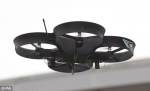
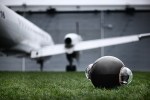
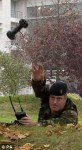
A story in the Daily Mail shows two new military robot surveillance devices developed for the UK Ministry of Defence’s Defence and Equipment Support (DES) group. The first is a throwable rolling robot equipped with multiple sensors, which can be chucked like a hand-grenade and then operated by remote-control. The second is another Micro-(Unmanned) Aerial Vehicle (Micro-UAV or MAV), a tiny helicopter which carries a surveillance camera. There have been rolling surveillance robots around for a while now (like the Rotundus GroundBot from Sweden), but this toughened version seems to be unique. The helicopter MAV doesn’t seem to be particularly new, indeed it looks at least from the pictures, pretty similar to the one controversially bought by Staffordshire police in Britain – which is made by MicroDrones of Germany.

The proliferation of such devices in both military and civil use is pretty much unchecked and unnoticed by legislators at present. Media coverage seems to be limited to ‘hey, cool!’ and yes, they are pretty cool as pieces of technology, but being used in useful humanitarian contexts (for example, rolling robots getting pictures of a partially-collapsed building or MAVs flying over a disaster zone) is a whole lot different from warfare, which is a whole lot different again from civilian law enforcement, commercial espionage or simple voyeuristic purposes. As surveillance gets increasingly small, mobile and independent, we have a whole new set of problems for privacy, and despite the fact that we warned regulators about these problems back in 2006 in our Report on the Surveillance Society, little government thought seems to have been devoted to these and other new technologies of surveillance.

The use of robots in war is of course something else I have become very interested in, especially as these flying and rolling sensor-platforms are increasingly independent in their operation and, like the US Predator drones employed in Afghanistan and Pakistan or the MAARS battlefield robot made by Qinetiq / Foster-Miller, become weapons platforms too. This is an urgent but still largely unnoticed international human rights and arms control issue, and one which the new International Committee for Robotic Arms Control (in which I am now getting involved), will hopefully play a leading role in addressing.

MAVs

Torin Monahan sent me this interesting video from the US Air Force showing ideas on Micro-Aerial Vehicles (MAVs) – nature-mimicking drones or independent robots that are intended to ‘enhance the capability of the future war-fighter’…

I’ve called for a convention on the use of robotic weapons and Professor Noel Sharkey and a couple of colleagues have now set up the International Committee for Robot Arms Control (ICRAC) – this video just illustrates why they need to be controlled as soon as possible before these kinds of things are widespread.