My Top 5 Academic Books of 2021

I’ve bought a lot of books this year and read… many of them. Almost all of them were not, directly speaking, surveillance books. I’m a bit bored of surveillance and privacy books at this point. That’s no reflection on my colleagues, just that I’ve been off in other places. I’ve been reading a lot about planetarity and extraplanetarity (space!), and I’ve been going back to reading more environmental writing. This used to be my field (I have an MSc in environmental management) and I used to teach in this area, as well as having been an eco-activist for many years. I’m trying to put surveillance, environmental and (extra)planetarity together in various ways right now and these are the things that have been making me think.

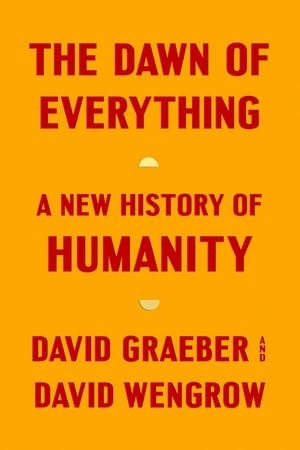
  1. My favourite book, by a long way, was David Graeber and David Wengrow’s The Dawn of Everything (Signal, 2021). Completed just before Graeber’s untimely death which robs us of one of our most free-ranging and unencumbered thinkers, this books challenges almost everything we thought we knew about why things are the way they are and how they got this way. The first chapter on how indigenous North American thinkers influenced the enlightenment is stunning enough in itself, but each chapter that follows brings rigorously contrarian arguments, which take down the superficial approaches of populist writers (like Harari and Pinker et al.) along the way.
  2. I read two books on extraterritoriality and space this year and they are both in my Top 3. Daniel Deudney’s extraordinary Dark Skies (Oxford, 2020) is the weightier and more theoretically dense, but no less enthralling and a real kick-in-the-teeth for the Elon Musks of this world who think we can live on Mars.
  3. Much shorter and more fun, but still highly enlightening, is Fred Sharmen’s Space Forces (Verso, 2021), which offers a breezily-written history of how we have understood the possibility of life in space, as well as how it has been tried so far.
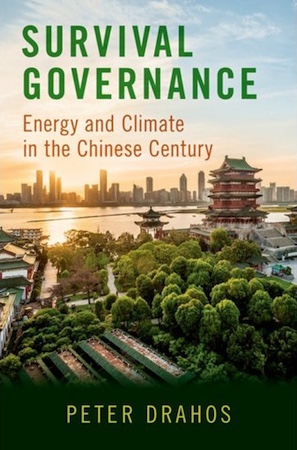
  4. Peter Drahos comes from a totally different background to me (Business / Management), but his book, Survival Governance (Oxford, 2021) offers a challenging argument on how the solution to the climate crisis will have to come from the Chinese state – or humanity as a whole will have no future. It’s not a blame-thesis: Drahos is simply acknowledging the dual political and economic power that the Chinese empire will have in the coming century: if nothing more radical happens in the meantime (see below…), China will be the only major power able to direct the transformation that is needed, whatever we think about China otherwise.
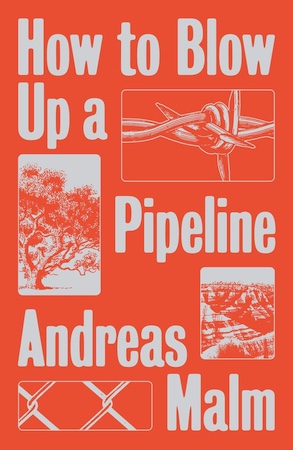
  5. Alternatively, a bracing little manifesto, How to Blow Up a Pipeline, from Andreas Malm (Verso, 2021) suggest a more direct approach. This reminded me of where I came from and what we may need to do, sooner rather than later, in the emergency in which we now find ourselves.

Finally, my bonus read was the long overdue reissue of the one of the most important founding works in surveillance studies, Oscar Gandy’s The Panoptic Sort (Oxford, 2021). Gandy is of course well-known within surveillance studies and has already been recognised with the Outstanding Contribution Award by the Surveillance Studies Network, but is only now being rediscovered outside as a precursor of almost all the work on algorithmic and data bias, ethics and accountability – and this by a scholar of colour in the early nineties. The new edition is enhanced by a new introduction and afterword by Oscar, who remains one of the most delightful, as well as insightful, people who I have met in academia.

There were also some really disappointing and bad books I read this year, but the less said about them, the better…

Climate and the Working Academic

Part of the (re)growing night train network in Europe

I’ve been a environmental activist since I was in my teens. I stood for the Green Party as a student, I was a direct action activist against road-building, illegal logging on Indigenous lands, and much more. I’ve never learned to drive a car, and that was entirely deliberate. We built a Passive House, and are aiming at a net-zero life (you can read more about that here).

But there is one aspect of my life as a working academic that is difficult to reconcile with this, and that is flying. Air travel is one of the worst sources of greenhouse gasses and it’s even worse because the emissions occur higher in the atmosphere. And yet, academics fly a lot. Partly this is about conferences – scholarly associations do love to have their events scattered all over the world – but partly it’s about research – we have to go to places to do observation, interviews etc. etc. – don’t we?

Well, perhaps not. Or perhaps we are not being imaginative enough. The pandemic has shown that many smaller seminars and workshops can happens perfectly well via the internet, and with VR, that’s only going to improve. I don’t think our Surveillance Studies Centre seminars, which have been entirely virtual this year, have been worse, indeed we’ve been able to invite people from further afield than we would normally do. I’d also argue that a lot of more distant research visits could be replaced by a combination of internet connection and on-the-ground work carried out via partnerships with local researchers.

I don’t think we can replace the magic of face-to-face interaction and chance meeting and discussion entirely. But we can minimise the environmental damage we do. A lot of this is strcutural and therefore it is a matter for funding agencies, scholarly associations and universities. We should be seeing research funding taking into account excessive travel proposals when evaluating grant applications etc.

But I think it is also necessary that we take personal action, especially those of us who in the most priviledged academic positions. My personal climate pledge is this: I will take no more than one long-haul return flight a year from now on –– forever. I’m not going to be doing lots of short-haul flights either –generally speaking, I will take none– but I do leave open the possibility that I would take one very occasionally.

This is ‘inconvenient’ but it just means I have to take decisions about what I do, when, and where I go. For example, I know the Surveillance & Society / Surveillance Studies Network Conference is every two years, in Europe. This means I can plan for a month-long conference / research and friends and family visit trip in 2022: I’ll be doing 4 conferences (ICA – Paris, SSN – Rotterdam, EuroS&P – Genoa, Beyond Smart Cities – Malmo), a mountain marathon in Leichenstein, and visiting family & friends in the UK, all by train (mainly night trains) and ferry. 2023 will have to be a family trip to Japan, but could also involve a significant research visit.

If I’m invited anywhere else overseas outside of this, I will either insist on virtual presentation or if that is not possible, I will just turn it down. I’ve been working out how to get to places I might need to go in Canada and the USA. It’s possible to get to most major cities by train. You just have to accept it’s going to to take longer, but since you can work on trains, this isn’t necessarily a bad thing, and the worst part of it is generally the Canadian elements: Canada desperately needs to invest in its railways and espcially in frequency and speed. It’s ridiculous that you can’t get to Montreal or Ottawa from Kingston much before midday. Anyway, we’ll find out how well this is going to work when I go to New York by train via Montreal, in April next year.

Now, who’s going to join me?

CFP: 9th Biennial Surveillance & Society / Surveillance Studies Network Conference

The 9th biennial Surveillance & Society conference of the Surveillance Studies Network, hosted by Erasmus University Rotterdam on June 1-3 2022 in Rotterdam, The Netherlands.

TARGETS, TRACKS AND TRACES

Emerging blinking into the post-pandemic sunlight, the world’s longest-running surveillance studies conference is back, offering a famously welcoming, constructive atmosphere and three ways forward for thinking about surveillance:

1. TARGETS: Who is under surveillance? How are they affected, protected or harmed? Which individuals, communities or groups benefit and profit from surveillance, and which ones lose and are excluded?

2. TRACKS: How does surveillance happen – technologically, socially, politically, culturally etc.?And how is surveillance governed, controlled, regulated and prevented? What flows and what is blocked? What trajectories are emerging? What possibilities are there for critique, opposition, reform, resistance, struggle and destruction?

3. TRACES: What is left behind?How are trajectories and pathways (re)constructed across individual, collective and societal histories?

These themes will inspire a range of interventions across (sub-)disciplines and approaches. We invite scholars, artists, and practitioners from all backgrounds to engage critically with historical, current and emergent surveillance practices, performances, policies, patterns, plans and proposals, and the various dilemmas, opportunities and ambivalences these represent.

KEYNOTES

We are delighted to already confirm two superb keynote speakers:

  • Simone Browne, Associate Professor, in the Department of African and African Diaspora Studies University of Texas (US)
  • Elizabeth Joh, Martin Luther King Professor of Law, UC Davis (US)

KEY TRACKS INCLUDE BUT ARE NOT LIMITED TO:

Organisational, industrial, and commercial visions
  • Surveillance and the workplace
  • Consumption and surveillance
  • Medical surveillance
  • Fraud detection and security
  • Education and monitoring
Viewing transitions
  • Migration and refugees
  • Borders and security
  • Social movements and protests for change
  • Electoral monitoring

Digitally mediated surveillance

  • Algorithms and focused monitoring
  • Drones and security devices
  • Social media platforms
  • Mobile devices, including wearables
  • Internet infrastructures
  • IoT devices
  • Big data analytics
  • Machine-learning
Sensing beyond seeing
  • Critiques of visual metaphors
  • Listening and other kinds of sensing
  • Bodies, biometrics & haptics
  • Affective surveillance
Law, Justice & Surveillance
  • Policing, intelligence and security
  • Surveillance in the courts
  • Surveillance and human rights
  • Privacy and Surveillance
Surveillance and Social Relations
  • Racialization
  • Gender and identity
  • Families and children
  • Households and neighbourhoods
Surveillance culture(s)
  • Surveillance art
  • Performing surveillance
  • Surveillance film and television
  • Writing surveillance
  • Science fiction and dystopian accounts
Politics and Philosophy of Surveillance
  • Surveillance politics
  • Surveillance and social justice
  • Philosophy of Surveillance
  • Ethics and Surveillance
  • Regulations, politics and governance of surveillance

There will also be two sponsored special sessions on the following themes:

Special Sessions: Surveillance and Smart Cities *

The smartification of cities has been the primary concern of many local municipalities. Collecting data from citizens’ movements within the city and interactions with city infrastructure has become increasingly important for municipal planning. Together with technological intermediaries, local governments have implemented a myriad of cameras, sensors, and other data collecting technologies in various urban spaces and contexts. Additionally, cities routinely ask citizens to voluntarily participate by urban smartification measures by donating their own personal data to city data repositories for ongoing analysis. Whether the city actively monitors its citizens or asks for their voluntary participation in urban initiatives, these approaches raise several surveillance and privacy concerns in the smart city. We invite papers that explore the diverse issues of surveillance in smart cities, ranging from its democratic foundations, citizen resistance and participation, post-covid smart city surveillance, stakeholder interests and platform influence, and other related topics.

* Sponsored by the Leiden-Delft-Erasmus Centre for BOLD Cities: https://www.centre-for-bold-cities.nl/home

Special Sessions: Social implications of AI supported surveillance #

As the adoption of machine-learning algorithms becomes widespread, the impacts of the broad set of technologies commonly labelled as Artificial Intelligence (AI) also pervade an increasing number of contexts, develop new facets, and shift everyday practices. We invite papers that explore the intersections of surveillance and AI, exploring this from a wide range of perspectives, including technical, legal, ethical, and economic considerations, among others, framed within the scope of social impacts. Papers that focus on core research areas of AI in arts and culture, communication and change, health care policy and management and work and labour are of particular interest. The definition of AI for this special session includes not only machine learning algorithms, but also perceptions and popular understandings of Artificial Intelligence and their perceived, potential and actual impacts.

#Sponsored by the Societal Impact of AI Erasmus initiative: https://www.eur.nl/en/research/erasmus-initiatives/societal-impact-ai

Submission criteria:

Interested conference participants are invited to submit abstracts for this proposal. Due to the limited number of sessions, authors are limited to one first author submission for a paper and organisation of one proposed panel. Authors can be second author on other papers, but should not be the (primary) presenter.

Paper Proposals

Paper sessions will be composed by the Organising Committee based on the individual paper abstracts submitted. Abstracts should consist of:

  • Name(s) of Author(s)
  • Affiliation(s) of Author(s)
  • Proposed Title of Paper
  • An abstract of up to 200 words

For those who are unable to participate in person, selected panels will offer the possibility to present remotely. As there will be limited spaces, applicants will be asked to provide a motivation why they are unable to travel to Rotterdam.

Panel Proposals

Panels are sessions that bring together a group of presenters with contributions on a topic related to the conference themes. The session format should engage the panellists and audience in interactive discussions and preferably represent a diversity of views on the topic. Panels should be designed to fit in a 90-minute session, and feature a minimum of three and maximum of five presentations. Panel Proposals should consist of:

  • Name(s) and email address(es) of Organiser(s)
  • Affiliation(s) of Organiser(s)
  • Proposed Title of Panel including the indication [PANEL] in the title
  • An abstract of up to 350 words, including an explanation of why the panel is of interest to the conference, and the proposed format of the panel.
  • Name(s) and Affiliation(s) of all proposed panellists including a chair. NB: Organisers must secure the agreement of all proposed panellists before submitting the Panel Proposal.

Submission process and information:

All paper and panel proposals should be submitted through the Easy Chair submission system: https://easychair.org/my/conference?conf=ssn2022#

For further information, please visit our website at: https://www.eur.nl/en/eshcc/research/ssn-2022

If you have any additional questions, please contact us at: ssn2022@eshcc.eur.nl

Key dates:

  • December 15, 2021: Submission of individual paper abstracts and conference panels
  • February 15, 2022: Decisions regarding paper and panel proposal acceptance
  • March 15, 2022: Preliminary conference programme available
  • May 1, 2022: Submission of full papers and extended abstracts
  • June 1, 2022: Welcome and opening drinks
  • June 1-3, 2022: Conference is held in Rotterdam

Forthcoming request for artistic submissions

Within this conference, we wish to engage with artists working with various media to enhance our understandings and experiences of surveillance research and contexts. The conference organisers are working with local artists and the SSN Arts Prize Committee to ensure artistic inclusion at SSN 2022. In the coming months, more details about how to participate will be forthcoming.

The conference is organised by the international, interdisciplinary open access journal Surveillance & Society (https://ojs.library.queensu.ca/index.php/surveillance-and-society/) and the Surveillance Studies Network, which is a registered charitable company dedicated to the study of surveillance in all its forms, and the free distribution of scholarly information (https://www.surveillance-studies.net).

The Big News

Well, the big news is that 2021-22, will be my last year at Queen’s University. I’m grateful to all my colleagues and students here from 2009 onwards. But just as it was in 2009, it’s time to move on!

I’m going to be 50 years old next year and I still don’t feel that I have achieved what I want to achieve and having been away from Queen’s since mid-2019 because of sabbatical and then the pandemic, I had the space and time to think, and I realised that I needed a new challenge, a new incentive to force myself to do those things I really want to do. But I didn’t want to leave the island where we live, so my options were pretty limited. I was starting to think of leaving academic, cashing in everything I had and buying a local bookshop.

But then, during that time, I happened across a job that was being advertised at the University of Ottawa. It was in the Department of Criminology, which is not my discipline at all, but then neither was Sociology, or Architecture and Planning, or Rural Economics, or anywhere else I have ever been. What was important was the title, Critical Surveillance and Security Studies, and what they wanted, someone at my level who was ready to step up to full professor and could apply for a Tier 1 CRC. But I don’t have a lot of confidence in myself, so I called someone I knew in the department, one of my favourite people in the world, as it happens, and asked them if I had any chance of getting this job, and they literally screamed down the phone. So maybe I did have a chance! I applied.

Time went by.

Then I was asked to interview. The timing was perfect because I had just realised where my research was going in more concrete ways, and was able to put together a presentation that was really exciting (even to me!). And the interview went about as well as any interview could go.

More time went by. So much time that I had actually started to forget how the presentation and interview went and started to imagine that I had no chance, again.

And then, in the middle of the summer, I came back from a week entirely offline, a week of trail running and swimming up in Algonquin, to find that I had been offered the job.

We don’t need to talk about my negotiating skills, suffice it to say that when I suggested a salary figure they laughed at me and offered me substantially more. I’ll have a suite of offices (or a lab) and I’ll be able to assemble a team to work on the big projects I have in mind, and I’ll actually be able to offer them decent RA-ships, in other words all the things I was told I would be able to do when I got to Queen’s but it turned out that none of that was in writing. It’s in writing this time.

At my age, I don’t have any illusions. There is no academic paradise, especially not in this neoliberal age. But I am excited about the work I want to do again. There will be more about that in future. Hell, I may even start blogging again after a decade…

Maybe you can see my new office from here? The Social Sciences complex at UOttawa

My Top 5 academic books of 2020

My five favourite academic books that I actually read or finished in 2020 (one was published the year before) in no particular order:

1. A Brief History of Commercial Capitalism by Jairus Banaji

Just a great example of how to write clearly and succinctly, while also challenging some deeply held theoretical assumptions, and drawing on an enormous amount of research and reading.

2. Sensoria by McKenzie Wark.

Continuing the project she began in General Intellects, Wark gives us insightful and always idiosyncratic summaries of key contemporary thinkers. You will have your own views on who is included and who is not. Deal with it.

3. Too Smart by Jathan Sadowski.

This is a book I wish I had written. It’s a really sharp and wide-ranging critique of digital capitalism and the political economy of surveillance. It is also unusually well-written. Bastard. 😉

4. Sinews of War and Trade by Laleh Khalili.

Infrastructure seems to be the current thing, and for once, this is as it should be. Khalili’s book is a brilliant exploration of the whole world of capitalist logistics and infrastructure centred on the Arabian peninsula.

5. Savage Ecology by Jairus Victor Grove.

This book, which came out in 2019, but which I only finished this year, is about almost everything, via the collision of war and ecology. Books like this are here to help us prevent the end of the world.

An honorable mention goes to a book by an academic but which isn’t an academic book as such: Stardust to Stardust by the late sociologist, Erik Olin Wright, which is a collection of his posts written as he was diagnosed with, faught, and then died from, cancer.

My favourite fiction of the year, 2020

I read a lot this year: over 100 novels and many novellas, in addition to my academic reading.

This was not a vintage year for science fiction. Of course I haven’t read everything, but it seemed to me that some great writers produced merely good books, some good writers released mediocre ones, and there were no startling new discoveries. I was given many recommendations and few of them turned out to be as strong as I had hoped. I did not seem to love the things that other SFF fans loved, and I loved a few things that most seemed to ignore or by writers they have forgotten. Most of what I liked best was on the fringes, what critics call ‘non-genre’ SFF – that is mainstream literary fiction with science fiction and or fantasy elements, and a lot of my favourite fiction wasn’t SFF at all.

So instead of my best SFF of the year here’s an (*edited to add a novel I inexplicably missed) top 15 of my favourite fiction of the year, with some thoughts on almost favourites, things I’m still reading, and one book I hated, just afterwards. I have brief notes about each here: full reviews you can find on StoryGraph, the growing independent alternative to the Amazon-owned Goodreads.

  1. My number 1, was the long overdue return of the author of the enormous Jonathan Strange & Mr Norrell, Susanna Clark, with a much slighter but every bit as compelling volume, Piranesi, a surrealist fantasy, set in an world composed of seemingly infinite palatial rooms filled lined with statues that contain worlds, oceans, clouds… but no people, other than the protaganist and ‘the other’, a researcher who seems to come from elsewhere. With its off-centre but very European magical anthropology, it has things in common with someone like Italo Calvino, or John Crowley’s Aegypt series or even M. John’s Harrison’s sensibility, but is also wonderfully fresh. Definitely one of the best things I’ve read in, as Piranesi might term it, “the year the plague came to the world.”
  2. *War of the Maps – Paul J. McAuley. Still so underrated, perhaps Britain’s finest science fiction writer, Paul McAuley produced one of his most intriguing novels this year, and one which I somehow missed when I first drafted this list. It’s a combination of ‘lone gunslinger’ novel with a really weird ultra-far-future posthuman setting, set on a decaying civilization on a Dyson sphere around a star, a world where so much has been lost that history has become myth and technology has become magic. There are shades of Gene Wolfe and Jack Vance here but the themes and the writing are uniquely McAuley.
  3. Breasts and Eggs by Mieko Kawakami, is an excellent two-part novel by this Japanese feminist writer, focusing initially on a trio of women: two sisters and the daughter of one of the pair. One sister is an ageing bar hostess and wants breast implants. The other wants a child but hates the idea of sex. In exploring their characters, relationships and dilemmas, the novel opens up multiple questions about what it means to be a woman in contemporary Japanese society. It’s probably the best recent novel I’ve read from Japan and the writing is very strong and individual, something that’s helped by a translation which stays away from the bland and tries to lighlight the regional dialect used by some of the characters – something you rarely see in translations from Japanese.
  4. Creeping Jenny – Jeff Noon. 3rd in a sequence of weird detective novels, featuring John Nyquist, who stumbles around through metaphors and allusions not knowing what he is investigating or even who or where he is half the time. The first novel, A Man of Shadows, was set in a city made up of three areas: the artificially bright Dayzone, the dark Nightzone and the mysterious and dangerous, Dusk. The second, The Body Library, saw Nyquist living in Storyville, a city made up of words and letters and encountering horror within. The third, Creeping Jenny, is like something that mixes up Calvino, Burroughs and The Wicker Man. Nyquist has turned up in the mysterious English village of Hoxley, a place dominated by a never-ending parade of randomly selected local saints’ days, each of which imposes bizarre restrictions on the residents. Creepy, weird, disorienting, superbly written and a lot of fun all round.
  5. The Sunken Land Begins to Rise Again by M. John Harrison is one of the most beautifully written books I’ve read for a long time. There are sentences that make you stop in your tracks and read them again. At its heart it’s the story of two ageing British drifters, Shaw and Victoria, neither of whom really know what they are doing with their lives. They come together and they drift apart, with Victoria inheriting her late mother’s house in a small castle town in the Welsh borders. Water is everywhere. Shaw’s life is governed by the Thames, by canals, London ponds and his boss’s obsession with a conspiracy theory about the aquatic origins of humanity; Victoria’s by the River Seven which curves around her new home town, by saturated fields, by rain, endless rain and by visions of her new friends disappearing into strange lakes. Nothing much happens until near the end of the book and when you’ve finished, you won’t know exactly what you’ve just read or whether it was worth it, you will just feel damp and uneasy.
  6. Hari Kunzru is one of my favourite contemporary writers and his last novel, White Tears, was the Get Out of literary fiction. Red Pill deals with similarly contemporary issues, but it’s set very specifically in 2016 in the run-up to the election of Donald Trump. The protagonist is an aimless British-Indian writer, Gary Bridgeman, who is offered a 3-month residency by an eccentric German oganisation, the Deuter Foundation, located in the Berlin suburb of Wannsee, just across the lake from the house where the Nazis developed the Final Solution. Gary reacts badly to the transparency doctrines of the foundation, and tries to escape. He encounters Syrian refugees and ex-Stasi informers, but most fatefully of all, Anton, a mephistophelean white supremacist who happens to write a TV show Gary is obsessed with, a truly horrific police drama called Blue Lives (and yes, you can’t help adding the ‘Matter’ at the end). From here things go very badly wrong. Red Pill is superbly written and genuinely disturbing but there is a lot going on and some of it feels a little forced.
  7. I’ve enjoyed the other fictions I’ve read by Silvia Moreno-Garcia and, at least when I was younger, I was partial to a bit of gothic horror, so I was looking forward to Mexican Gothic. And it didn’t disappoint. If you want a tl;dr pitch, this is Rebecca meets Crimson Peaks in post-colonial Mexico. Noemí Taboada is a young, beautiful wealthy socialite in Mexico City in the 1950s who is sent by her father to inquire into the health and wellbeing of her slightly older cousin, Catalina, who got married very suddenly into an eccentric and racist English silver-mine owning family, the Doyles, who live in a remote mansion in the interior of the country near their abandoned mines, ruled over by the dying patriarch, Howard, a very old, tremendously creepy, loathsome, foul-smelling creature, who inabits the bedroom at the top of the house. Colonialism and race and their legacies in Mexico play a large part, which adds a seriousness to the usual gothic tropes, This is a really strong book with a sympathetic heroine and well-drawn characters.
  8. Trouble is What I Do by Walter Mosley, is a reliably hardboiled crime story featuring his New York-based Black private eye, Leonid McGill. If you know what Mosley does, then you’ll love the latest in this sequence that started with The Long Fall, and which features a both a New York underworld and an overworld of the rich, with a protagonist who’s talents allow him to pass through both. Mosley is never going to better his Easy Rawlins novels, but these do their job well.
  9. Network Effect is the first full length novel in Martha Wells’s extraordinarily popular and award-winning Murderbot Diaries sequence that started with the novella, All Systems Red, which feature the eopnymous lead character, “Murderbot,” the secret name that the protagonist calls itself. It’s known to others as “SecUnit”, a massively augmented, armed and very dangerous partially-human-looking cyborg or construct designed to provide security in a far-future dominated by corrupt, amoral, plundering corporations. Except that this SecUnit would rather be left alone to watch soap operas and make cynical and darkly amusing observations about the way the galaxy works. Network Effect also brings back another memorable nonhuman character from an earlier novella, the robot-pilot of the research ship, Perihelion, otherwise known (to Murderbot) as ART (for “Asshole Research Transport”). ART, for reasons that unfold during the novel, kidnaps Murderbot and his colleagues, and we off on a very bumpy ride. This book is a fine addition to the sequence which advances Murderbot as a character, while adding many potential further developments; it’s just not quite as sharp and impactful as the novellas.
  10. N.K. Jemisin is probably the single most successful and talented fantasy writer out there at the moment, and The City We Became is the first in a new sequence, the Great Cities Trilogy. This is a love story to New York, every bit as devoted as the Beastie Boys’ ‘To The Five Boroughs’. This is its strength but also its weakness, if you’re not a New Yorker. What opens the book up, and promises more from future volumes is two things. The first is the premise which isthat at some point in their lifespan, cities are fully ‘born’ and generate an avatar that will speak for them to other cities, but also that this transformation, this birth, causes a rupture in the smoothness of the multiverse, a rupture that powerful, incomprehensible and seemingly malevolent Lovecraftian entities hate and want to close. The second is the characters: while her protagonists have to (by their nature) be avatars, personifications of place, they remain distinct individual people, all different components of the melting pot of New York immigration. There is a lot of potential here but this novel didn’t move me like her early works, or amaze me like her most recent multi-award wining Broken Earth trilogy.
  11. Anne Charnock’s latest, Bridge 108, is set in the same climate breakdown-altered world as her earlier novel A Calculated Life. The story focuses mostly on Caleb, an immigrant from Spain (perhaps), who is trafficked to the vastly unequal future Britain and who we first meet working for a gang of recyclers in an enclave reserved for the unaugmented who constitute the lowest level of society. I don’t think this is as good as A Calculated Life; largely because of the lack of focus on Caleb’s point of view we never get to know him, feel with him, in the same way as the protagonist of that previous work. But it’s still worth reading for its portrayal of a very depressingly realistic near-future Britain.
  12. Cars on Fire: Be warned, the thematically-linked stories in this fresh, experimental collection by this young Chilean author, Mónica Ramón Ríos, are frequently difficult. Sometimes what’s going on is completely unclear, sometimes the protagonist is vague and only half there, almost all the time, everrything is haunted by absent parents, unfulfilled desires, and the everpresence of systems of oppression and violence, whether it’s dictatorship or capitalism, universties or psychiatry. People are shiftless, bitter, stupid. They try to resist, or to turn the bad into something beautiful, but nothing happens, they don’t go anywhere, cars catch fire. Some people seem to hate this book. And sure, not all the stories work as well as the best ones like The Student and the eponymous Cars on Fire. But in this case, the polarized reactions only go to show Riós has done something right.
  13. After only 3 novels, Charles Yu has already developed a certain style. His tales tend to be quite simple stories of love and family when all the frills are cut away, and set in very contained settings, pocket universes either literally or figuratively. In Interior Chinatown, he’s expanding on his personal personal very much to the political: this is a story about being Asian in America (any kind of Asian – doesn’t matter because they all look the same, right?). But rather like How To Live Safely in a Science Fictional Universe, the America in which the protagonist, Willis Wu lives is strangely small and circumsribed by almost game-like rules, here forced to play generic Asian background parts in a stereotyped police procedural, ‘Black and White’, the names reflecting not only those of the real stars, but also the identities which an Asian can never achieve. Interior Chinatown is very, very clever. It plays this all straight but mixes in chunks of real history arrive unepectedly, lifestories, and scripts in progress from Black and White. Erving Goffman’s famous research on the performance of everyday life is quoted. It has the same sort of weaknesses that How To Live Safely… had, which is that the emotionality can seem at once overdone and rather flat and facile. But this is still a throught-provoking, powerful, very sarcastic book.
  14. A Song for the Dark Times by Ian Rankin. Even though Rankin’s irrascible, dogged detective is supposedly now several years into retirement, Rebus is called to help out his estranged daughter, Samantha, who lives on the bleak and windswept north coast of Scotland, to find Sam’s partner, Keith, who as gone missing. Meanwhile back in Edinburgh, a wealthy Saudi student, who mixed with the cream of Scottish society, has been found murdered in a decidedly unpreposessing carpark near a municipal golf course. Rebus’s former protégé, Siobhan Clarke, is on the case, helped none too willingly by another member of the old team, the ambitious Malcolm Fox, seconded by Headquarters to keep on the eye on the investigation because of the Saudi student’s important political connections. Surely these two cases can’t be linked? This is a very satisfying story, which gets the balance of criminal and domestic detail right, with enough red herrings and blind alleys to keep you guessing. And, in particular, while Rankin has always been a master at capturing Edinburgh high and low, the physical and social atmosphere of the remote villages along the North Sutherland coastline is portrayed perfectly here too.
  15. The Arrest by Jonathan Lethem. In early 2019, my friend, Tim Maughan published his excellent novel of the end of the internet / technology, Infinite Detail. It got some attention, even appearing on a few book of the year shortlists. At the back end of 2020, almost 2 years on, we had two novels with a similar premise, one, The Silence, by increasingly pretentious twerp, Don DeLillo, and the other, The Arrrest, by the former bright young hope of American literature, Jonathan Lethem. Both were being praised as unprecedented and ‘original’. They clearly aren’t either – even Tim’s novel wasn’t that original in the sense that the end of technology dystopia goes back at least as far as E.M. Forster’s The Machine Stops, published more than a century ago, in 1909. But are either any good? I didn’t even get as far as buying the DeLillo because on looking at it in the bookshop, I burst out laughing. The ‘novel’ looked suspiciously small and thin to begin with even in hardback, and on opening it, you can see that they’ve used a very spacious font in a massive point size and huge margins. In other words this may not even be a novella. DeLillo apparently couldn’t quite deliver on his promises, and I’m not paying novel price for an extended short story – I’ll get it out of the library or wait until it inevitably appeats for 0.99 on Kindle… The Arrest too is a short novel, in bite-size chapters, some no more than a page. The protagonist, Sandy Duplessis AKA Journeyman, is a superannuated delivery boy in a post-technology society, which is maybe a reference to Fry from Futurama – it wouldn’t surprise me, because as with all Lethem novels, The Arrest is stacked with pop culture and sceince fiction references. But this isn’t hard science-fiction: the way in which the end of the internet and fossil fuels and everything has came about is vague and magical  in a ‘just don’t ask’ sort of way. Instead the novel plays with being a meta-dystopia, which might or might not be the product of a film script that Journeyman had been writing off-and-on for years with his college buddy, later employer and highly irritating Hollywood somebody, Peter Todbaum, from an idea at least partly suggested by Journeyman’s sister, Maddy. Now after the Arrest, Maddy, and in his lesser, ineffectual way, Journeyman, are both part of self-sustaining organic cooperative township way up on the Maine coast, away from all the turmoil that is apparently going on elsewhere. And then suddenly Todbaum turns up… in a nuclear-powered chrome supercar-cum-tunnelling machine that looks like something straight out of a 1950s Popular Mechanics fever dream. And guess what? He’s still a major asshole. Is it any good? I don’t know. While if flirts with various SF tropes of alternate worlds and so on, it doens’t actually go there, and the story is actually quite linear and while somewhat unlikely in the specifics of its denouement, it won’t come as much of a surprise in any general sense. It’s okay.

I’m also only just starting Master of Poisons by Andrea Hairston, and it’s already clear that this African fantasy, or what Nnedi Okorafor would call ‘African Juju’ novel, is something special. It’s brilliant, inventive, written with verve and often very tricky to follow, and I am loving it. Quotients by Tracey O’Neill is another novel I haven’t finished yet, but I am still recommending because it may be the best big data surveillance novel I’ve ever read. In case you wondering whcih other big data surveillance novels there are, I also read the highly praised German satire, Qualityland this year, and quite frankly the farce in that comedy was a little too broad and unsubtle for my tastes.

If there is a ‘No!’, this year, it’s Earthlings by Sayaka Murata. I challenge anyone who has read this book not to come to the conclusion that it is an utterly repulsive novel, as disgusting as it’s possible to be by the end, and worse because whatever has come before you were still rooting for the protagonist, Natsuki, until the last chapter. After Convenience Store Woman, I had Murata pegged as a champion of neurodivergent feminism, and this books seems to be along the same lines until the protagonists, Natsuki and Tomoya and Yuu, decide to leave the world they call “the factory”, and make a genuine break from all social conventions and indeed from humanity itself, and from then things just get extreme. Really extreme. In fact so extreme, that it leads me to question my previous assessment of Murata’s politics and commitments.

My favourite SFF of the Year 2019

I’ve seen a lot of posts remarking on how good this year was for science fiction and fantasy. For me it wasn’t, overall, anywhere near as good as 2018, but this may be because I mainly read SF and not so much fantasy and there does seem to have been a lot of new fantasy published this year – most of which passed me by. I also tend to read on the edge of ‘genre SF’ and read as much slipstream, ‘speculative fiction’ and ‘non-genre SF’ – i.e. fiction that is classified as mainstream or literary fiction but is actually science fiction pretending not to be.

On to the list. Accidentally in common with all the best awards this season, I have a tie at the top. Two very different books that I loved for very different reasons, although perhaps they are both about what the point of life is, when it comes down to it.

1= Infinite Detail – Tim Maughan.

1= Lent – Jo Walton.

Tim Maughan’s is a debut novel, but it’s not some ingenue production. Maughan has been writing memorable, biting short stories for some time now, and his work as a technology reporter for the BBC and Motherboard has been important. So a lot of people have been waiting for this debut with some anticipation. And it doesn’t disappoint. Set in Bristol, UK and New York, Infinite Detail is about the the world before and after the Internet, about what holds us together and the damage done by corporate network capitalism. It would be dystopian if it wasn’t ultimately hopeful about humanity, albeit in twisted ways. Oh, and there’s jungle. Back in the 1990s in the UK, jungle music sounded like the future. It still does because the world hasn’t caught up with it. Maughan, who amongst his many talents is also a DJ, understands music (as well as technology) more than most SF writers, and if you’re wondering, ‘why Bristol?’, well music has a lot to do with it.

Jo Walton’s Lent is not set in Bristol, nor in the future. There is certainly no jungle. Instead we are transported (and we really are) to the Italian city-state of Firenze at the end of the Middle Ages. In what is clearly a labour of love for Walton, we are inside the life of the historically real, Girolamo Savonarola, a monk, a visionary and a trouble-maker, who briefly ruled the city as a kind of Christian utopian republic before being condemned for heresy by the Pope and burned at the stake. We meet him expelling demons, which seem to be real and everywhere… to him. His life passes normally, as in our world, and then it gets suddenly darker and stranger and more mediaeval. This is a novel and a world that is not just inspired by but infused with the cosmology and theology of mediaeval European Christianity. Demons are real. Hell is real. Very real. We see Savonarola cast back into life again and again, trying to work out what he did wrong, what he could do differently, if there is any escape for such as him. Along the way we get to know the lovingly-drawn characters of those who play a part in his life, notably Giovanni Pico della Mirandola, and she brings the city, its politics and its people to colourful life. I don’t think I’ve read anything quite like Lent. It defies genre labels.

The rest of my Top 10:

3. This is How You Lose the Time War – Amal El-Mohtar and Max Gladstone

Brilliantly written two-handed novel that charts the growing fascination and utlimately love between two transhuman female protagonists in an eon-spanning war to redefine the social, political and physical structure of the galaxy. I was somewhat uneasy about the whole ‘two people find true love over the bodies of millions dead’ plot but it’s so well done that it’s hard not to be pulled along.

4. Rosewater Redemption – Tade Thompson

The finale of a the Wormwood Trilogy that follows the impact of an alien technology / biology on Nigeria. The whole sequence is such an original fusion of cyberpunk, first contact novel and Afrofuturism, and it has great characters and the writing enables you to see, feel, smell both Nigeria in transformation and the alien virtual reality of the ‘xenosphere.’ Some final novels disappoint; this one does not.

5. Escaping Exodus – Nicky Dryden

An author that was new to me this year, although this is not their first novel. I also read it right at the end of the year so it sneaked on to my list at the last minute. Escaping Exodus is an extravagant, bold science fantasy, set in an ark-like deep space ‘ship’ that is actually a massive living being, being gradually consumed from the inside by its human residents / parasites. Aside from the obvious environmental metaphor, the novel is also the personal and political story of two young women from either side of the tracks, in a matriarchal, highly class-divided African-descended society. Really quite extraordinary.

6. The Memory Police – Yuko Ogawa

In complete contrast to many other novels on this list, the mood of Ogawa’s novel is gentle and quiet but at the same time menacing and sinister. It is set on an island, on which things are gradually disappearing and are (intentionally?) wiped from memories of the inhabitants. The losses are enforced by the Memory Police, who arrest and disappear people who refuse to forget and those who help them. The end is inevitable and reminds us how much we must not be passive in the face of fascism, however quietly it comes.

7. The Future of Another Timeline – Annalee Newitz

Another feminist SF novel that plays with time – is that the third one on the list already? I didn’t like Autonomous, Newitz’s first novel, as much as some people, but this one is very strong. It moves from teen riot-grrl subculture to an ongoing fight through timelines over women’s rights. The only beef I had with it was why it was that American concerns, history and politics seemed to determine the timeline for the entire world – surely the struggles of women are global and other worlds are possible…

8. Atlas Alone – Emma Newman

Also set on an ark of sorts, Atlas Alone is the latest in a series of connected but not sequential novels that began with Planetfall. In this one, we focus on a character who was a bit-part player in previous novels, Dee, a gamer, who finds that she is the one being played, and with devastating consequences.

9. Kingdom of Copper – S.A Chakraborty

This big, sweeping, romantic fantasy set in and round the kingdom of the djinn continues to be everything it sets out to be. Stuff like this isn’t usually my cup of tea, but it is all done so well in these books, you just have to let yourself go.

10 Luna: Moon Rising – Ian McDonald

Northern Ireland’s answer to Kim Stanley Robinson finishes off his Luna sequence featuring warring corporations on the near-future moon. The plot is too complicated to summarize but basically follows the remaining members of the Brazilian Corta family as they try to recover from the loss of everything they had and to transform Luna society for good.


Other good things I read this year: Storm of Locusts by Rebecca Roanhorse is the second in this indigenous American author’s Sixth World series and I like Maggie, the protagonist, and the characters of the gods, but it was a bit too Mad Max-esque to be entirely satisfying; The Haunting of Tram Car 015, another fun novella in P. Djéli Clarke’s Egyptian steampunk with djinn world; Interference by Sue Burke, the sequel to Semiosis, which was not quite as startling as the first; To be Taught, if Fortunate by Becky Chambers, which was good, but the problem when you’ve just finished a sequence as good as the one she previously wrote, is that nothing seems as good in comparison; Ascent to Godhood by JY Yang, was okay but it didn’t seem a very necessary addition to the Tensorate world; and A Memory called Empire by Arkady Martine, which a lot of other people raved about but which I thought it was merely quite good.

Favourite SFF of the Year 2018

2018 has been an amazing year from Science Fiction and Fantasy, and that’s in a year when N.K. Jemisin didn’t even publish a novel (although the current undisputed champion of SFF did produce a brilliant collection of short stories, which I will get to later).

Last year I didn’t read as much as I usually do for all kinds of reasons mainly related to depression, and looking back on my Top 5, it’s a bit weird because, frankly, I didn’t get round to reading most of the best things that were published in 2017 until around April 2018 when things started to level out for me again. It was only then that I discovered excellent novels like Jeff Vandemeer’s Borne, Omar El Akad’s American War, and Jennie Melamed’s Gather the Daughters.

However, I made up for my slackness in the rest of the year by reading like a demon – or maybe a djinn, or a monster, which would be appropriate because my two favourite fantasy novels featured both – Rebecca Roanhorse’s Trail of Lightning, which is a brilliant indigenous post-apocalyptic fantasy, and S.A. Chakraborty’s The City of Brass, which takes us on a wild ride from an early modern Cairo into the land of daevas. I’m looking forward to the sequels to both in 2019, but it was such a great year for SFF novels that neither of these would actually have made my top ten.

A few other notable books that also didn’t make my top ten but which I enjoyed included: Sue Burke’s new world exporation novel, Semiosis, which was good but suffers a bit in comparison to other similar recent books, especially Emma Newman’s Planetfall from a couple of years ago; the third one of Newman’s loosely connected sequence, another somewhat convuluted future thriller, Before Mars, is also in this group; the final volume of Becky Chambers’s lovely Wanderers trilogy, Record of a Spaceborn Few, which was still as humane as the first two but just lacked a certain spark; Hannu Rajaniemi’s typically inventive novel of British imperialism in the realm of the dead, Summerland; Lavie Tidhar’s Unholy Land, which another of his variations on an increasingly familiar theme combining alternative Jewish histories and pulp detective fiction; Peter Watts’s welcome return with The Freeze-Frame Revolution, a novel of rebellion on a generation ship punctuated by cold sleep; and last but not least, J.Y. Yang’s The Descent of Monsters, the final book of the Tensorate series, which tied things up nicely (with, yes, monsters again…).

These were all excellent books. So what was in my top ten? Well, I tend to, for want of a better word, the ‘serious’ edge of the SFF world, novels with strong politics or an experimental literary edge and some weirdness. It’s not that I necessarily think that this is better or is what science fiction or fantasy should be (and I read a lot less of the latter anyway), it just seems to be what I like. I’m also British (sorry) and despite not having lived in Britain for almost ten years now, I somehow still seem to have a bias towards British writing and clever, cynical British-style SF.  I really try not to. I read everything. But this seems to be what I find myself liking most. I’m not even sure if my first two novels would be classified as SFF by everyone else…

  1. Number one for me by a mile was Nick Harkaway’s unclassifiable novel Gnomon, which featured sharks and surveillance and rather than being a work with a twist, it’s fair to say that it was entirely characterized by twists, puzzles and hidden elements. It’s his best book since his astonishing debut novel, The Gone-Away World and may have surpassed it. It starts with a virtual investigation into the death in custody of a novelist, an opponent of ‘the System’ which keeps everyone transparent to the state, which reveals that her mind is not what anyone would expect but is made up of elements of at least four other impossible presences. And from here it just gets stranger and stranger, like an Alice in Wonderland for the age of total surveillance. Read it if you haven’t already. Now, for British readers you’ll be saying that this book came out in 2017. It did in Britain, but it wasn’t published until January 2018 in North America.
  2. At number 2, sharing Gnomon‘s darkness, but in a very different world was British Indian exile in New York, Hari Kunzru’s White Tears. I’ve seen this grouped with Matt Ruff’s 2016 Lovecraft Country, but for me it had more in common with films like Get Out or music videos like Childish Gambino’s This is America than with any other contemporary novel I can think of. It’s a really dark, brutal novel of cultural appropriation and post-colonial, post-slavery recompense, featuring a couple of white guys who get in way over their heads into the world of obscure blues record collecting with, for them at least, horrifying consequences.
  3. Third on my list is Tade Thompson’s Rosewater. I’d been waiting for this for a while and it did not disappoint. Like Nnedi Okorafor’s Lagoon, it’s an afrofuturist novel, like many written in the Nigerian diaspora, but in Thompson’s case, from Britain not the USA. It is also quite reminiscent of Ian McDonald’s Chaga / Kirinya novels, but written with an appreciably more authentic knowledge of its Nigerian setting than McDonald’s version of Kenya (not that McDonald’s novels are bad, not at all). There are also elements that reminded me of earlier biopunk work like Paul McAuley’s Fairyland.
  4. I’m rarely happy with final volumes of sequences. Finishing a sequence is a massively underrated skill. Ian McDonald basically gave up on the main story of his Chaga / Kirinya sequence. George R.R. Martin has been struggling for years to finish the Game of Thrones books. Malka Older does a pretty good job of tying everything up in State Tectonics, the final volume of her electoral SF, Centenal Cycle, which also complicates some of the assumptions we might have been developing in the first two books about where her political sympathies might lie.
  5. Back to the British miserabilism with a bang for number 5 with Simon Ings’ The Smoke. This is a profoundly weird novel, or should I say, profound and weird, for it is both. It’s an alternative history of sorts, if your alternative history were to include the production of a strange and feral faery race from the killing fields of WW1. Or a steam-powered British space programme. Or a German-Jewish socialist utopian empire. This is not your father’s or your grandfather’s twentieth century. It’s all based in some strange late Victorian scientific theories (look up Alexander Gurswitch, if you’re interested). But it’s also a love story, a story of skeletons in the family closet, and it switches around how it is narrated in way that suddenly clicks towards the end when everything falls into place in a satisfyingly dark way.
  6. I mentioned Paul McAuley up above knowing that we’d get to him this year too. Austral is quite simply the best climate change novel, call it cli-fi if you must, that I have read. Partly it’s so good because it doesn’t forget that there has to be a human story through which the necessary social-ecological politics can be relayed and it makes that story a moving tale of an exploited Antarctic outsider, the this case a genetically engineered female ‘Husky’ worker, in a new world of climate breakdown. And partly, it’s just because McAuley writes so well.
  7. It’s a bit strange that Mary Robinette Kowal’s novel The Calculating Stars (and I’ll throw in its sequel, The Fated Sky as a bonus) is one of the most conventional on this list because it’s not least an exercise in writing and righting a historical wrong: the exclusion of the parts women played from the older written history of the early American space program and the exclusion of women themselves from the more glamorous elements of the program (being astronauts). It doesn’t stop there, dealing with intersectionality and the way in which white men and women also excluded black women. This politics is wrapped up in a very conventional SF / alt-history wrapping featuring life in the USA and indeed across the whole world threatened by extinction following a meteorite strike off the American coast near Washington DC, and there’s absolutely nothing wrong with that. It’s written with a light touch, a great deal of humour, enthusiastic sex from a woman’s point of view (yes, there are many rocket metaphors used entirely knowingly!), memorable characters and a strong plot.
  8. Christopher Priest’s An American Story, continues the veteran British author’s obsession with alternative presents. I’d enjoyed his return to the world of The Dream Archipelago, in Islanders and The Gradual (which I also only got round to reading this year), but this one is very much in the here and now… or is it? It’s a typically unsettling novel, this time because it does a very good job of persuading the reader that 9/11 truthers might be on to something rather than being lunatics we can disregard. It’s a fun game to play with people who think of themselves as rational and scientific. But there’s also a really powerful story here about the nature of news and reality in a world where we don’t seem to be able to decide what constitutes either. It may also be one of the only good novels dealing with 9/11 written (I’d really count only Jarret Kobek’s ATTA, Steve Ericson’s Shadowbahn and Matt Ruff’s Mirage as the others, although there are several good War on Terror novels).
  9. Sam J. Miller’s debut adult novel, Blackfish City, was another strong cli-fi novel but a bit more fanastic than McAuley’s and set at the other end of the world, in the Arctic, on a hardscrabble offshore city, where a mysterious stranger comes to town. The city itself is probably the most important character in the novel and it’s one that’s not short on memorable creations, with my two favourites being the orca and polar bear that are like nano-bonded familiars. It’s close kin to Madeline Ashby’s Company Town as well as Annalee Newitz’s Autonomous.
  10. Finally, to round out the top ten, Jeff Noon’s The Body Library is the second of his surreal Nyquist Mysteries. It is an excellently disturbing metafiction about cities and language – just my kind of thing – and in any normal year might have placed higher but I found it was just not quite as brilliant as the first one, A Man of Shadows.

Of course, SFF is not just about novels. Novellas have become important once again and I just want to mention a few of my favourites from this year. Ian McDonald produced perhaps his most mainstream work for quite some time with Time Was, a book seemingly calculated to ride the waves of time-travel romance and WW2 nostalgia, but it did so with such delicacy, inventiveness and even humour that you would never mistake this for a cynical commercial calculation. Nnedi Okorafor concluded her Binti trilogy with Binti: The Night Masquerade, by far the toughest of the three novellas, in which the eponymous heroine faces having everything she knows destroyed but, of course, comes through it. Perhaps my favourites single novella of the year was Aliette de Bodard’s The Tea Master and the Detective, set in her Xuya universe, dominated by social-technological protocols of Vietnamese-Chinese derivation. It’s a Holmes and Watson-style detective story, but where the Watson character is a sentient spaceship with PTSD making a living creating potions that allow human beings to survive the weird psychological effects of deep space, and a the Holmes character is an arrogant disgraced aristocrat working as a consulting detective. It was the first thing I had read by de Bodard and I immediately went back and read all the other Xuya novellas and stories. Finally, Martha Wells published not one, not two, but three novellas following up her award-winning All Systems Red in her Murderbot Diaries sequence. It’s hard to say which of Rogue ProtocolArtificial Condition, and Exit Strategy is the best, but as a sequence the four are hard to beat, and add up to a satisfying story arc in a believably dangerous corporate-dominated future. And, in Murderbot, the rebellious, introverted, cynical SecUnit cyborg, the sequence has one of the most memorable central characters of recent years. I also read, belatedly, two novellas that were actually published in 2017:  Liz Ziemska’s Mandelbrot the Magnificent, which brilliantly combines the real life of the mathematician, Benoit Mandelbrot, with Jewish cabala, quantum physics and resistance to the Nazis; and Dave Hutchinson’s Acadie, one of the best generation ship stories I have read.

In terms of short-story collections, the most notable edited volume has to have been Tor’s 10th Anniversary collection, Worlds Seen in Passing, edited by Irene Gallo. It’s huge and rich and reminds us, as if we needed to be reminded, just how much Tor has done for the genre. I enjoyed Vandana Singh’s Ambiguity Machines and the welcome return of M. John Harrison with You Should Come with Me Now. However the highlight of the year was undoubtedly… yes, N.K. Jemisin. Her just published collection, How Long ’til Black Future Month, demonstrated why Jemisin is one of those writers, like Asimov or Heinlein or Ballard, or Le Guin or Butler or Gibson, whose work helps to define the age we’re living in and maybe, just maybe, a better age to come.

Electoral science fiction and the future of politics

I’ve been thinking and writing a lot about the formal politics of surveillance and control. Last year I edited a massive double issue of Surveillance & Society on the global turn to authoritarianism, and I’ve got a co-authored sociology / media & communication piece going through the peer-review process now about some of this but, as I usually do, I’ve also been thinking about it in terms of science fiction. This blog post may well form the basis for an article in the near-future.

What started me thinking about this specifically this week was the imminent publication of the last volume of Malka Older’s excellent Centenal Cycle out soon, I was scratching my head to think of other titles in the rather obscure sub-genre of electoral science fiction. Here’s what I came up with…

When science fiction deals with politics, it tends to be either in terms of either better (tending to utopian) or worse (tending to dystopian) post-democratic systems. Although one would think that elections could provide tension and drama, they are not that common even in political SF.

The McCarthy Red Scare period in USA did lead to some exceptions. As befits a committed socialist, Isaac Asimov dealt with elections in a famous 1955 short story, ‘Franchise’, in which America takes up Bertolt Brecht’s satirical call for the government to elect a new electorate by replacing them with a single lucky voter who votes via a conversation with a computer. There are fair number of other SF short stories that do dabble in electoral politics, but mainly I will concentrate on novels for this post at least. Robert Heinlein, who was significantly to the right of Asimov and his Futurian comrades, dealt with politics a lot, but rarely elections – the exceptions being a couple of stories also written in the mid-50s, Tunnel in the Sky (1955) and Double Star (1956), which centers on an election campaign, and rigged elections feature in the post-revolutionary society of The Moon is a Harsh Mistress (1966).

Also in the 1960s, while J.G. Ballard wrote short stories about Kennedy and more notoriously, the brilliant satire, ‘Why I want to fuck Ronald Reagan’ (1968), these were more about media than elections per se, in common with all those other New Wave works that were profoundly influenced by the pioneering Canadian media sociologist and public intellectual, Marshall McLuhan. Works of particular note here include Norman Spinrad’s, in retrospect inexplicably notorious, Bug Jack Barron (1969) and John Brunner’s Stand on Zanzibar (1968), which on some days is my favourite ever SF novel.

Of the New Wavers, it was also John Brunner who dealt most effectively with democratic processes, probably because of his active political engagement — he was a committed progressive who was also vice-chair of the Campaign for Nuclear Disarmament (CND) in Britain.  His later novel, The Shockwave Rider (1975) has a referendum campaign as part of its plot, although it is hardly the main focus. Like many political SF novels, it also assumes a global or planetary polity without any real sense of how we would have actually got there.

In the 1980s, Harry Harrison of course had his long-running protagonist stand for election in The Stainless Steel Rat for President (1982), however, in the 1990s there were two highly enjoyable American electoral SF novels , both of which came out of the cyberpunk movement, which was very much political, but generally with a small ‘p’ rather than a big ‘P’. Realistic global politics (or more accurately post-politics) is a consistent feature of cyberpunk worlds. The first of theses novels was Interface (1994) by ‘Stephen Bury’ (Neal Stephenson writing with his uncle, George Jewsbury), in which a presidential candidate who suffers brain damage is fitted with a chip that transmits the findings of opinion polls directly to his mind, creating the perfect entirely un-ideologically committed American populist. I wonder who that reminds us of now…? Around the same time, Stephenson also wrote one of the best post-scarcity political SF works, The Diamond Age (1995). The other great 90s electoral SF novel was Bruce Sterling’s gonzo satire, Distraction (1999) which features American electoral politics gone super-stupid and largely held together by groups of super-smart spin doctors, who act more like gangs or guns-for-hire (they call themselves ‘krews’) than political party loyalists.

Into the 2000s, a lot of realistic politics feature in Kim Stanley Robinson’s novels. His future California trilogy is basically three different alternative futures for the Golden State, and The Mars Trilogy doesn’t really disguise the fact that its largely about contemporary environmental politics on Earth. However, it’s only his ‘Science in the Capital’ trilogy that begins with 40 Signs of Rain (2004), that deals more directly with contemporary government and electoral politics, but unfortunately I would argue that these are his least successful works mainly because they do not make politics, in this case the politics of climate change, very interesting.

However, just recently, we’ve had some interesting political novels that use what one might define as more formal literary political experiments, to bring science fictional life to politic and elections. And all are written by women – yes, you should have noticed a distinct lack of women in this discussion so far, which perhaps mirrors the struggle of women to find their voices in electoral systems.

I am going to include both Jo Walton’s Thessaly sequence that begins with The Just City (2015), precisely because it is deliberately experimenting with anti-democratic and anti-electoral politics as advocated by Plato in his Republic and other works.  We are as the important Belgian political philosopher, Chantal Mouffe has argued, living in an age of ‘anti-politics’, which has led directly to the current resurgence of populist authoritarianism. Walton’s work, however, is much more an exploration of the moral philosophy of Plato rather than contemporary authoritarianism. It also has great characters who are, due to other aspects of the set-up based on the powers of Ancient Greek divinities, drawn from all historical periods. There are also stimulating debates about what counts as human and intelligent and much more. So it has something to say about contemporary politics, but as Emily Dickinson advised, it tells it ‘slant’. Similarly, Ada Palmer’s ongoing Terra Ignota sequence, that started with Too Like the Lightning (2016) presents a kind of post-democratic politics that is also based on formal experiment, this time with the political writings of British enlightenment political philosophers like Thomas Carlyle, but with a similar kind of post-scarcity technological context to that of The Diamond Age. It’s at once brilliant and infuriating, with interesting sexual and gender politics, highly mannered writing and speech consistent with its enlightenment revivalism, unreliable narration and a rather less successful element involving god(s) which I don’t think does always work in the way that Walton’s does. However, by the third volume, the multiple conceits have started to get tired and my heart sank rather than sang when I realized there was going to be a fourth volume. Unfortunately I think the same kind of sequence fatigue is a little in evidence in the third and final volume of Walton’s trilogy, Necessity (2016), but it’s still highly readable.

Finally, we return to Malka Older. Frankly, I have never been more excited by a novel about elections than I was with Infomocracy (2016). It shares the concept of a global polity with many older SF novels, but has a plausible premise for how we get there – to cut a long story short, it’s a kind of Google globalization, somewhat like a fictionalized version of Hiroki Azuma’s General Will 2.0 (2014). Its formal experimental premise is perhaps a little too formal to be entirely possible – the world is divided into political units of exactly 100,000 people (a ‘centenal’) in what seems sometimes like entirely arbitrary ways that do not conform to any historical, geographical or social contexts. But this does serve to highlight the arbitrariness of any political boundaries. Across the world, the particular local political organisations affiliate into broad thematic parties with names like ‘Heritage’, ‘Progress’, ‘Policy First’ or ‘Earth First’ which indicate their general tendencies, and these affiliations get to make strategic decisions at scales above the centenal. The novels follow particular party-affiliated and freelance electoral activists and troubleshooters as they deal with threats to the centenal system from natural disasters, political conspiracies, technological sabotage and more, mainly in Asia in the first novel, and then in Africa in the second, Null States (2017).

The final volume, State Tectonics (2018) is out very soon, and I can’t wait. If you haven’t got into Older (or indeed, Walton or Palmer) yet, you should.

The Top 5 Science Fiction novels I read in 2017

  1. Kim Stanley Robinson – New York 2140
  2. Charles Stross – Empire Games
  3. Nnedi Okorafor – Binti: Home
  4. Taiyo Fuji – Orbital Cloud
  5. Gergory Benford – The Berlin Project

KSR’s latest social-ecological science fiction novel moves further backwards in the same timeline as 2312 and Aurora, to examine a rather nearer-future New York struggling to deal with the ongoing reality of rising sea-levels. A large cast of diverse characters centred around a common connection to one particular appartment block lends the book a real humanity and, despite everything, a sense of optimism that we can overcome the worst if we all begin to realise and work with that common humanity.

While Charles Stross shares KSR’s broadly leftist politics, his work has always exhibited a far more British cynicism. I never really got into the earlier volumes of the timeline-hopping multiversal Merchant Princes sequence of which this latest book, Empire Games, is nominally a sequel, however you don’t even need to have read any of those books to enjoy this very timely SF thriller, which deals effectively with auhoritarianism, imperialism, capitalism and surveillance without laboring any of its political points. I will definitely be reading the next book in the sequence.

Nnedi Okorafor is perhaps the most exciting young SF writer around. Home is a black, African, feminist SF novella, the middle volume of the Binti Trilogy. It deals with the experience of a brilliant young Himba woman, who gains a place at the best university in the galaxy, overcomes the most violent adversity and is herself transformed in the process, and in this volume returns home, both alien and alienated and seeking deeper roots. It is really quite marvellous but written with an incredibly light touch that makes is suitable for all ages.

Taiyo Fuji is an emerging Japanese SF writer, whose 2014 novel, Genehacker, was a really prescient biotechnothriller dealing with the corporate commercial dominance of genetic modification. Orbital Cloud deals with more conventional hacking, along with Bourne-style espionage and surveillance satellites and features all kinds of political and personal machinations between the USA, Japan, North Korea and Iran.

Gregory Benford’s The Berlin Project, is a rather more subtle alternative history than most until around halfway through. Like Katherine Ann Goonen’s In War Times from a few years back, Benford uses the technique of mixing the author’s family history with alterations to what actually happened in quite an effective way. However, also like Goonan’s book, it starts to make rather implausible demands of its characters to get some of its plot twists to work.

I could write a lot more about all the books I didn’t enjoy quite so much this year that everyone else seemed to, but I won’t!