
I’ve posted several times over the last few years on how the USA is rapidly overtaking Britain as the leading democratic ‘surveillance society’. It seems like some commentators in the USA now agree – Glenn Greenwald writes on the Salon magazine site, about his essay published by the libertarian Cato Institute, and the responses it has received from different parts of the US political spectrum. It’s all worth a read, although for British activists and academics in this area in particular, it will sound like what Yogi Berra famously described as ‘deja-vu all over again’… and it’s hardly new even in the States (see the work done by ACLU, Wired’s Danger Room, experts and academics like Bill Staples, Bruce Schneier and Torin Monahan, and popular books by Christian Parenti and Robert O’Harrow, for just a couple of examples).
Category: Americas
City of Leon to install mass public iris-scanning
The City of Leon in Mexico, if a report in Fast Company are to be believed, is going ahead with a scheme that goes far further than any other urban surveillance project yet in existence. They are already installing scanners that according to their manufacturers, Global Rainmakers Inc., an until recently secretive company with ties to US military operations, can read the irises of up to 50 people per minute.
Now, we have to be careful here. Gizmondo, as usual has gone way over the top with reports of ‘the end of privacy’ (which, if you believed their stories has already happened as many times as the apocalypse for 7th Day Adventists…) and talk of the ‘entire city’ being covered and ‘real-world’ operations (i.e. in uncontrolled settings). In fact, if you read the Fast Company report, and indeed the actual description of the products from the company, they are far more limited even in their claims (which are likely to be exaggerated anyway). There is no indication that the iris scanners proposed will work in uncontrolled settings. When the company talk about the scanners working ‘on the fly’, they mean that they will work when someone is basically looking at the scanner or near enough whilst no more than 2 metres away (in the most advanced and expensive model and significantly less for most of them) and moving at no more than 1.5 metres per second (and, again, slower for the lower range devices). All the examples on the company website show ‘pinch points’ being used (walls, fences, gates etc.) to channel those being identified towards the scanner. In other words, they would not necessarily work in wide public streets or squares anyway and certainly not when people were moving freely.
So is this what is being proposed? Well, there are two phases of the partnership with Leon that the company has announced – and we have as yet no word from Leon itself on this. Phase I will cover the settings in which one might expect levels of access control to be high: prisons, police stations etc. Phase II will supposedly cover “mass transit, medical centers and banks, among other [unnammed] public and private locations”. It is also worth noting that the scheme’s enrolment is limited to convicted criminals, with all other enrolment on an entirely voluntary basis.
I am not saying that this is not highly concerning – it is. But we need to be careful of all kinds of things here. First of all, the Fast Company report is pure corporate PR, and the dreams of the CEO of Rainmakers, Jeff Carter (basically, world domination and ‘the end of fraud’ – ha ha ha, as if…) are the same kind of macho bulltoffee that one would expect from any thrusting executive in a newish company in a highly competitive marketplace. Secondly, there’s a whole lot of space here for both technological failure and resistance. The current government Leon may well find that the adverse publicity from this will lose rather than gain them votes and that in itself could see the end of the scheme, or its being limited to Phase I. In addition, without this being part of wider national networks, there may in the end be little real incentive for anyone to enrol voluntarily in this. Why would banks in Leon require this form of identification but not those in Mexico City or Toluca for example? Will the city authorities force everyone who use public transport to undergo an iris scan (which would make the ‘voluntary’ enrolment a sham)? This could all end being as insignificant as the Mexican companies offering RFID implants as a supposed antidote to kidnapping, it could be the start of a seismic shift in the nature of urban space, or it could be a messy mixture.
I hope my colleagues in Mexico are paying attention though – and I will try to keep updated on what’s really going on beyond the corporate PR.
Surveillance, Coercion, Privacy and the Census
There’s been a huge furore here in Canada about the current government’s decision to abolish the long-form census. I’ve been following the debate more interested in what the proponents and opponents have been saying about privacy and surveillance rather than intervening. But it’s about time I got off the fence, so here’s my two cents’ worth. It may come out as an op-ed piece in one of the papers soon, I don’t know…
Sense about the Census:
Why the Long-form Census debate really matters.
The debate about the scrapping of the long-form census is in danger of being unhelpfully polarized. The result can only benefit the current government to the long-term detriment of the Canadian people. On the one hand, some of those campaigning for the reinstatement of the survey have dismissed issues of surveillance and privacy. On the other hand, supporters of its abolition have referred to ‘privacy’ and ‘coercion’ as if these words in themselves were reason enough to cut the survey. But the whole way in which privacy has been discussed is a red herring. We need to reaffirm a commitment to privacy alongside other collective social values not in opposition to them. We need privacy and we need the census.
First, coercion. The long-form census is undoubtedly a form of coercive state surveillance. One only has to glance at the recent history of state data collection and its role in discrimination and mass-murder to see that that one can be far too blasé about the possibility of states misusing statistics. Examples abound from the Holocaust to the genocide in Rwanda, and there is no reason to suppose that this could never happen again. In fact technology makes discrimination easier and more comprehensive: with sophisticated data-mining techniques, inferences can be made about individuals and groups from disparate and seemingly harmless personal data.
However, just because censuses have the potential for abuse, this does not make them wrong. Surveillance forms the basis of modern societies, good and bad, and coercion is all around us from the time we are children told by our parents not to play on the stairs. Coercion can be caring, protect us and improves our lives. The long-form census would have to be shown to be unfairly coercive, or not have enough beneficial policy outcomes to justify any coercion. This, the government has failed to do, whereas the campaign for the restoration of the survey has highlighted numerous examples of improvements in communities across Canada resulting from long-form census data.
Now to privacy. The campaign to restore the long-form census has seen frequent instances of the argument, ‘nothing to hide, nothing to fear’. This is one of the most glib arguments about privacy and surveillance, not only because of the potential abuse of state data collection but also because it assumes so much about what people should want to keep private. Another common argument is that privacy is irrelevant because ‘everyone gives away their personal information on Facebook anyway’. But the fact that some people chose to share parts of their lives with selected others does not imply that any infringement of privacy is acceptable. Privacy depends on context. Social networking or marketing trends do not mean that ‘anything goes’ with personal data.
In making these arguments, campaigners end up unwittingly bolstering a government strategy that relies not only on the evocation of ‘coercion’ but on pitting individual privacy against collective social goals. Yet, the government’s position is misleading. Privacy is not simply an individual right but also a collective social value. And further, just because the data is collected from individuals by the state, does not mean that the state infringes on privacy. It depends on whether the data is stored without consent in a way that identifies individuals or is used in a way negatively impacts upon them.
However, Statistics Canada have demonstrated a commitment to privacy within the census process. The long-form census data is not used to identify or target individuals. It is aggregated and used for wider community purposes. As Statistics Canada say quite on their website: “No data that could identify an individual, business or organization, are published without the knowledge or consent of the individual, business or organization.” The census returns are confidential and Statistics Canada employees are the only people who will ever have access to the raw returns, and they are bound by The Statistics Act. All this was confirmed by the Office of the Privacy Commissioner of Canada, who found the 2006 census fully compliant with privacy law.
So both privacy and coercion are red herrings. The conduct of the long-form census has demonstrated a commitment to privacy alongside other collective social values in support of individuals and the wider community. This moderate, sensible and profoundly Canadian position is now under threat. That is why this debate matters.
Top Secret America
Top Secret America is a really excellent project from The Washington Post with some excellent articles and classy and educative graphics. It traces the huge current US security-intelligence complex, and is partituclarly interesting for noting the massive private sector involvement. This isn’t actually entirely new – private technology companies have been intimately involved in both the manufacture and the servicing and operation of intelligence for a long time – look at the example of RCA and the early history of the National Security Association, for example. However, this blurring of the boundary between state and private sector now goes much further into the operations of intelligence. The Post alleges that “out of 854,000 people with top-secret clearances, 265,000 are contractors.” That’s almost a third. And the database of companies involved is enormous – nearly 2000. The searchable database is also going to be very helpful in our current work at the Surveillance Studies Centre on the involvment of private companies in Canadian border control!
PS: I should be back up and posting regularly now. I’ve had one of my occasional anti-blogging periods!
No-one helps stabbed man
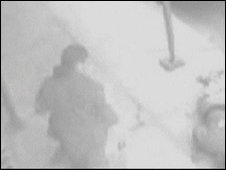
The BBC is reporting that passers-by in New York failed to help a stabbed man who was bleeding to death on the sidewalk. Hugo Alfredo Tale-Yax had reportedly tried to intervene to stop another man from attacking a woman and as knifed. That’s bad enough, but of course what the BBC don’t note is that although they state that this was all captured on CCTV, no-one stopped either the incident or saved Hugo Alfredo Tale-Yax as a result of the cameras seeing the whole thing, either. There’s also a strong argument to be made that the presence of cameras may also be a contributory factor in explaining the reasons why passers-by don’t help: surveillance ‘deresponsibilizes’ them – they assume that someone behind the camera will intervene so they don’t have to. Of course, the predominant factor is more likely to be the simple, cruel prejudice that the man was clearly homeless and therefore not even of any interest to them. Contrary to what Bentham believed, being watched constantly clearly doesn’t make better people…
Morro dos Prazares to be demolished?
Eduardo Paes, the hardline Mayor of Rio de Janeiro, has indicated that he may try to demolish the favelas that were affected by recent flooding and landslides, including Morro dos Prazeres, where 25 died, and where I visited last year. Paes is no friend of the poor and his concern for their welfare appears feigned. It is more likely that he will use any excuse, including the recent tragedy, to erase the political and security problem that these informal settlements that cover Rio’s hillsides represent. This will of course accelerate as we approach the 2014 FIFA World Cup and the 2016 Olympics… and as to what will happen to the people who live in Morro dos Prazeres, nothing so far.
Rio favelas hit by flooding
One of the things I noted this time last year when I visited Rio de Janeiro was the perilous situation of the poorest areas of informal housing, the favelas or morros when it comes to flooding and landslides. Just in the last 24 hours, huge amounts of rain has caused land and debris slides that have killed around 100 in the state according to the BBC, and in particular 13 people have been killed in Morro dos Prazeres, a favela I visited with my colleague Paola, according to The Guardian*. The centre of the city is deep in water. My thoughts are with all the people I met last year in Rio, and all the communities affected by this disaster.
Chicago’s Cameras Continue to Increase
The Associated Press is reporting on Chicago’s ongoing efforts to integrate it’s public and private camera systems together into one seamless visual surveillance system of perhaps 10,000 networked cameras, including those in schools. This is a long way from the very limited ‘closed-circuit’ of the original video surveillance systems. There really isn’t another city that is doing anything close to this. London, for all it’s large numbers of cameras, is a patchwork of disconnected, often archaic, systems bound by multiple domains of regulation. Chicago’s network, in contrast, is being developed, through large Homeland Security and Federal stimulus grants, with connection in mind and regulation in the post-9/11 era is only to the benefit of the state’s efforts. The particularly interesting thing is the way the boundary of acceptability is continually pushed out by this process of connection and integration. For example, the AP story confirms that Chicago Police Superintendent, Jody Weis, has been quoted on several occasions he would like to add secret cameras “as small as matchboxes” to the network. And there are few critical voices.
Federal judge rules against NSA
A US Federal Court judge has ruled that the National Security Agency’s secret domestic wiretapping program of internal terrorist suspects, was illegal according to the New York Times. The activity violated the 1978 Foreign Intelligence Surveillance Act (FISA) which was put into place after the various inquiries into the activities of the FBI and NSA in the late 1960s and early 1970s. As I’ve said before, that’s hardly a surprise and don’t think this has got a whole lot to do with George W. Bush in particular. Intelligence services might claim to operate under laws but in reality their priorities are not bound by them.But there’s a kind of cycle of collective amnesia that goes on with these inquiries and rulings. This time, the NSA was basically doing almost exactly the same thing as in the earlier period. Some minor superficial changes will occur. People will forget about it. The NSA will carry on. Then in 20 years time, there will be something else that will reveal again the same kinds of activities. Cue collective shock again. And so on. It would take a lot more continual public oversight and openness for them to be held properly to account, and if they were, they’d be very different entities. But that’s not to say that they shouldn’t be held to account: the fact that most democratic nations have what amounts to a secret state within the state that may have very different priorities than the official government or the people should be profoundly worrying. Yet it seems to be such an enormous breach of the democratic ideal that it goes largely unnoticed.
Google does the right thing, but…
Google is, as I type this, closing down its Chinese site as the first stage of its withdrawal of service from mainland China, in response to numerous attacks on the company’s computers from hackers allegedly connected to the Chinese state and ongoing demands to provide a censored service with which they felt they could not comply. The company claims that Chinese users will still be able to use Google, only through the special Hong Kong website, http://www.google.com.hk, which for historical reasons falls outside the Chinese state’s Internet control regime. Whether this will mean that the site will actually be accessible to Chinese Net users is debateable. Some say they cannot access it already. There are also numerous ‘fake Google’ sites that have sprung up to try to make some fast cash out of the situation.
But there’s more to this of course. Google has been widely reported to have opened its doors to the US National Security Agency (NSA) in order, they say, to solve the hacking issue, but the NSA only get involved in matters of US national security – if Google is essentially saying it is effectively beholden to US intelligence policy and interests, I am not sure that this is a whole lot better than bowing to China. You can be sure as well, that once invited in, the NSA will insinuate themselves into the company. Having a proper official backdoor into Google would make things a lot easier for the NSA, especially in populating its shiny new data warehouse in Utah…
 ubisurv