
The mundane costs of independent drones

It’s been an aim of developers for quite a while to develop more independently functioning surveillance drones that can fly around and recharge themselves in some way – whether it’s solar gliders in the stratosphere or, at street level, biomimetic bird-like micro-UAVs that can ‘perch’ and draw power from electricity cables. This was one of the original aims of the DARPA call that led to the creation of that beautiful marvel of engineering / dystopian nightmare surveillance tool, the Nano Hummingbird. If you are an engineer, this is certainly convenient and probably looks a lot like a ‘free lunch’ – there is certainly no mention of any possible costs or downsides in this piece on engineering.com. But as we all should know, there is no such thing as free lunch.

Firstly and most importantly, there’s the question of whether societies want either identifiable or camouflaged surveillance devices flying around us at all times. A mobile surveillance device essentially becomes even more independent and less limited by its construction if it can ‘feed’ itself. And while the US Federal Aviation Authority in particular has just recently put a bar on commercial drone delivery services (PDF), it certainly hasn’t prohibited other kinds of drone use, and many other national regulatory bodies are yet to decide on what to do, while drone manufacturers are pushing hard for less ‘bureaucratic’ licensing and fewer controls.

The second objection is less fundamental but perhaps more effective at igniting opposition to such devices. It might be that any single device would draw minute amounts of power from cables, but what happens if (or when) there are thousands, even millions, of these devices – flying, crawling, creeping, rolling, slithering – and all hungry for electricity? I would suggest that, just like the cumulative effect of millions of computers and mobile phones, this would be substantial and unlike the claims made for smartphones, this would be additional rather than replacing less efficient devices. And this is not including the energy use of the huge server farms that provide the big data infrastructure for all of these things. So, who pays for this? Essentially we do: increased energy demand means higher bills and especially when the power is being drawn in an unaccountable way as with a biomimetic bird on a wire. And unlike the more voluntary decision to use a phone because of its benefits to us, paying for our own surveillance in this way would seem to be less obviously ‘for our own good’ and certainly has the potential to incite the ire of ‘ordinary middle-class homeowners’ (that holy grail of political marketing) and not just the usual small-government libertarian right or pro-privacy and anti-surveillance left.
 

High tech class control

Watch this video from The Guardian on Camden, NJ. It’s ostensibly about police surveillance, and I was expecting to be outraged (once again…) at the use of over-the-top high technology – visual and audio surveillance – to deal with everyday crime.

But instead, what struck me was not so much the ostensible subject but the backdrop: the place itself. The areas patrolled by the officers in this film look almost post-apocalyptic. I’ve seen favelas in Rio de Janeiro that are in better shape, and many certainly seem to have more hope than this. Poverty and inequality in the USA, grounded in a history and present of racial and class exploitation, have become extreme. There’s no other way to put it.

And yet, outside of these places, which are everywhere across the USA, and ironically given the investment in technologies of visibility, the reality is invisible. The use of surveillance here is just a recognition of the lack of anything that amounts to a conception of a decent and fair society in practise, while people are still blinded by the noble goals of the USA as expressed in its constitution. This constitution means little to millions of Americans forced to live in these conditions, while being treated all the time as not even ‘potential criminals’ but simply ‘future criminals’, who will commit a crime at some point, and are destined for nothing more than to be churned through a carceral system that is in itself now a profitable and perhaps even essential component of American capitalism. However, this seems to have escaped the notice and concern of those who actually vote in elections and make decisions, whether they class themselves as liberals or conservatives, most of whom are so far removed from these conditions, physically and emotionally that they could not possibly understand.

This makes it even more bitterly ironic that The Guardian choses to title this report as ‘Minority Report meets The Wire‘, as if the only way to understand this is through fiction – that, somehow, it can’t be real. Yet here it is.


The Right to Watch?

I’ve always defended the right to photograph in public places. However, a number of cases in the last few weeks are highlighting an important new development in this area, a new front in the increasingly confusing information wars. Gary Marx always like to say that surveillance is neither good nor bad but that intent, circumstances, and effects make it so, but a growing number of people and organizations seem to be treating surveillance – or at least watching, and certainly not all watching is surveillance – as a right which supersedes rights to privacy. We’ve seen this in the case of Google Glass – even before it was launched commercially – and more recently with the arguments over the ‘right to be forgotten’ in Europe, with personal privacy being counterposed to freedom of information and actions to protect privacy being compared to censorship. It’s all somewhat reminiscent of Dave Eggers’ novel, The Circle, in which a Facebook-Google-Apple-a-like company completely turns around social values until, as one of the corporate slogans has it, “PRIVACY IS THEFT!”

The latest case is that of the use of drones / micro-UAVs / MAVs in the USA. The Federal Aviation Authority (FAA), the government body that controls US airspace, is trying to regulate the use of drones and has attempted to fine commercial drone operators who fly surveillance drones without their permission. The case revolves around one Robert Pirker, who used an unlicensed drone to film a promotional video back in 2011. At the moment the FAA is appealing against the National Transportation Safety Board (NTSB), who rule that it could not fine Pirker as it did have jurisdiction over small drones. Now the media has weighted in on Pirker’s side, arguing that the FAA’s stance infringes the first amendment and creates a ‘chilling effect’ on journalism.

I’m really not sure about either argument. On the FAA side, this is partly about a bureaucracy trying to keep control of its regulatory territory as much it is about the object of the regulation – the FAA does not want to be seen to be losing control just as the number of small drones is increasing massively.

On the other side, is this really about the rights of journalists? Pirker was making a commercial film not covering a story, and the effect of the FAA’s ruling being overturned is more likely to open the door to a corporate free-for-all, an absurd PKDickian world of drones as far as the eye can see, with all the attendant crashes and legal battles, could result. Think not? Well, back in the 1900s, people thought there would never be that many cars on the roads either… so it is certainly it is partly about their mandate, i.e. air safety.

The big question here, as with Google Glass and with Search, is whether technological change makes a difference. Is a flying camera just the same as a hand-held camera? Does the greater potential for intrusion, or on the other hand the inability to know that one is being filmed, matter? Does that possibility that ‘the truth’ will be revealed justify any technological method used to obtain it? If not, which ones are acceptable, whereis the line drawn, and who decides and how? In the UK, the ‘public interest’ would be a good basis for deciding, as has been frequently alluded to in the Leveson Inquiry into telephone tapping conducted by Murdoch-owned newspapers, however ‘public interest’ is a much vaguer term in the USA… what is certain is that conflicts around the ‘right to watch’ versus the ‘right to privacy’ and other human rights and social priorities are only going to intensify.

When your employer knows what you are eating

Way back when we published the Report on the Surveillance Society in 2006, one of the things we included in our vignettes of the future surveillance society was that companies would have extended their interests in their workers into their private exercise and dietary habits. And, lo and behold, the Wall Street Journal is reporting today that AT&T, Johnson & Johnson and others are now paying employees to gain access to health and diet data “to lower health-care and insurance costs while also helping workers.” The measures include blood-pressure cuffs and other kinds of 24/7 medical monitoring, with the promise of special health and weight-loss programs for those showing signs of high blood pressure and obesity in particular.

The problem is not so much the authoritarian nightmare of order – that such schemes might become formally compulsory – but more that they will from being simply voluntary experiments to being informally expected or appended to employee performance assessments and reports, just ‘to help’. The ‘helping of workers’ via the monitoring of health and diet then becomes a form of soft control, an insidious organisational blackmail which incorporates private personal decisions into the purview of not just the employer but also the insurance industry which provides the health benefits in employee packages (in the USA at least).

(Thanks to Jenn Barrigar for the link)

Drones Over America

EPIC has obtained evidence under the Freedom of Information Act from the US Department of Homeland Security that is has fitted Predator drones with domestic espionage capabilities. The document, Performance Specification for the US Customs and Border Protection Unmanned Aerial System (UAS) Version 2.4, dated March 10 2010,  includes the following technical requirements: infra-red sensors and communications, plus either synthetic aperture radar (SAR), Ground Moving Target Indicator mode (GMTI – tracking) or signals interception receivers (page 7). The UAV should:

be “capable of tracking an adult human-sized, single moving object” with sufficient accuracy “to allow target designation at the specific ranges.”(page 28)

“be able to maintain constant surveillance and track on a designation geographic point.” (page 28)

The section ‘target marking’ is redacted in EPIC’s version however the CNET website managed to get hold of a non-redacted version, which say that the system “shall be capable of identifying a standing human being at night as likely armed or not,”  and specify “signals interception” technology for mobile phone frequencies as well as “direction finding” which will enable the UAS locate them.

And in case people are wondering whether this is just for border patrol, the documents specifically states that it is for collection of ‘Intelligence Surveillance and Reconnaissance (ISR) data in support of Department of Homeland Security (DHS) and CBP missions” (page 1). I hope all you US people know exactly how you can challenge drones flying at 20,000 feet up that might be breaching your 4th Amendment Rights…

Illegal UK blacklists now being shared with the USA?

I’ve written here in the past about British blacklisting organisations that compile lists of ‘troublemakers’ (mainly union activists) and sell them to building firms and share them with police. This has led to people being unable to get jobs and all kinds of hassle. In theory, the notorious Economic League which started this activity back in the 1920s is now disbanded but their mantle was taken up by a number of other private bodies, including the Consulting Association, which was the subject of an unusual raid by the Information Commissioner’s Office (ICO) back in 2009.

Now it seems that in the era of transnational information sharing for ‘security’, such lists have found their way to the US Homeland Security complex. According to a report in the London Evening Standard, his certainly seems to be the case for major British mainstream environmental campaigner, John Stewart, formerly of the anti-road building lobby, Alarm UK and now of the Heathrow Association for the Control of Aircraft Noise (HACAN).

If such private politically motivated lists are now circulating internationally and being treated as reasonable grounds for refusing entry to other countries, it makes a mockery of the fact that they have already been found to be in breach of British and European laws, and it is likely that such data will continue to circulate entirely decontextualized from the circumstances and motivation of their collection. So an illegal anti-democratic trawling operation to stop legitimate political activity becomes the basis for security decisions to err… safeguard democracy. It would be funny if it wasn’t already so common and will continue to be so as security relies increasingly on risk assessments derived from the indiscriminate mashing together of information into ‘big data’.

On rejecting drones

There’s an all-too infrequently unquestioned assumption in a lot of popular and academic writing about surveillance, that surveillance just spreads and intensifies and that new surveillance technologies proceed in a teleological manner to fulfill their designed purpose. Sure, we have all read the science and technology studies literature and pay lip service to ideas of technological failure and we all keep searching for ‘resistance’ or even just ‘politics’, but even if, like me, we talk deliberately talk about ‘sociotechnical trajectories’ without trying to assign one possible direction to these trajectories, we very rarely make the retreat, diminution and easing off of surveillance the central focus of our work or our writing.

Drones have been the latest demonstration of this. Practically all my blog entries on the subject over the last few years have been telling a story of the seemingly unstoppable spread of drones from particular military applications to widespread military use, to civilian policing and thence to other government and private uses. So it is really instructive to see the introduction of drone surveillance stopped in its apparent tracks twice in one week. This is exactly what has happened in Seattle, Washington, and Charlottesville, Virginia this week. The Seattle Police Department had intended to implement a strategy of drone surveillance and had purchased two Micro-UAVs (MAVs). But rather than these following the CCTV route of government promotion and general public apathy or support bolstered the usual police surveys showing how ‘effective’ the new technology has been, instead, following massive public concern over privacy,  Mayor Mike McGinn this week returned the two drones to the manufacturer and put a stop to any further development. He stopped short of introducing any ordinance banning drones, as Charlottesville did in the same week with a resolution pledging that the city would not purchase any such technology and calling on the state legislature to introduce an outright ban.

However in many ways the Seattle decision might be more influential as it is a far larger metropolis and this could resonate in major cities across North America – and beyond, given that Seattle is an aspiring global city too. But how influential? We will have to see. Certainly the UAV manufacturers and police associations will try to fight back with renewed PR and sales pitches – I am fully expecting lots of ‘drone success stories’ in the media in the next few weeks and months as a result. But what these two decisions should do is remind us all that the domestic politics of drones is still open, the future is unwritten and there are many possible trajectories – which we should emphasize more than we do.

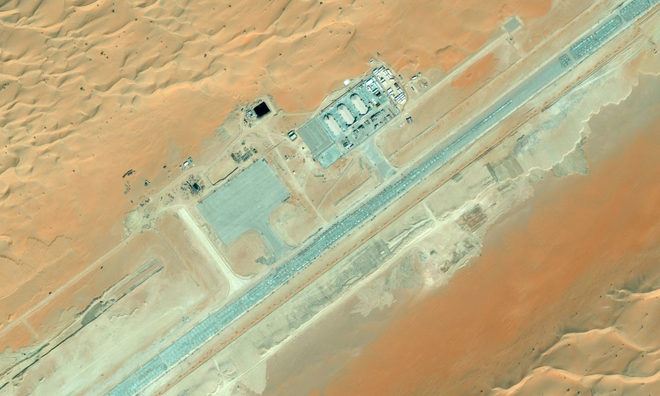
US drone based in Saudia Arabia revealed?

003Wired’s Danger Room blog has published pictures of what may be the hitherto secret CIA drone base in Saudi Arabia, revealed as part the confirmation hearings for John Brenner as proposed Director of the CIA…

How online companies can protect privacy and free speech

QR_logoThere have been a lot of stories about online services breaching privacy, losing user’s data, being hacked, being to willing to give into state requests for information and much more. But not so much on how companies might provide a positive service that works, whilst respecting privacy, free speech and other fundamental rights. But now ACLU has issued a helpful guide. Clearly, it’s designed for business rather than being a critique of businesses and their practices, and as such is hardly a manual for revolution, but it will be interesting to see who takes notice… and who doesn’t.

Obama’s drone wars in question

So much has been happening over the US drone warfare program over the last few weeks that it’s hard to keep up.

First, the United Nations Special Rapporteur for Human Rights and Counter-Terrorism, instigated an inquiry into the targeted killing programs operated by the USA, largely using drones, and focusing on the issue of civilian casualties. The rapporteur, Ben Emmerson, made it clear that the inquiry would pull no punches and might result in war crimes charges against the US, should evidence be discovered of such crimes.

Second, NBC television in the USA revealed a leaked Justice Department document laying out the legal justification for the targeted assassination of US citizens using drones. The full memo is also available from this link and assembles a tortuous argument about how US citizens can be killed by their own government from above if there an “informed, high-level” official decides that the person has “recently” been involved in undefined “activities” threatening a violent attack against the US and “there is  no evidence suggesting that he has renounced or abandoned such activities.”

And now, the Washington Post is reporting that the nomination of President Obama’s counter-terrorism guru, John Brennan, to head the CIA, has led to all sorts of revelations and difficult questions for Brennan to answer about the CIA’s targeted assassination program, including the acknowledgement of a secret drone base, at a still undisclosed location, in Saudi Arabia.

A while ago it looked like Obama’s drone strategy was unassailable despite increasing public knowledge via the Bureau of Investigative Journalism and criticisms from groups like the International Committee for Robot Arms Control. Now, this is going mainstream and it’s not looking so good for what former CIA Director, Leon Panetta, called the ‘only game in town’.