Facebook Places: opt-out now or everyone knows where you are?

Facebook Places… what to say? Most of the criticism writes itself because we have been here before with just about every new ‘feature’ that Facebook introduces, and they seem to have learned absolutely nothing from any of the previous criticisms of the way in which they introduce their new apps and the control users have over them. Basically, Facebook Places is just like Google Latitude, but:

1. instead of having to opt-in to it, you are automatically included unless you opt out; and (here’s the really creepy part),
2. instead of just you being able to tell your ‘friends’ where you are, unless you do turn it off, anyone who is your friend can tell anyone else (regardless of their relationship to you) where you are, automatically.

Luckily we know how to turn it off, thanks to Bill Cammack (via Boingboing).

When, if ever, will Facebook realise than ‘opt-out’ is an entirely unethical way of dealing with users? It lacks the key element of active consent. You cannot be assumed to want to give up your privacy because you fail to turn off whatever new app that Facebook has suddenly decided to introduce without your prior knowledge. Facebook is basically a giant scam for collecting as much networked personal data as it can, which eventually it will, whatever it says now, work out how to ‘add value’ to (i.e.: exploit or sell), whether its users like it or not. And surely this is now the ideal time for an open source, genuinely consensual social networking system that isn’t beholden to some group of immature, ethically-challenged rich kids like Zuckerberg et al.?

Top Secret America

Top Secret America is a really excellent project from The Washington Post with some excellent articles and classy and educative graphics. It traces the huge current US security-intelligence complex, and is partituclarly interesting for noting the massive private sector involvement. This isn’t actually entirely new – private technology companies have been intimately involved in both the manufacture and the servicing and operation of intelligence for a long time – look at the example of RCA and the early history of the National Security Association, for example. However, this blurring of the boundary between state and private sector now goes much further into the operations of intelligence. The Post alleges that “out of 854,000 people with top-secret clearances, 265,000 are contractors.” That’s almost a third. And the database of companies involved is enormous – nearly 2000. The searchable database is also going to be very helpful in our current work at the Surveillance Studies Centre on the involvment of private companies in Canadian border control!

PS: I should be back up and posting regularly now. I’ve had one of my occasional anti-blogging periods!

Further details on the new UK government’s Civil Liberties agenda

The UK full coalition agreement between the Conservatives and Liberal Democrat parties has just been published. It includes a section on civil liberties which is much more than we could have hoped for and which makes no mention of rolling back the Human Rights Act or the more ludicrous fringe Conservative demands… In full it is as follows:

“The parties agree to implement a full programme of measures to reverse the substantial erosion of civil liberties under the Labour government and roll back state intrusion.

This will include:

• A freedom or great repeal bill;

• The scrapping of the ID card scheme, the national identity register, the next generation of biometric passports and the Contact Point database;

• Outlawing the fingerprinting of children at school without parental permission;

• The extension of the scope of the Freedom of Information Act to provide greater transparency;

• Adopting the protections of the Scottish model for the DNA database;

• The protection of historic freedoms through the defence of trial by jury;

• The restoration of rights to non-violent protest;

• The review of libel laws to protect freedom of speech;

• Safeguards against the misuse of anti-terrorism legislation;

• Further regulation of CCTV;

• Ending of storage of internet and email records without good reason;

• A new mechanism to prevent the proliferation of unnecessary new criminal offences.”

All of these points are excellent. They lack detail of course, and the devil is always in the detail, and I would have liked to have seen a little more on what would be included in the ‘great repeal’ given that later it only talks about ‘safeguards’ against the abuse of anti-terrorism laws, but really this is as good as anyone could have hoped for, even, though they may not admit it, many of the more socially-liberal Labour Party supporters. The reform of libel laws and commitment to transparency is equally as welcome as the rolling back or regulation of surveillance, and this seems to extend into other parts of the agreement for the reform of government and elections. I hope the eventual full programme will also include some rationalisation of the crazy landscape of multiple ‘commissions’ to regulate different aspects of state-citizen information relations, in favour of an expanded and more powerful Information Commissioner’s Office, but we will see. However, this is a great start (and I never, ever, thought I would be saying that about a Conservative government…).

UK ID Card Program scrapped after election (and more)

As both the Conservative Party and the Liberal Democrats in the UK had the scrapping of the National Identity Card card scheme as part of their manifesto, the unpopular program has been suspended immediately by the new coalition government, pending further announcements.

The full statement reads as follows:

“Both Parties that now form the new Government stated in their manifestos that they will cancel Identity Cards and the National Identity Register. We will announce in due course how this will be achieved. Applications can continue to be made for ID cards but we would advise anyone thinking of applying to wait for further announcements.

Until Parliament agrees otherwise, identity cards remain valid and as such can still be used as an identity document and for travel within Europe. We will update you with further information as soon as we have it.”

But although the cards will almost certainly go, despite the statement it is unclear yet what will be the fate of the National Identity Register (NIR), the new central database at the heart of the scheme. Neither party, and the Tories especially, said anything specific in their manifestos about scrapping the database, so we will see what happens here – although the statement issued seems categorical about this too. Although the end of the card scheme reduces opportunities for the ‘papers, please’ style abuse of minorities, it is the database that is of biggest concern to those interested in surveillance and social sorting. I have long favoured a secure central government Information Clearinghouse, which whilst transferring necessary information as needed and consented to between different parts of government, would not in itself hold any data. I suspect however, that some fudge will emerge!

In the meantime, the price of the coalition also was reported to include new legislation regulating video surveillance (CCTV) cameras (only about 20 years too late, but that’s the speed of British politics for you), and the review of many of the new powers in the (Anti-)Terrorism and Civil Contingencies Acts (and perhaps the Regulation of Investigatory Powers Act too – though it hasn’t yet been mentioned specifically). It is very rare that legislation is repealed or rolled back but we may yet see an increase in civil liberties under the new coalition. The one big worry in this are though is the Conservative opposition to the Human Rights Act – however with their Liberal Democrat partners being committed to the HRA, I can’t see any moves to repeal the act in this Parliament.

I am cautiously optimistic…

No-one helps stabbed man

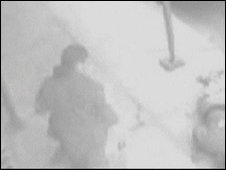
Cameras 'saw', people 'saw', no-one helped

The BBC is reporting that passers-by in New York failed to help a stabbed man who was bleeding to death on the sidewalk. Hugo Alfredo Tale-Yax had reportedly tried to intervene to stop another man from attacking a woman and as knifed. That’s bad enough, but of course what the BBC don’t note is that although they state that this was all captured on CCTV, no-one stopped either the incident or saved Hugo Alfredo Tale-Yax as a result of the cameras seeing the whole thing, either. There’s also a strong argument to be made that the presence of cameras may also be a contributory factor in explaining the reasons why passers-by don’t help: surveillance ‘deresponsibilizes’ them – they assume that someone behind the camera will intervene so they don’t have to. Of course, the predominant factor is more likely to be the simple, cruel prejudice that the man was clearly homeless and therefore not even of any interest to them. Contrary to what Bentham believed, being watched constantly clearly doesn’t make better people…

Google vs. Privacy Commissioners Round 1

Google and a group of Information and Privacy Commissioners have been having an interesting set-to over the last couple of days. First, a group including Canada’s Privacy Commissioner and the UK’s Information Commissioner sent a letter to Google expressing concern about their inadequate privacy policies, especially with regard to new developments like Buzz, Google’s new answer to Facebook.

Then Google put up a post on its blog, unveiling a new tool with maps out various governments requests for censorship of Google’s internet services. Interestingly, it framed this by reference to Article 19 of the Universal Declaration on Human Rights.

So now we have two sets of bodies referring to different ‘human rights’ as the basis for their politics. Of course they are not incompatible. Google is right to highlight state intervention in consensual information-sharing as a threat, but equally the Privacy Commissioners are right to pull up Google for lax privacy-protection practices. The problem with Google is that it thinks it is at the leading edge of a revolution in openness and transparency (which not coincidentally will lead to most people storing their information in Google’s ‘cloud’), and the problem with the Privacy Commissioners is that they are not yet adapting fast-enough to the multiple and changing configurations of personal privacy and openness that are now emerging as they have to work with quite outdated data-protection laws.

This won’t be the end, but let’s hope it doesn’t get messy…

Chicago’s Cameras Continue to Increase

The Associated Press is reporting on Chicago’s ongoing efforts to integrate it’s public and private camera systems together into one seamless visual surveillance system of perhaps  10,000 networked cameras, including those in schools. This is a long way from the very limited ‘closed-circuit’ of the original video surveillance systems. There really isn’t another city that is doing anything close to this. London, for all it’s large numbers of cameras, is a patchwork of disconnected, often archaic, systems bound by multiple domains of regulation. Chicago’s network, in contrast, is being developed, through large Homeland Security and Federal stimulus grants, with connection in mind and regulation in the post-9/11 era is only to the benefit of the state’s efforts. The particularly interesting thing is the way the boundary of acceptability is continually pushed out by this process of connection and integration. For example, the AP story confirms that Chicago Police Superintendent, Jody Weis, has been quoted on several occasions he would like to add secret cameras “as small as matchboxes” to the network. And there are few critical voices.

UofT Researchers uncover Chinese Internet espionage system

The Globe and Mail is reporting today that researchers based at the University of Toronto’s Munk Centre for International Studies, along with two private internet security consultancies, SecDev and the Shadowserver Foundation, have uncovered a worldwide network of automated intrusion programs (or botnet) based in China. The report called Shadows in the Cloud describes how over 1300 infected computers containing information related to all kinds of material from the Dalai Lama, the Indian government and US security were linked back to Chinese sources. The authors include Greg Walton who wrote the excellent early report on China’s ‘Golden Shield’ Internet surveillance and censorship system a few years ago. It can’t be said for certain that this was a Chinese state operation: as with the attacks on Estonia from Russian sources back in 2007, suspicions just as much centre on ‘patriotic hackers’, who are just doing this out of a sense of outrage at opposition to their country’s leadership. And no doubt, this is far from the only nationally-oriented botnet system.

SHADOWS IN THE CLOUD: Investigating Cyber Espionage 2.0

Surveillance and Ethical Investment

An interesting case today. Associated Press is reporting that Sweden’s major pension fund has decided to drop the company, Elbit Systems, from its investment portfolio on the grounds that it provides surveillance equipment to the separation barrier that cuts through the Occupied Territories of the West Bank. The find has an ethical policy and as the European Union considers the barrier to be in violation of international law, it seems they had little moral choice but to drop it. Interestingly the Israeli government has complained on behalf of this private company, which of course just serves to highlight still further the close links between the state and security firms and arms manufacturers in Israel. I am not sure that it’s particularly ethical for any national pension fund to be propping up another nation’s security policies, let alone a policy that is so controversial not to say overtly illegal. But beyond this Elbit is a major arms company that would, I thought, in any case have been off-limits for a fund with ‘ethics’ – see: Neve Gordon’s report on The Political Economy of Israel’s Homeland Security produced for The New Transparency collaborative research initiative here at the Surveillance Studies Centre at Queen’s.

Federal judge rules against NSA

A US Federal Court judge has ruled that the National Security Agency’s secret domestic wiretapping program of internal terrorist suspects, was illegal according to the New York Times. The activity violated the 1978 Foreign Intelligence Surveillance Act (FISA) which was put into place after the various inquiries into the activities of the FBI and NSA in the late 1960s and early 1970s. As I’ve said before, that’s hardly a surprise and don’t think this has got a whole lot to do with George W. Bush in particular. Intelligence services might claim to operate under laws but in reality their priorities are not bound by them.But there’s a kind of cycle of collective amnesia that goes on with these inquiries and rulings. This time, the NSA was basically doing almost exactly the same thing as in the earlier period. Some minor superficial changes will occur. People will forget about it. The NSA will carry on. Then in 20 years time, there will be something else that will reveal again the same kinds of activities. Cue collective shock again. And so on. It would take a lot more continual public oversight and openness for them to be held properly to account, and if they were, they’d be very different entities. But that’s not to say that they shouldn’t be held to account: the fact that most democratic nations have what amounts to a secret state within the state that may have very different priorities than the official government or the people should be profoundly worrying. Yet it seems to be such an enormous breach of the democratic ideal that it goes largely unnoticed.