
There’s a very interesting video-report from Sebastian Meyer here on the US military use of biometrics in Afghanistan to try to identify Taliban in what he calls ‘frontline anthropology’. Wired revealed last month that the NATO / US army operation is planned to be expanded into a nationwide biometric ID card scheme by next May. Wired says that there are only two biometric systems operating in Afghanistan but they don’t seem to have noticed that the UNHCR mission in the country is also using biometrics to identify returnees who have already claimed the financial assistance on offer and are making fraudulent claims, in conjunction with the Afghan government. Are these systems all connected? More investigation is needed…
Article 12: Waking Up in a Surveillance Society
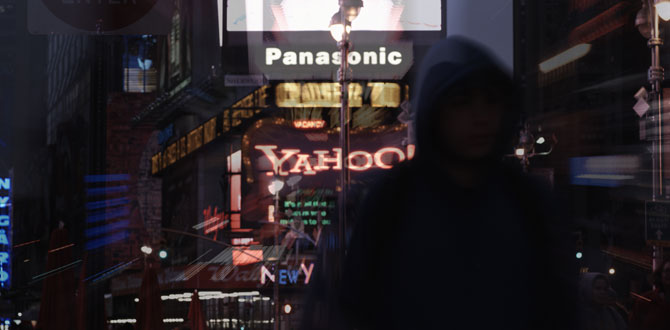
I’m in a film! Article 12: Waking Up in a Surveillance Society is a really essential new documentary made by Junco Films, now doing the rounds of international film festivals. According to the Leeds Film Festival, where it will be shown next
 “Article 12 presents an urgent and incisive deconstruction of the current state of privacy, the rights and desires of individuals and governments, and the increasing use of surveillance. The film adopts the twelfth article of the Universal Declaration of Human Rights to chart privacy issues worldwide, arguing that without this right no other human right can truly be exercised. It assembles leading academics and cultural analysts including Noam Chomsky, AC Grayling and Amy Goodman to highlight the devastating potency of surveillance, the dangers of complicity, and the growing movement fighting for this crucial right.”
Showings will be on Fri 12th Nov, 2010 at 20:15 in the Howard Assembly Room and on Tue 16th Nov, 2010 at 17:00 in Leeds Town Hall 2. The Tuesday showing will feature a discussion involving some of the contributors including AC Grayling (not me, although I was asked – it’s a bit too far to go!).
Future showings will include the Geneva International Human Rights Film Festival in March 2011 and hopefully Hotdocs in Toronto. If anyone else is interested in showing this film as part of an event, I’d be happy to contact the makers…
New UK government to go ahead with old government plan on data retention
One of the many promises made by the new Conservative-Liberal Democrat coalition government was that it would “end the storage of internet and e-mail records without good reason.” The obvious flaw in this promise is that all the protection provided was only good so long as the government was unable to invent a ‘good reason.’
Now it appears according to The Guardian newspaper, that such a ‘good reason’ has been defined in the Strategic Defence and Security Review, to keep all web site visits, e-mail and phone calls made in the UK. And it is an old reason: basically, everything should be kept in case the police or intelligence services might find it useful in the prevention of a ‘terror-related crime’. Note: not actually terrorism, but terror-related, which is rather more vague and not so clearly defined in law, even given that ‘terrorism’ is already very broadly defined in the relevant laws.
This is pretty much exactly what the last Labour government were planning to do anyway with the proposed Communications Bill. Oh, and dont’t forget that the cost of this has been estimated at around 2Bn GBP ($3.5Bn) in a country that just announced ‘unavoidable’ welfare cuts of 7Bn GBP… that’s the reality of the ‘age of austerity’ for you’. It shows what David Gill argued in his book Policing Politics (1994) that the intelligence service constitute a ‘secret state’ that persists beyond the superficial front of the government of the day.
Real-time Video Erasure?

There are some reports circulating around the web that researchers from the Technical University of Ilmenau, Germany, have invented an algorithm for unobtrusively erasing objects from live digital surveillance camera footage. Now the possibility of post-hoc manipulation of video has long been known, but the idea that live images could be altered is something new. A device that could trigger such an erasure drove the plot of the superb surveillance technothriller, Whole Wide World, written by Scottish author, Paul McAuley back in 2001, but almost ten years later, reality appears to have caught up with a piece of near-future SF that already felt perilously close.
According to Ray Kurzweil’s blog, the software is being demonstrated as I write at the Symposium on Mixed and Augmented Reality (ISMAR) in Seoul, although the researchers appear to refer to their invention as ‘diminished reality’. There are links to video on the invention from both there and the university press release (above). The software appears to work by recognised shapes and removing them from the video as the feed comes in and before it reaches any display.
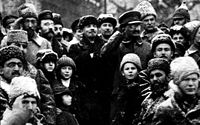
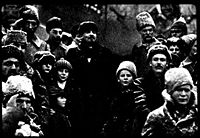
However, neither Kurzweil nor any of the other commenters on this story (e.g. BoingBoing) seem to get the potential seriousness of this development, both for resistance to surveillance and for the credibility of video surveillance: it could be a fantastic tool for privacy, or an equally fantastic tool for social and political control. It’s one thing to be able to manipulate the past (to do what Stalin did to his oppenents and airbrush them out of history -see David King’s excellent book, The Commissar Vanishes), it’s yet another thing to be unsure whether what one is watching on TV or on YouTube is ‘real’ or ‘fake’ or some combination, but it is another thing entirely to be unsure whether the supposedly live images from a surveillance camera are actually real or not…
Audio Surveillance Zooms In
Audio surveillance, especially in public places, seems to be one of those lines that we do not want to be crossed. Yet, it seems it will not be long before it gets crossed anyway.
New Scientist this week had an interesting snippet of news about the development of something called ‘AudioScope’ by Morgan Kjølerbakken and Vibeke Jahr, who were at the University of Oslo, but have now set up in business to sell this system, mainly it seems to sports stadia and conference facilities. The technology itself relies on a combination of cameras and microphones in an array, both of which can effectively zoom in on sounds, and “with 300 microphones can make a single conversation audible even in a stadium full of sports fans”.
I just wonder it is before we see an ‘experimental’ version of this installed in some public square, and which will be the lucky city… place your bets now!
Facebook owns patent on location-based social networking
Via Boingboing: Facebook has been awarded a ‘broad’ US patent on location-based social networking services. This seems curious when Foursquare, Gowalla, Google Latitude and many others were doing this long before Facebook, but it seems that Facebook applied for this patent back in 2007, so even though they weren’t doing it before others, in the way the patent system works, they can claim they were thinking about doing it before others.
Facebook seems to be moving strongly to consolidate its hold on social networking and it clearly sees its location-based service, Places, and such like as being the guarantee of its future success. In short, it seems intent on creating a ‘brandscape’ which recombines the virtual and the material producing a seamless data-stream on the lives of its users for it to exploit.
Rio de Janeiro to continue in hardline direction
The Brazilian presidential elections may be only at the half-way stage – with Lula’s hand-picked successor, Dilma Rousseff, not quite securing the 50% she needed to avoid a run-off, largely due to a late surge by the radical Green Party candidate, Maria Silva – but the results of the elections for Rio de Janeiro’s Governor were much clearer. The incumbent, Sergio Cabral, was easily re-elected with just over 66% of the vote. Second was, once again, a Green Party candidate, Fernando Gabeira, with almost 21%, followed by a slew of minor candidates.
Cabral was expected to win as he is supported by the growing middle classes who have done well due to the economic bouyancy of Rio in the last few years. However, it is by no means clear that this result will do much good for the poorest in society. Cabral, along with the Mayor Eduardo Paes, favours a hardline approach to the favelas and their inhabitants, favouring a law-enforcement and crime-control approach to a social one – what Paes calls the choque de ordem. In this sense he is out of step with the national government, however for the middle class of Rio reading their copies of O Globo behind the doors of their secured apartments, the favelas represent not an unfair city which is still unable to close the massive gap between the rich, growing ever richer, and the poor, but a spectre of criminal disorder and a source of fear
The upcoming mega-events, particularly the FIFA World Cup, 2014, and the Olympics in 2016, have only strengthened the feeling amongst the privileged that Rio must simply crack down on violence rather than dealing with the underlying problems (poverty and the international drugs and small arms trades) that fuel the violence. What this means in practice is ‘out of sight, out of mind’: walling off favelas, installing surveillance cameras, stopping the illegal street vending that gives many in the favelas some small hope of a livelihood, and demolishing high-profile new construction.
*For more on my work in Brazil and in Rio de Janeiro, see the entries from January to April last year…
Drone Britain
Despite the supposed anti-surveillance tendencies of the new coalition government in Britain, one kind of surveillance would seem to be expanding, as it is almost everywhere in the world: that of surveillance Unmanned Aerial Vehicles (UAVs), Micro-unmanned Aerial Vehicles (MAVs) or flying drone cameras. There are so many previous stories on this blog about drones you’d be better off searching than me providing links here!
The Guardian reported on Friday that a growing number of different agencies are either ordering drones or have plans to do so, including he Serious Organised Crime Agency (SOCA), four police forces (Merseyside, Essex, Staffordshire and the British Transport Police), the Environment Agency, and even some Fire Services (West Midlands and South Wales). This follows the story in January that there was what seemed to be an evolving secret national strategy for drones.
So far, their use has been limited not by ethical concerns but by the requirements of the Civil Aviation Authority (CAA) which insists that they must be “licensed when flown within 50 metres of a person, property or structure.” This remains its position, but it will be interesting to see how stringent are the licensing requirements as drones increase in number and whether the expansion in UAV use is in any way affected by the government’s stated policy aim to bring CCTV under stricter regulation.
(thanks to Charles Raab for this)
The Tools of Personal Surveillance
There’s always something interesting on BoingBoing, and it was via that site that I came across this story in Salon magazine about one woman’s decision to track down the man who had robbed her. Now, most of the commentary about this has focussed on her commitment and determination and the usual stuff about how the police let criminals prospers etc. However, what interested me was the techniques and technologies that she was able to employ to find this guy: basically not only did she use a whole lot of techniques and technologies that not so long ago would have been the preserve of the intelligence services, police or private investigators, but also the thief in question was also an inveterate social networker and was about as careless with his online personae as most of us are. Of course, what it also shows is that it takes an awful lot of effort to do this, and this kind of obsessive hunt takes over lives, so it would not be a practical option: individual surveillance is not a substitute for the power of the state. It’s a fascinating read…
Dawn of the Surveillance Dead
My second zombie story today may be (at least for anti-surveillance advocates) a more positive one. Every since the global credit crunch hit, I have been wondering about its effects on the expansion of the surveillance industry (see here, here, here and here). On the one hand, it could be hit as hard as any other sector, but on the other, security tends to be the one sector that thrives in recessions as crime, or at least fear of crime, rises in these periods. I saw on the UK industry site, Surveillance Park, a story about a report by Plimsoll Analysis, conducted over the summer this year, saying that of 960 companies surveyed in the surveillance field in the UK, 143 have been left in a ‘zombie’ state by the recession. Essentially these companies are the living dead: they look like active companies, they have an offficial existence, but in reality there is nothing alive inside – they stumble on merely to pay off existing debts.
However, whilst this may seem like a significant blow to the ongoing expansion of the surveillance industry – that’s 21% of the companies in the sector in trouble – the industry analysts argue that in fact this provides a further opportunity for market consolidation. They say that 79 of these companies are in fact ripe for take-over.
This is part of a trend we have also been witnessing in the research we are doing currently for the Canadian Federal Privacy Commissioner on the involvement of private companies in border control – see e.g. this story. In my view, what is emerging from the recession is a global surveillance and security industry that will be composed of bigger, more diversified companies – a ‘rationalization’ of the proliferation of small start-ups and spin-offs that started in the 1990s but really took off after the US (and international) response to the 9/11 attacks, which made it clear that there would be long-term state investment in and purchasing of high-tech surveillance and security ‘solutions’. The thing is that for those interested in challenging the onward march of surveillance, this may not be such good news after all – bigger companies with their own institutional structures and cultures, and lucrative guaranteed state contracts, are likely to be far less amenable to influence from the outside.
 ubisurv