
Larry Elliot, the Guardian’s main economics reporter, has written a great piece today which pretty much sums up what I and other surveillance studies scholars, as well as people writers like Hardt and Negri, Zygmunt Bauman and Naomi Klein, have been saying about the direction of global policy, but particularly in the UK, in recent years. In short, it argues that the current government has completely abandoned the main principles of a liberal democracy, which were to control the market for the common good, and instead has reversed the equation, and now, largely through surveillance, seeks to control people for the benefit of the market. Although this is hardly a new argument, Elliot’s piece is particularly succinct and clear. Worth a read…
Tracking disease spread on the Internet
Internet disease tracking using interactive maps or mash-ups seems to be be one of the more constructive uses of the surveillance potential that comes with the combination of easy-to-use digital mapping and online communications. Both Computer World and The Guardian tech blog reported a few days back how Google, following on from its use to track previous flu epidemics, is experimenting with tracking swine flue cases in Mexico.

However other web-crawler-based systems also exist for tracking the spread of disease (or indeed potentially almost anything) as The Guardian reported on Wednesday. Leading the way is HealthMap, which comes complete with Twitter feeds and suchlike.

As the latter report makes it clear however, this is not all just good news; there are many problems with the use of web-crawlers in providing ‘reliable’ data not least because the signal to noise ratio on the Internet is so high. The other problem is that although the might appear current or even ‘predictive’ by virtue of their speed and interactivity, they are of course actually always already in the past, as they are compilations of reports many of which may already be dated before they are uploaded to the ‘net. Better real-time reporting from individuals may be possible with mobile reports, but these could lack the filter of expert medical knowledge and may lead to the further degredation in the reliability of the data. Can you have both more reliability and speed / predictability with systems like this? That’s the big question…
(Thanks to Seda Gurses for pointing out the CW article to me!)
High Court rules innocent man’s DNA must be removed from database
As if the govenrment wasn’t in enough of a bind over the police National DNA databases, in a landmark ruling yesterday, the High Court of England and Wales has decided that the DNA of the innocent should not be on the database in the current legal circumstances. The man from County Durham was maliciously accused of assaulting a pupil at the school at which he was a teacher, and despite volunteering for questioning was arrested, fingerprinted and swabbed. These records were of course kept despite his innocence.
This story reminds us that being on the NDNAD is not an isolated thing, but part of a complex network of records that do imply suspicion (like it or not) – even Sir Alec Jeffreys, who pioneered DNA fingerprinting, thinks so… in the case of this teacher, he would have been wrongly suspected every time he applied for jobs working with children.
This is another indication that the government’s policy on the DNA database and police tactics to populate it, have been not just morally questionable but illegal, and confirms that the response issued this week was inadequate and devious. It will be interesting to see how they might now immediately have to modify their plans to conform to this new ruling (which, being a British court, they can hardly blame on ‘un-British’ European law)…
UK National DNA Database – what will change?
The government’s official response to the damning ruling by the European Court over the retention of DNA and fingerprint samples and data is a farce, which seems utterly contemptuous of the ruling and reasoning of the court, shows no sign of understanding the significance of Article 8 or the British common law principle of innocent until proven guilty.
One thing that has struck me recently in the UK has been the sudden increase in the level of defensiveness by New Labour over the surveillance apparatus it has constructed over the last 12 years. Report after report has damned their slapdash attitude to human rights and civil liberties – we expect the government’s official response to the Lords Constitution Committee report next week – and there have been attacks from various political ‘big beasts’ including David Blunkett, former MI5 Chief Stella Rimington, and most recently Stephen Byers and even current cabinet ministers reportedly asked for the ID card scheme to be scrapped.
As a result, there has been a splurge of sudden backtracks, retreats and promises of change and consultation on future plans but there have also been rather devious attempts to avoid taking real action to remedy already existing wrongs. In the first category, we have seen the abandonment of Clause 152 of the Coroners and Justice Bill, where a an blanket permission for government data-sharing had been hidden, and there have been suggestions that the proposed new super-database of communications traffic data might not be constructed after all – though largely, it seems, on grounds of cost not principle.
However, in the second category, today we got the government’s official responseto the damning ruling by the European Court over the retention of DNA and fingerprint samples and data by the UK police. It is, to put it mildly, a farce, which seems utterly contemptuous of the ruling and reasoning of the court, and shows no sign of understanding the significance of Article 8 for individual liberty. Mind you, it also shows little sign of comprehending the British common law principle of innocent until proven guilty.
The government proposals are to retain the DNA samples and profiles, and fingerprints (these are just as important and not so often mentioned in the news reports) of all those convicted of a crime. Of the innocent, the National DNA Database (NDNAD) has around 350,000+ people who are certainly in such a position, however the police apparently need two years to go through the Police National Computer to check the other 500,000+ DNA profiles of those not convicted of any crime, as they can’t be sure whether existing profiles match to those who have committed offences (so much for joined-up government…). Then those people, who are, let’s not forget, entirely innocent in law will be sorted into two categories – those arrested but not convicted for serious and violent offences, and those arrested and not convicted of minor offences.
Will the latter have their profiles immediately removed, as we might reasonably expect?
Err, no.
In fact, these innocent people will have their DNA profiles and fingerprints retained for 6 years – more than the number of years (5) that Scotland retains the DNA of those suspected of serious and violent offences. Those in the latter category will have their DNA profiles and fingerprints retained for 12 years. In addition the profiles of children will be retained until they are 18, and then removed only if they have been arrested (again, not convicted) for one minor offence.
Is this an acceptable response? Quite clearly not. It is against the spirit of the ruling by the European Court, even if it might be interpreted as complying with the exact wording issued. More to the point, it is an attempt to get around the difficult issues, not deal with them. It is devious, based on the pre-emptive logic of risk-surveillance principles, and goes against the long-standing principles of British Common Law as well as more recent developments in Human Rights law, and is not the response of a government that has any trust in the people who elected them. It allows the police to continue to populate the NDNAD by stealth. And they certainly are using whatever methods they can to do so – for example, one key indicator is the rise in the number of stop and searches under Section 44 of the Terrorism Act, which in London, it was also reported today, rose from 72,000 in 2007 to 170,000 in 2008, a rise of 236%, however it rose by 325% amongst the black population. There seems to be no mention of the role that discriminatory stop and search policing plays in populating the NDNAD in recent government statements, however it is quite clear that stop and search policing is discriminatory, and we know too that young black men are disproportionately represented in the NDNAD.
In this climate, with a government obsessed by pre-emptive security to compensate for its growing loss of power and trust, and a police service that appears, after the G20, increasingly out-of-control, what is the chance of developing a fair, accountable, just and transparent system of personal data retention in law enforcement in the UK? At the moment, it could appear, the answer is ‘very small’.
Swine Flu and Surveillance
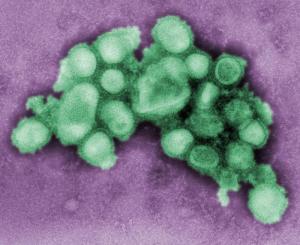
Without a doubt, there has been a massive jump in the appearance of surveillance in the news worldwide this week. However this may have escaped the notice of many people who are interested in ‘surveillance’ as social scientists would conventionally understand it. The surveillance in question has been that around the current global spread of the H1N1 virus variant, and the Swine Flu disease which it causes. Perhaps the main emerging question as the H1N1 spreads around the world, aided by our increasingly interconnected global transport network and the mobility for multiple reasons, of both people and animals, is whether these surveillance systems have been adequate. This question is addressed by the New York Times today, for example.
The strange thing for me, as I once again discovered this week, is that many surveillance studies people, who are used to looking at everything from CCTV to Internet monitoring, don’t think of this, or aren’t used to thinking of this as surveillance. The argument was made to me this week that one shouldn’t be fooled by the coincidence of words, that medical / epidemiological surveillance is something quite different from the ‘systematic, focused attention to personal data for the purposes of influencing behaviour’ (or whatever definition happens to be used). Partly this is because these definitions are inadequate in the first place. Surveillance – as Dr Andrew Donaldson of the Centre for Rural Economy at Newcastle, who specialises in looking at the geography of the nonhuman, and I wrote back in 2004 in an article called ‘Surveilling Strange Materialities’ in Society & Space – is primarily a mode of social ordering. This involves relationships of humans and things. ‘Things’ are always involved: whether they are technological things that originate within society, or natural things that originate without but enter or are are brought in to a social relationship. When these things are regarded as threatening, as with viruses or other kinds of pathogens, they are subjected to the kinds of activities that would be quite familiar to surveillance studies academics: there is monitoring, collection of data, analysis and matching, and action that results in real ordering effects, that takes through global, regional and national networks of scientists and research centres. This is surveillance and the ways in which medical science and social science understands it are not separate concepts that happen to share the same word.
The current regime is the result of the experience of previous outbreaks, and there is now increasing connection between the systems set up by the OIE, or the World Animal Health Organisation as it is now increasingly called, and the World Health Organisation with which most of us are more familiar. A lot of this simply involves keeping a close watch on the patterns of reported diseases and illness and comparing these with the normal levels of disease. In the case of swine flu, unusual patterns were reported in Mexico, but by the time this had been confirmed as something of real concern, people from the affected areas were already moving around the world, coming into contact with other people and spreading the virus on to new hosts. This is hardly the fault of the surveillance systems in operation. Disease surveillance is a far more complex operation than monitoring a city-centre with a CCTV camera. It relies first of all on disease outbreaks being recognised as disease in the first place – not always easy when many originate in places with so many species of human misery and suffering. Then, the disease much be identified and some assessment must be made of the risks it poses. One interesting thing about viruses is that the viruses that spread most rapidly tend to be those that do not prove fatal to large numbers of people (or at least not quickly). The reason for this is clear. Viruses are like little packets of swiftly mutating genes and evolutionary ‘strategies’ come and go very quickly. But they have very limited ability to move and reproduce without a medium of some kind, in other words a host. If in their reproduction they kill the host very quickly, their subsequent movement and further reproduction could be very limited. This is one of the reasons why fearsome diseases like Ebola have thus far stayed fairly localised. So, from a human or animal perspective, rapidly-spreading viruses may not be of much extra concern (as with the ordinary waves of flu that pass through northern countries in winter). However, because viruses evolve by mutation and swapping genes between themselves and other similar viruses, there is always the possibility of a new strain of any virus that is both highly virulent and ultimately fatal.
The question is then, how much to panic when a new or unusual outbreak is spotted. However because we are talking both about the chances of this being spotted, reported, the reports analysed by regional centres, and then probably confirmed through more systematic sampling, this time-frame almost inevitably cannot be made to coincide with the rapid and global mobility of human and animal populations – and with animals I am not just talking about the wild bird movements that so concern disease specialists in the case of H5N1 (Bird Flu), but the global trade in animals for all sorts of purposes from food to pets.
The other interesting issue is the indirectness of the surveillance involved. We’re not generally tracking the virus itself (except at the laboratory level), but the carriers, the animals or humans infected with the virus. It’s the only thing we can do on the whole. You can’t monitor viruses in the world. Humans and large animals are much easier, and since it is the effects of these viruses on these organisms that we are concerned about in the case of H1N1, much more relevant. The next point then is the altering of behaviour. The control of the spread of large outbreaks as they threaten to turn into pandemics, must involve slowing down or stopping the movement of people and animals that facilitates the spread of diseases. This means the kind of authoritarian controls, and indeed disruptions to flows of people and goods, that we would regard as utterly unacceptable in most other situations because we accept the expert judgment of the seriousness of the risks…
I’ll write more about this later.
The Expansion of Surveillance Studies
I’ve been away in Scotland at a special seminar organised by Mike Nellis, Kirstie Ball and Richard Jones, hence the lack of posts this week. It has been based in the Institute of Advanced Studies at Strathclyde, a place set up to encourage ‘unconstrained thinking’, but to aid this still further, two of the days were on the island of Jura where wireless is still something you listen to. The other people involved were Michael Nagenbourg from Germany, who is also involved with an ongoing project on human implantation with myself and Kirstie, Anders Albrechtslund from Denmark, Mark Renzema from the USA, Francisco Klauser from Switzerland (via Durham!), Kevin Haggerty from Canada and David Wills from England, whose PhD I examined not so long ago. Charles Raab also joined us for the days in Glasgow, although he didn’t come to Jura, and we had a talk from Jim Frazer, a DNA expert.
We were on Jura because it was the place where George Orwell wrote Nineteen Eighty-Four during 1946 and 1947, whilst he was also dying of tuberculosis. We couldn’t visit his cottage (it is a long way beyond the end of the main road), but we spent two days in the company of Ken McLeod, one of my favourite contemporary science fiction writers, whose most recent books, The Execution Channel and The Night Sessions feature surveillance as a key element of both world and plot. The aim seems to have been to rethink everything we thought we knew about surveillance through both traditional seminar session but also through the consideration of scenarios and of course, sf writing, films and even computer games.
And I have to say it has worked. I am not quite sure what conclusions I have come to but I have been shaken out of a kind of complacency that affects us all about what we just ‘do’ and what we take for granted in order to enable this. For me, this has been particularly important because my current project is specifically designed to rethink and shake up ideas around ‘surveillance’ and ‘surveillance society’, but perhaps I have not been radical enough. The tendency of surveillance studies to make ‘imperial moves’ as it grows and inevitably institutionalises to a certain extent (however open access and open source and friendly we try to keep it), is something about which I should be more concerned. In some ways, I have been one of the surveillance studies academics most keen to expand what surveillance studies is and not to limit it to being a subset of sociology. Indeed I criticised Sean Hier and Josh Greenberg’s Surveillance Studies Reader on these grounds in the relaunch issue of Surveillance & Society earlier this year, however I think I was probably somewhat unfair to do so, and what seemed obvious to me about the field may not actually be as unarguable as I had proposed. Of course not everything is surveillance as seems to be the unfortunate starting point of some of the less good stuff in the field, but surveillance studies may not even, as David Lyon has claimed, be able to add something to everything and further, for the sake of academic social relations, maybe it should not…
Surveillance and Resistance
A great new issue of Surveillance & Society is out now on surveillance and resistance, guest edited by Laura Huey and Luis A. Fernandez.
Featuring great new articles…
- David Bell – Surveillance is Sexy
- Aaron K. Martin, Rosamunde E. van Brakel and Daniel J. Bernhard – Understanding resistance to digital surveillance: Towards a multi-disciplinary, multi-actor framework
- Lucas D. Introna and Amy Gibbons Networks and Resistance: Investigating online advocacy networks as a modality for resisting state surveillance
- Helen Wells and David Wills Individualism and Identity Resistance to Speed Cameras in the UK
- Andrés Sanchez – Facebook Feeding Frenzy: Resistance-through-Distance and Resistance-through-Persistence in the Societied Network
With a special Review section on the UK House of Lords Constitution Committee Report, Surveillance, Citizens and the State, with responses by Oscar H. Gandy Jr. , N. Katherine Hayles, Katja Franko Aas and Mark Andrejevic
Opinion from Gary T Marx , and a poem from Rez Noir
…and lots of book reviews!
Behind the cameras
While the vast majority of those monitoring CCTV screens are probably decent people who stick within the legal and ethical guidelines (such as they are), it is worth remembering that pervasive surveillance offers unprecedented opportunities to perverts, stalkers and sex offenders. This is not just secret cameras set up by weirdo voyeurs, it is the people who work with CCTV. This was noted by Clive Norris and collaborators back in the 1990s in Britain in their work on control rooms when they reported on operators making private tapes of women they saw in the street. Yesterday, The Daily Telegraph reported on a case in the US, where two FBI agents spied on girls changing for a charity fashion show for the underprivileged. They have been charged with criminal violation of privacy, which I am glad to see is a crime in the US. But, don’t forget that behind the cameras, if there is anyone these days, is a human being and that human being has as many flaws and secret desires as anyone else.
In the recession, are humans too expensive?
One of the things that I have been following over the past few months has been the effect of the recession on security and surveillance. One of the observations I have made is that those investing in security at this time are turning more and more to surveillance in preference to expensive human guards.
The Journal, the regional newspaper of the north-east of England (and my local paper), has a report today which seems to add more weight to this hypothesis, arguing that “the economic downturn, which has had a devastating effect on the construction industry, has led to a growing trend of companies cutting costs by replacing building site security guards with hi-tech CCTV systems”.
However, like the last time I reported on a similar story from Boston in the USA, there is perhaps less to it than meets the eye. The piece is another business section puff-piece for a local company, this time Newcastle-based UK Biometrics, largely a fingerprint ID outfit, on the basis that it is claiming “a 10-fold increase in enquiries for its sideline technology, CCTV cameras which can be accessed via remote devices”. It turns out that the suggested reason for this also comes from the company. This doesn’t make them incorrect, however I tend to treat all local business news stories with a certain degree of scepticism.
There is also a fundamental problem with the reasoning for such decisions, if they are indeed being made, which is one of the big issues with CCTV more generally, which is that cameras, even if they ‘work’ (and what that means is controversial enough), do not provide an equivalent service to a human guard. It is not necessarily a question of better or worse, it is just not the same. CCTV is also nothing if there is no response to the images that are seen. Without operators, analysts and people on the ground to act on the images, there is little point in even thinking that CCTV systems will ‘replace’ what a guard does. If only the machines are watching, there is only the illusion of security; an empty show.
India joins the battle for orbital space

India has launched its first major military surveillance satellite, RISAT-2, a platform for high-resolution Synthetic Aperture Radar (SAR), which puts it up there with the kind of things that the USA were launching over 10 years ago. Of course although, as The Times of India comment shows, being part of the club of orbital space powers is a consideration, the main motivations are most immediately, dealing with the threat of Pakistani Islamic extremists, and in the long term, regional competition with China, which has its own active satellite launch (and satellite-killing) program. One thing which about which the paper is entirely correct is that Indian high tech is more advanced than China’s and this home-grown satellite marks a small but significant shift in global surveillance power towards India. Whether, for a country still struggling with massive poverty and inequality, it is what anyone ‘needs’ or is any more than an expensive strategic symbol is another question.
 ubisurv