Canada Postdoctoral Research Award 2025 Opportunity

I’m looking for an outstanding near complete or complete PhD, to apply for a prestigious Canada Postdoctoral Research Award to work with me in CSS/Lab at the uOttawa. The Award is worth up to $70,000 CAD for 2 years, and you would start in the second half of 2026, if successful.

Candidates would be working on a project of their choice within one of three broad areas:

1. Surveillance, security and post-smart cities – looking at plans for and development of AI-driven private cities and special zones.

2. Hired hackers and private spies – working on the proliferation of private surveillance companies worldwide.

3. Surveillance and the planetary polycrisis – looking at the surveillance implications and issues in global environmental management

Candidates should either already be working in one of these areas and be familiar with the literature.

uOttawa particularly encourages candidates from under-represented and equity-seeking groups.

The successful candidate would be able to be associated with

Please see the details of the program here:

https://sshrc-crsh.canada.ca/en/funding/opportunities/canada-postdoctoral-research-award-program.aspx

The deadline for the full application is 11 September 2025, so I need expressions of interest, including a letter and CV sent to me by the end of July (July 31st 2025), so that I can work with the chosen candidate during August.

to: david.mw [at] uottawa [dot] ca

Harper’s nominee for Privacy Commissioner must be challenged

The current Canadian government has been in a lot of trouble recently over nominations to various federal offices. It’s been accused of cronyism, overly partisan, inappropriate  and even illegal nominations to senior positions. Many have been rejected. It comes as no surprise then to find that Prime Minister, Stephen Harper, has nominated someone who seems almost entirely inappropriate to be the next federal Privacy Commissioner.

The nominee, Daniel Therrien, has spent almost all his career as a government insider. If Therrien was a privacy expert, this wouldn’t necessary be an obstacle even to someone taking a job which is supposedly an arm’s length position, as much a watchdog on government as a government office.

If he was a privacy expert.

But he’s not.

Therrien’s experience comes mainly in corrections (prisons and parole offices) and latterly with immigration and border issues. He’s currently the Assistant Deputy Attorney General, Public Safety, Defence and Immigration Portfolio, at the Department of Justice. It is in this position that he has had some involvement with privacy issues, and in some ways, this involvement makes his nomination even more troubling.

Therrien was one of the leaders of the Canadian negotiating team that dealt with the privacy principles of the Beyond the Border Accord, the agreement that essentially allows the USA to extend its ‘perimeter’ around Canada (the original proposed version of the agreement was refered to as the North American Perimeter agreement).

So what do the principles say? Essentially they are a vague set of reaffirmations of well-understood data protection principles combined with the recognition of domestic laws. They don’t do anything specific or new. They certainly will not guarantee that sensitive personal information is not shared across borders or provide for genuine protection when they are. And it seems clear that while necessity and proportionality and data quality are all referenced, necessity seems to trump everything else. As the final principle on ‘Retention’ states:

“The United States and Canada are to retain personal information only so long as necessary for the specific purpose for which the information was provided or further used.”

But as we know from almost everything that has happened since 9/11, necessity is the mother of expansion.

In addition, most of the principles also use the phrase “in accordance with their respective domestic laws”, or similar. A paragraph on ‘Effective Oversight’ states

“A system of effective data protection supervision is to exist in the form of a public supervisory authority or authorities with effective powers of intervention and enforcement. These powers may be carried out by a specialized public information protection authority or by more than one supervisory public authority to meet the particular circumstances of different legal systems.”

Translated, this means “business as usual.” Canada can carry on having its system of Commissioners and the USA can carry on having its in-house Privacy Officers. This does nothing to resolve the issue of what happens when privacy laws and systems of oversight are in conflict or incompatible – as they frequently are.

The Prime Minister is quoted in the press release as saying: “­­­­­­­­­­I am pleased that Daniel Therrien has agreed to be nominated for the position of Privacy Commissioner. He is a well-qualified candidate who would bring significant experience in law and privacy issues to the position.”

I guess it all depends what one considers to be ‘significant experience’. He has some experience. But he is neither a privacy lawyer not a privacy expert by training nor has be become such by virtue of his career. And his limited experience is almost entirely in the context of the furthering of neoliberal trade and security agreements with the USA, it is not in domestic privacy protection.

Daniel Therrien may well have had an impeccable professional record. He may well be an excellent Assistant Deputy Attorney General. He may well be a good person. But none of those things are the issue here: Therrien is not “a well qualified candidate” to be the federal Privacy Commissioner. He could, like the current interim Commissioner, Chantal Bernier, legitimately be appointed as Deputy Commissioner in order to build up his qualification in the area. But as the Commissioner? No.

Luckily, this nomination is not a foregone conclusion. It must be approved by both the Senate and House of Commons, and Liberals, NDP and Greens have all voiced concerns already. I am adding my own voice to this in saying that this nomination must be challenged in the most robust terms. Personally, I also think it’s a great shame that the capable and directly experienced Bernier was not given the opportunity to retain the seat that she has only been keeping warm for the next Commissioner…

The Ottawa Statement on Mass Surveillance in Canada

Over the last couple of weeks I’ve been working with Michael Vonn of BCCLA on the Ottawa Statement on Mass Surveillance in Canada. This statement was originally crafted on the occasion of the launch of the book Transparent Lives: Surveillance in Canada / Vivre à nu: la surveillance au Canada, at the ‘Politics of Surveillance Workshop’. This event brought together in Ottawa, Canada, May 9-10, 2014, an international group of academics and advocates to debate the various political, legal, social and technological strategies for challenging mass surveillance, protecting civil liberties and advancing democratic rights. I see this as a minimum set of demands that answers the question ‘what do we do?’ and about how Canadian government needs to respond to the Snowden revelations and the new era of big data and ubiquitous surveillance into which we are rapidly and blindly accelerating…

The Statement reads as follows (and you can also read and sign it here) (in English first, and then French):

Ottawa Statement on Mass Surveillance in Canada


We are entering an age of big data and ubiquitous surveillance. We know:

  • That governments and private corporations routinely collect and sort massive amounts of personal data for multiple reasons from national security to marketing;
  • That there is extensive targeting and profiling of individuals and groups on grounds of race and ethnicity, political and religious views, social class, age, gender, sexual preference and disability;
  • That Canadian privacy and data protection laws and regulations are regularly bypassed, undermined or broken, and are inadequate for dealing with information and privacy rights in the age of big data and ubiquitous surveillance.


We the undersigned are agreed:

1. That all levels of government in Canada must fully respect the Canadian Charter of Rights and Freedoms including the right to privacy, freedom of thought and expression, freedom of association and peaceful assembly, and security against unreasonable search and seizure.

2. That all proposals for changes to information and privacy rights must be presented, justified and debated in a transparent manner. No changes to information and privacy rights and statutory privacy law should ever be embedded in omnibus bills or otherwise hidden in legislation relating to other issues.

3. That the extension of ‘lawful access’ regimes allowing government bodies to collect and/or purchase and store personal data without specific judicial permission, should be halted. All such proposed changes must be subjected to tests of necessity, proportionality, minimality and effectiveness, with the burden of proof being on the government. In addition, security vulnerabilities in communications systems must be addressed and fixed rather than exploited by government agencies.

4. That the powers of provincial and federal privacy commissioners should be commensurate with the quasi-constitutional status of privacy law. Commissioners should have extended powers and appropriate financing and staffing, to initiate investigations, as well as react to complaints, and prosecute and fine state bodies and private companies for breaches of that law.

5. That all state security, intelligence, policing and border agencies must be brought fully under proper legal regulation, judicial authorization, transparency and democratic accountability. While it is necessary for the government to have some secrets and conduct some secret activities, this does not mean that these should be governed by secret law or exceptions from law. In particular:

  • That government agencies must fully disclose the legal definitions of the terms employed for surveillance, the kind of data they gather and the full justifications for surveillance and data gathering.
  • That the government must publically acknowledge all secret international security treaties, agreements and memoranda that require the sharing of personal data, affect free movement and personal security, or place Canadian state surveillance in the service of other sovereign states, international agencies or the private sector.
  • That the government must implement the recommendations of the O’Connor Inquiry into the case of Maher Arar1 including the introduction of integrated oversight and review mechanisms.

6. That negotiations for all new international treaties, agreements and memoranda, including international trade agreements, which might affect information and privacy rights, must be transparent, consistent with the Canadian Charter of Rights and Freedoms and privacy law, subject to parliamentary and public scrutiny, and if necessary referred to the Supreme Court.

7. That a full, transparent and participatory public process must begin to create a comprehensive legal framework for information and privacy rights and freedoms, built on the Canadian Charter of Rights and Freedoms and acknowledging the United Nations’ reaffirmation of privacy as a fundamental human right.2

Footnotes:

[1] Security Intelligence Review Committee, Report of the Events Relating to Maher Arar, 2006.
[2] UN General Assembly Resolution, Right to Privacy in the Digital Age, 2013


Déclaration d’Ottawa sur la surveillance de masse au Canada

L’époque qui s’annonce sera marquée par les mégadonnées et l’omniprésente de la surveillance. Nous savons :

  • Que les gouvernements et les entreprises privées font systématiquement la cueillette et le tri d’énormes quantités de données personnelles pour des raisons variées allant de la sécurité nationale à la commercialisation ;
  • Que le ciblage et le profilage des individus et des groupes en fonction de la race, de l’ethnie, de l’opinion politique et religieuse, de la classe sociale, du genre, de l’orientation sexuelle et du handicap est pratique courante ;
  • Que les lois et les règlements de protection de la vie privée et des données personnelles sont régulièrement contournées, sapées ou enfreintes, qu’ils sont insuffisants pour faire respecter le droit à la vie privée et le droit à l’information à notre époque de mégadonnées et de surveillance omniprésente.

Nous sommes d’accords pour affirmer:

1. Que tous les paliers de gouvernements du Canada sont tenus de respecter pleinement la Charte canadienne des droits et libertés, y compris le droit à la vie privée, la liberté de pensée, la liberté d’opinion et d’expression, la liberté d’association et de réunion pacifique, et la protection contre les fouilles, les perquisitions et les saisies abusives.

2. Que tout projet de modification aux libertés, au droit à l’information et au droit à la vie privée doit être présentée, justifié et débattu dans la transparence. Aucune modification au droit à la vie privée, au droit à l’information de même qu’aux lois d’accès à l’information et de protection des renseignements personnels ne devrait être insérée dans un projet de loi omnibus ou autrement camouflée au sein d’un projet de loi portant sur d’autres sujets.

3. Que l’extension des régimes dit d’«accès légal» permettant aux organismes publics de recueillir et/ou d’acheter et de stocker des données personnelles sans devoir obtenir d’autorisation et sans forme de supervision doit être arrêtée. Que toute modification de ce type doit être soumise à un examen visant à démontrer sa nécessité, sa proportionnalité, sa minimalité et son efficacité, le fardeau de la preuve incombant à l’État dans chacun des cas. En outre, les failles de sécurité dans les systèmes de communication doivent être corrigées plutôt qu’exploitées par les organismes publics.

4. Que les pouvoirs des commissaires à la protection de la vie privée, tant au niveau fédéral que provincial, devraient correspondre au statut quasi-constitutionnel des lois de protection des renseignements personnels. Les commissaires devraient donc jouir de pouvoirs étendus, d’un financement et d’un personnel permettant de réaliser des enquêtes, de donner suite aux plaintes, ainsi que de poursuivre et de mettre à l’amende les organismes publics et entreprises privées qui enfreignent la loi.

5. Que les services de sécurité, de renseignement, de police et de douane doivent être soumis à une réglementation, une autorisation judiciaire, une transparence et une reddition de comptes adéquates. Bien qu’il puisse être nécessaire pour un gouvernement de tenir des choses secrètes et de conduire des activités dans le secret, cela ne signifie aucunement que de ces dernières doivent être régies par des lois secrètes ou des exceptions à la loi. En particulier :

  • Que les organismes publics doivent divulguer entièrement les définitions légales des termes employés pour effectuer de la surveillance, le type de données qu’ils recueillent et les justifications complètes de la surveillance et de la cueillette de données.
  • Que le gouvernement doit reconnaître publiquement tous les traités, accords et protocoles qui exigent le partage de données, affectent la libre circulation et la sécurité personnelle ou mettent la surveillance de l’État canadien au service d’autres états souverains, d’autres organisations internationales ou du secteur privé.
  • Que le gouvernement doit mettre en œuvre les recommandations de la Commission d’enquête O’Connor sur les actions des responsables canadiens relativement à Maher Arar1, y compris la mise en place de mécanismes intégrés de supervision et d’examen.

6. Que la négociation de tout nouveau traité, accord ou protocole international, y compris dans le cas d’un accord commercial international, qui pourrait avoir une incidence sur le droit à l’information et le droit à la vie privée, doit être transparente, conforme à la Charte et aux lois sur les renseignements personnels, en plus de faire l’objet d’un examen minutieux de la part du public et du parlement et si nécessaire de la Cours suprême.

7. Qu’un processus complet, transparent et ouvert à la participation du public doit commencer à bâtir un cadre juridique détaillé pour les libertés et les droits relatifs à l’information et à la vie privée, reposant sur la Charte et reconnaissant la réaffirmation par les Nations Unies du droit à la vie privée comme droit fondamental de l’être humain.2

Notes de bas de page:

[1] Rapport sur les événements concernant Maher Arar, 2006.

[2] Résolution adoptée par l’Assemblée générale de l’ONU le 18 décembre 2013. 68/167. Le droit à la vie privée à l’ère du numérique.


Signatures (as of 22/05/2014):

Prof. David Murakami Wood, Dr. Jonathan Obar, Prof. David Lyon, Prof. Ron Deibert, Prof. Micheal Geist, Prof. Andrew Clement, Prof. Leslie Shade, Prof. Benjamin Goold, Dr. Monia Mazigh, Prof. Cindy Blackstock, Dr. Yasmeen Abu-Laban, Prof. David Grondin, Prof. Lisa Austin, Prof. Colin Bennett, Prof. Elena Razlogova, Prof. Christine Bruckert, Prof. Gabriella Coleman, Dr. Andrea Slane, Prof. Teresa Scassa, Prof. David Phillips, Prof. Maritza Felices-Luna, Prof. Martin French, Prof. Ian Goldberg, Prof. Randal Marlin, Prof. Laureen Snider, Prof. Valerie Steeves, Prof. Lori Stinson, Prof. Bryan Sacks, Prof. Dwayne Winseck, Prof. Benjamin Muller, Shawna Finnegan, Nadim Kobeissi, Sharon Polsky, Steve Chapman, Mathieu Gauthier-Pilote, Annette DeFaveri, Philippe Frowd, Dr. Brenda McPhail, Jennifer Barrigar, Ozgun Topak, Dr. Adam Molnar.

OpenMedia.ca, B.C. Civil Liberties Association, National Council of Women of Canada, Surveillance Studies Centre at Queen’s University, Amnesty International Canada, Canadian Internet Policy and Public Interest Clinic, FACIL, International Civil Liberties Monitoring Group, Privacy and Access Council of Canada, National Council of Canadian Muslims, Privacy International, North American Association of Independent Journalists, Free Dominion, B.C. Library Association, B.C. Freedom of Information and Privacy Association, Pirate Party of Canada, Canadian Civil Liberties Association.

 

Surveillance as ‘Solution’

In his book, To Save Everything, Click Here, Evgeny Morozov called the predominant contemporary technocentric politics, ‘solutionism’. Surveillance may be one of the best contemporary examples of this trend, at least many surveillance technologies are promoted as a technological solution to some problem whose roots are in way ‘technological’ but social and economic, and therefore whose resolution, equally, must be social and economic.

What got me thinking about this (again) was a little puff-piece in the Ottawa Citizen today, which presented panoramic thermal imaging as the ‘solution’ to the monitoring of the US-Canada border. Now, in recent history the formerly largely unguarded US-Canada has not really presented much of a problem to anyone. However, post-9/11 paranoia has recast the border as a source of threat, not least because of the widely believed myth that some of the hijackers entered the US through Canada. Whether propagated deliberately or through sheer ignorance, this myth has served to harden the US-Canadian border for ordinary people, and especially people of colour, at the same time as the economic liberalization of North America proceeds ‘beyond the border’ (to use the name of the Obama-Harper initiative).

However, the piece in the Citizen isn’t about security as such, but about drugs, and largely marijuana trafficking. This, let us not forget, is at a time when the failures of prohibition are increasingly recognised, when the Organization of American States has published a major report arguing for the decriminalization of the illicit drugs trade in order to better regulate it, and when Canadian police themselves don’t really bother with enforcing existing laws when it comes to marijuana, and Uruguay and several US states have actually voted to legalize it. Surveillance on this context is a ‘solution’ not only to a ‘problem’ that is essentially a legal artifact but one that is a counter-productive and pointless waste of resources which leads to the unnecessary prosecution and demonification of many people.

Where this comes back to 9/11 is that the war on terror has served to ‘securitize’ a lot of these social problems. It does matter that a particular law is ineffective and on the way out, the trade in illegal drugs is bundled together with terrorism and other threats under the rubric of security, and therefore the border is ‘insecure’*. In this context, the manufacturers are able to step forward with technological ‘solutions’ and rather than being laughed out of town, or condemned for overreacting, they are taken seriously by the media and policymakers.

*it should be noted that this process didn’t start with 9/11: ‘narcoterrorism’ was a catchword in US policy in South America for some time before. As Armand Mattelart has argued, in these counter-insurgency operations carried out under the banner of the war on drugs, we see the beginnings of many of the tactics that have become more widespread since 9/11.

Canada and Mali

I’m privileged to be supervising some great students at all levels, but Jeff Monaghan is something else*. Not surprisingly for someone who previously worked with the awesomely prolific and engaged, Kevin Walby (now over in Victoria – who may be the young researcher I most admire in surveillance studies), he mainly uses Access to Information and Privacy requests (ATIPs – under Canada’s freedom of information legislation) as a basic method, and as far as I can see he is constantly firing these things off and sorting through them for revealing nuggets. Right now, Jeff is working in the way in which Canadian development aid, like that of many wealthy nations, is becoming increasingly entwined with a security agenda, what he calls ‘security aid’. Anyway, he’s in the news today because one of his ATIPs has revealed that Canada was engaged in planning for military intervention in Mali, of some sort, over a year ago, belying their apparent public reluctance to get involved right now.


Unlawful Access

The campaign video a lot of us were involved in, to raise awareness of the dangers to Canadian communication rights posed by potential new ‘lawful access’ legislation, is now out. Lawful Access legislation was proposed last year but came up against the time limit of the election. It was then proposed to be included in the new Omnibus Crime Bill, C-51, but was split from this and is now likely either to be introduced separately, or attached stealthily to another bill. It isn’t going to go away…

Watch, learn, act…

Please also sign the petition, and there are also further resources and news here, here and here.

US border project cancelled… or is it just mutating?

Neoconopticon is reporting that the Secure Border Initiative (SBI) project is to be shelved and replaced with off-the shelf surveillance equipment (UAVs etc.).

The project which was based on contracts with Boeing and Raytheon, had been in trouble for some time. I reported back in 2009 how Boeing had basically wasted most of the money on the Mexican border projects on systems that didn’t work. Neoconopticon gives the figure of $3.7Bn for the project, but in fact estimated costs for the longer-term maintenance just of the Mexican fence component had spiralled to over $10Bn.

The original source for this news, Defence Industry Daily, has a good timeline.

I am left wondering however about whether this cancellation might have anything to do with the discussions that were recently revealed on the North American Perimeter project, which I blogged back in December last year. A complete North American perimeter might reduce the pressure to add further security to the US-Canadian border at least, and Canadian government funds and people could be leveraged by the US, as they were during the Cold War with the DEW Line and BMEWS. A summit on the issue between US President, Barack Obama, and Canadian Prime Minister, Stephen Harper, had been scheduled for January and was recently pushed back into February, which has given time for the decision on the cancellation of the SBI.

This could all be coincidence, but it is certainly interesting timing…

Two Weeks to Go for Bill C-32

Many people will still not be aware of the imminence of a new bill on copyright for Canada. Everything you need to know (and more) is on Michael Geist’s excellent site. The key thing is that, like most such bills around the world, this bill is still skewed towards industry perspectives and does not place much importance on the rights on the ordinary citizen or resident of Canada, in particular in the areas of ‘digital locks’ that prevent fair use of digital materials, and the lack of provision for copying across form factors for personal use. You have until the end of January to make your views heard.

The New North American Perimeter

Canadians have been angered to discover recently that a deal to create a new US-Canada perimeter security initiative has been going on behind their backs. This plan has been some time in the making, as we uncovered during our current research on border security. In particular, alliances of major corporations and US and Canadian government organisations have been planning together in the Security and Prosperity Partnership (SPP) and the North American Competitiveness Council (NACC) – who back in 2007 produced a document, Building a Secure and Competitive North Anerica (pdf), that seems to prefigure exactly what this ‘new’ soon to be announced plan will contain.

And already the state public relations machines have rumbled into place to prevent dissent. The government clearly has nothing but contempt for the Canadian Charter rights that this deal will damage (most notably those around information and privacy). And there seems to be no doubt that this deal will further embed US security priorities in Canadian-US relations, and effectively add an inner core of security to the economic layer of NAFTA (excluding Mexico, of course… no doubt the perimeter will continue exclude them, even while we exploit their cheap labour and resources). Indeed the ‘success’ of NAFTA (read: the success of NAFTA for business elites) is one of the reasons given for supporting this so-far unseen plan by five former Canadian ambassadors to Washington in an Opinion piece in the Globe and Mail today.

This first volley from the big guns seems to have come straight from the Ottawa PR stategy. There are references to ‘common sense’ and the ‘reassertion of sovereignty’ and attacks on ‘bellyaching’ and ‘knee-jerk anti-Americanism’. Indeed it is worth quoting the final paragraph in full because it is a masterpiece of old-fashioned continentalist propaganda combined with post-9/11 fear-stoking:

“Knee-jerk anti-Americanism is an indulgence without purpose in today’s interconnected, interdependent world. Our future economic prosperity relies on an efficient border, and we should welcome any agreement that smoothes the way for jobs and growth while toughening up our borders to security threats against both our countries.”

In this worldview, asserting sovereignty means giving it up, ‘interconnected and interdependent’ means allied with the USA rather than all the other multiplicity of friendships Canada had carefully crafted around the world prior to the Harper era, and security threats to the USA are seen as one and the same as those to Canada. In other words, we should hitch our wagon more firmly to Washington and prevent any return to that ‘indulgent’ Canadian emphasis on global security, peace-building, human development and human rights – you know, the values that once gained Canada respect around the world.

It’s quite eye-opening in a way to see former representatives of the Canadian state to the USA openly acting as US assets in Canada, clearly trying to educate the Canadian public in how to think and how to behave towards their rulers (sorry, slip of the tongue, of course I meant ‘neighbours’), and trying to preempt and predefine reaction to a plan that we haven’t even seen yet not least because people like this seem to think that Canadians don’t deserve to have a say in something that amounts to nothing less than the future sovereignty of their country.

(thanks to Harrison Smith for the NACC document and David Lyon for pointing out the Opinion piece)

Disguised man allowed to board flight to Canada

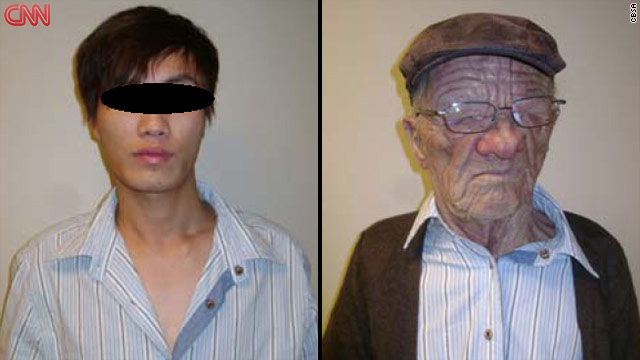
An effective disguise (CNN)

CNN has an exclusive today on a young Chinese man who boarded an Air Canada flight from Hong Kong disguised as an old white man. During the flight he removed the mask and then claimed asylum on landing in Canada.

No-one outside of the man concerned and the Canadian Border Security Agency knows much more about this right now. The disguise looks pretty impressive. And he had a boarding pass for a man of the correct age and origins. Of course some people will try to spin this as a ‘security threat’ story, or make it about terrorism. But really this says far more about the desperation of those trying to claim asylum faced with the rather kafkaesque logic of such systems, which tend to assume that claimants can use legal means to escape from situations where their life might be in danger…

Not everything is about the (still relatively small) risk of terrorism and nor should we overreact or organise or always try to reorganise our societies on the basis of that risk. Canada has a historically-deserved reputation as a humane refuge for those in need. This should be defended.