New European Report on Surveillance

There’s a big new European report out on surveillance – I haven’t read it yet, but here’s the Press Release in full, and contact details for those who want it…

EC-funded project calls for greater transparency and accountability re use of surveillance systems
 
Press release, 17 Jan 2013

The IRISS project, funded by the EC under the 7th Framework Programme, has just published a major 412-page report entitled Surveillance, Fighting Crime and Violence. The report analyses the factors underpinning the development and use of surveillance systems and technologies by both public authorities and private actors, their implications in fighting crime and terrorism, social and economic costs, protection and infringement of civil liberties, fundamental rights and ethical aspects.

The IRISS consortium has identified the following trends: (1) a substantial growth of public sector demand for surveillance bolstered by the adoption of identity schemes and terrorist detection technologies and markets, (2) an increase in the demand for civil and commercial surveillance, (3) the development of a global industry in surveillance, (4) an increase in integrated surveillance solutions, and (5) a rise in the government use of cross-border surveillance solutions.

“The role of surveillance in law enforcement is expanding,” says IRISS project co-ordinator Reinhard Kreissl. “There has been a shift in its use in identifying offenders before they have committed a crime. This has affected the presumption of innocence in a way that citizens are now considered suspects (a shift to a presumption of guilt).” With the growth of encompassing preventive surveillance, the presumption of innocence as an important legal safeguard is gradually hollowed out.

“There are numerous open questions about the usefulness and effectiveness of surveillance technologies and their possible rebound effects, specifically in relation to surveillance measures introduced to fight terrorism and organised crime without knowledge of their effectiveness and consideration of their negative side effects.”

Among the report’s other findings and recommendations are these:

Important social costs of surveillance include the social damage caused by false positives of suspects of criminal and terrorist activities, the categorical suspicion and discrimination of members of certain social or ethnic groups, the marginalising effects and social inequalities caused by invasive monitoring of those of lower social status, the inhibitory effects of surveillance which can undermine social and democratic activities, and the erosion of trust in society.

There are gaps and deficiencies in the law and in jurisprudence as they struggle to keep pace with technological development and institutional practice, perhaps especially in an online environment and in a climate of enhanced law enforcement and counter-terrorist policy.

Data protection authorities as external overseers and regulators typically focus upon the privacy-related implications of surveillance and find it difficult to embrace a wider perspective of values in their regulatory exhortations and enforcement practice. The laws within which they operate do not normally give them a licence to roam across the range of values to invoke when they seek to limit surveillance.

The European surveillance industry is developing at a rapid pace and is expected to continue doing so. However, surveillance companies from Europe face stiff competition from companies from outside the European Union.

Europe requires a multi-level strategy to build resilience in society vis-à-vis surveillance. The consortium recommends that industry associations develop surveillance-related guidelines and codes of ethics, and foster greater corporate social responsibility practices.

Greater transparency and accountability for the surveillance industry might come through the adoption of privacy impact assessments (PIAs) or surveillance impact assessments (SIAs) and through the development of standards and certification requirements for surveillance technologies.

This report is the first of several expected from the IRISS project. Other reports will address the key features raised by social, political and legal perspectives of surveillance and democracy; comparative empirical evidence concerning the impact of surveillance on democratic and open societies based on five case studies; citizen attitudes towards surveillance; the exercise of democratic rights under surveillance regimes; and options for enhancing social, economic and institutional resilience in “democratic” surveillance societies.

The report was produced by a consortium of 16 partners from universities, research institutes and companies from Austria, Belgium, Germany, Hungary, Italy, Norway, Slovakia, Spain and the United Kingdom. IRISS is the acronym for “Increasing Resilience in Surveillance Societies”, a three-year project which began in February 2012. The consortium prepared the report for the European Commission’s Directorate-General for Research & Innovation.

For more information, including a copy of the report.
 
Reinhard Kreissl, Project Co-ordinator
 David Wright, Work Package 1 leader

Czech Republic operating illegal ‘gay’ screening

The Czech Republic is violating the European Convention on Human Rights by using a controversial and highly privacy-invasive method of screening those seeking asylum on grounds of being persecuted for their sexual orientation.

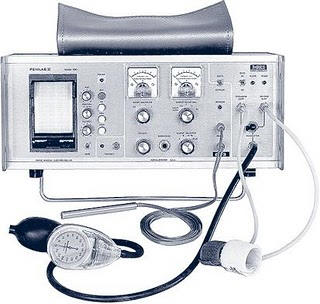
A BBC report (via BoingBoing) says that the country’s interior ministry has been criticised by the EU Agency for Fundamental Rights for using a ‘penile plethysmograph‘ on such claimants.

This so-called ‘phallometric test’ uses sensors attached to the penis which measure blood flow when different images are shown. The evidence from such tests is not recognised by courts in many countries due to its many problems including lack of standardization and the highly subjective interpretation of results.

European Parliament blocks EU-US data-sharing agreement

In a rare burst of sanity and concern for the rights of EU citizens, the European Parliament has exercised one of its very limited range of powers and blocked an agreement to continue the ability of the US government to access the Swift international bank transfer system. The parliament argued that the agreement, the descendent of a secret arrangement discovered in 2006, which came about in the aftermath of 9/11, paid insufficient attention to privacy. They are right. It doesn’t pay any attention to the safeguarding of citizens’ information rights, it merely confirms the terms of the undemocratic original agreement, one of a surge of such arrangements that were rushed through in the wake of the attacks when no-one was likely to pay much attention to things like human rights. Now, however, in an slightly less charged atmosphere, the Parliament has been able to demand that such rights should be respected in any transparent and accountable agreement. No-one is arguing that data should not be shared where there is a case for it to be shared, but this should not be at the expense of the rights and freedoms of which we are supposedly exemplars.

Europe’s Surveillance State

EU_surveillance
The Open Europe report

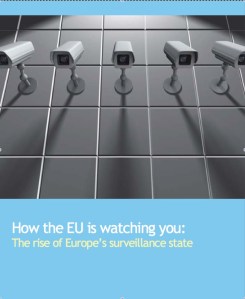
I have just got hold of a new report by UK-eurosceptic think-tank, Open Europe, called How the EU is Watching You: the Rise of Europe’s Surveillance State, which whilst it isn’t as startling as the NeoConPanopticon report from the Trilateral Institute and Statewatch, does some to collect some useful information together in one place. Crucially the report points out the same thing as Will Webster and I did in our paper in JCER a couple of months ago, that this isn’t just a case of ‘European’ bad practice being imposed on the UK, but just as much UK bad practice being exported and generalised throughout Europe.

One interesting footnote is how the discourse of opposition and analysis is changing. A few years ago, and still in academia, the idea of the ‘surveillance society’ was the dominant way of describing the situation, but now there is once again an increasing focus on the ‘surveillance state’ or the ‘database state’.  This is partly, I think because there are an increasing number of right-libertarian and anti-state or small-state groupings openly opposing increasing surveillance – for example, the new Big Brother Watch in the UK, and they tend to emphasise the state’s role (or in this case, the role of an organisation they regard as an unaccountable superstate). This also reflects the growing opposition from the UK in particular. This is particularly interesting because in the past, the idea of the ‘surveillance state’ was mainly a historical term to do with the development of repressive political policing, especially that involved in colonial counter-insurgency – see, for example, Alfred McCoy’s new book, Policing America’s Empire, on the role of the US occupation of the Philippines in the co-evolution of US and Filipino state surveillance practices – or in the totalitarian regimes of the former Eastern Bloc.

The landscape today is much less obviously one of state control. Indeed one could see these developments as a result of the retreat of the power of the individual state and an attempted reconfiguration of state-power of a new kind at a supranational level. And, this power is crucially dependent, as it has been since the end of WW2 on the private sector. The military-industrial complex is now a security-industrial complex and security is no longer anywhere near being simply state business.

Project Indect and the NeoConOpticon

Following the release of the NeoConOpticon report, Ben Hayes of Statewatch has set up an interesting blog monitoring EU security policy, called (ahem…) Notes on the European Security Research Program. One the first post (and a follow-up) concerned one particular EU 7th Framework Program-funded project called Indect, which seems to think that it is a great idea to have an Enemy of the State-style comprehensive surveillance system across Europe. It appears to be filmed in Poland – you think the Poles at least would have learned from almost half a century of totalitarian rule…

There are of course, hundreds of these security projects being funded by the EU that Ben’s report detailed (with a tiny, tiny number of alternative or critical ones, and of course some token nods to simple ethical concerns like privacy within some of the projects). One that finished in 2007 was the SAFEE project that proposed (amongst other things) to put cameras in the back of every aircraft seat so that passengers’ facial expressions could be monitored automatically for signs off threat… it’s unclear how many of these ever get beyond the research stage – and I hope most don’t – but if they do, the future of the EU is one of a tightly controlled society of people constantly monitored even at the most personal level in case they step out of line. The great thing about the NeoConOpticon report is that it puts all of these things together rather than treating them in isolation. I wonder if the individual researchers involved would think differently if they actually considered their work in this context and in the context of the political architecture of security that is being built in the EU.

Anyway, here’s the PR video for Indect, for those who are interested in such things. It’s typical of the genre: a dumbed-down, hyped-up, over-macho, TV-detective series pastiche with a ridiculous voice-over and music. No doubt it goes down a storm at sales events.

Anyway, keep an eye on Ben’s blog. I will be.

Reclaim your data!

A new campaign launches on the 1st October in Europe to reclaim your data from the European police authorities.

Now in Europe, national police databases systems, the Schengen Information System (SIS) on immigration and border control, the files of Europol and more, are planned to be integrated following the Prüm Treaty and the so-called ‘Stockholm Programme’ (now in preparation for European Council vote in December this year).

As the organisers make clear, this does not just concern people convicted of any crime, but all immigrants, political protestors arrested at demonstrations, all the many entirely innocent people included on the UK’s National DNA Database – or any other national police database that includes data on the innocent, etc. What’s more, as a result of pre-existing (and originally secretly negotiated) agreements with the USA, the data will also be shared with the FBI and other US intelligence agencies.

So – first of all, protest! In what ever way you can. And secondly, as the campaign suggests:

“to anyone who would like to know what the police (think they) know about you, or simply to register your dissent, we recommend exercising your right to access your own data by sending a request for information to the relevant police authority in your country. The digest received in response will help to give us an idea of the full extent of police access to citizen data, as well as serving as a starting point for getting your data out of the computer systems, by legal or political means.”

Further details here (in English and German).

German-language document generator for data requests.

Europe’s new security-industrial complex

neoconopticonThere is a superb and chilling new report out today that utterly demolishes the European Union’s claims to be in any way an  ethical or progressive leader on issues of security and surveillance. The report written by Ben Hayes for the Transantional Institute and Statewatch, documents in some detail the new vision for security in the EU, which the authors describe as a ‘neo-con-opticon.’ The report confirms a lot of things that have been concerning me about the direction and emphasis of EU security research and the increasingly unnacountable and behind closed-doors ways in which security policy is being developed. I asked back in January in an editorial in Surveillance & Society whether surveillance was becoming the new ‘baroque arsenal’, Mary Kaldor’s famous phrase to describe the huge, intricate and complex technocentric security structures of the second Cold War. This report answers that question with a resounding ‘yes’.

The press release quotes from the introduction:

“Despite the often benign intent behind collaborative European research into integrated land, air, maritime, space and cyber-surveillance systems, the EU’s security and R&D policy is coalescing around a high-tech blueprint for a new kind of security. It envisages a future world of red zones and green zones; external borders controlled by military force and internally by a sprawling network of physical and virtual security checkpoints; public spaces, micro-states and mega events policed by high-tech surveillance systems and rapid reaction forces; peacekeeping and crisis management missions that make no operational distinction between the suburbs of Basra or the Banlieue; and the increasing integration of defence and national security functions at home and abroad.

It is not just a case of sleepwalking into or waking up to a surveillance society, as the UK’s Information Commissioner famously warned, it feels more like turning a blind eye to the start of a new kind of arms race, one in which all the weapons are pointing inwards. Welcome to the NeoConOpticon.”

But don’t stop there. You can (well, you must) read the full report here: NeoConOpticon – The EU Security-Industrial Complex

And whilst you are at it, download Tony Bunyan’s equally superb report, The Shape of Things to Come – the EU Future Group, on the EU’s thoroughly undemocratic attempt to bypass public debate and hand internal security and surveillance policy over to the transnational security companies and the police and intelligence services.

(thanks to Rosamunde van Brakel for passing this on)

EU Telecommunications Directive in effect

From today, private lives in the UK will be a little less private, as EU Directive 2006/24/EC becomes part of national law.

Traffic data on e-mail, website visits and Internet telephone calls now have to be recorded and retained by Internet Service Providers (ISPs). Specifically, the Directive mandates the retention of: the source of a communication; the destination of a communication; the date, time and duration of a communication; the type of communication; the type and identity of the communication device; and the location of mobile communication equipment.

This is coming into force despite the fact that many countries and ISPs still object to the directive. It has to be said that many ISPs are objecting on grounds of cost rather than any ethical reason. German courts are yet to determine the constitutionality of the directive and Sweden is not going to implement it at all.

As with many of these kinds of laws, it was rushed through on a wave of emotion after a particular ‘trigger event’ – in this case, the 7/7 bombings in London in 2005. There was a whole lot of devious practice in the Council of Ministers to get it passed too – if the Directive had been considered as a policing and security matter, it would still have needed unanimity, which means that the objections of Germany and Sweden would have vetoed the Directive. Instead, it was reclassified as ‘commercial’ on the grounds that it was about the regulation of corporations, and commerical matters need only a majority vote. How convenient…

The Home Office in Britain says our rights are safe because of RIPA, which is hardly cause for rejoicing. My main concerns, apart from the fact that this is yet another moment in the gradual erosion of private life, are that:

1. police access will rapidly become routine rather than specific, and this could be extended to many other public authorities – the original drafts of the Communications Bill would have extended the right of access to such data to all RIPA-empowered organisations (which includes most public authorities);

2. the data will be used illicitly by ISP employees for criminal purposes (remember that most identity thefts are inside jobs) – the records will be a blackmailers delight;

3. there will more ‘losses’ of this data by ISPs and others who have access to it. Remember the accidental revelation of user data by AOL in the USA?

EU to EULA if UK is OK

It is a kind of digital enclosure, an attempt to impose on the Internet the same kind of removal of common rights that the British ruling classes imposed on the land from the Seventeenth Century onwards…

I have just completed an article on the UK as a ‘bad example’ to the rest of Europe, and lo and behold another piece of regressive, repressive idiocy by the British government appears. It seems that the UK is trying to amend the proposed EU-wide Telecommunications package to destroy the principle of net neutrality. Their proposals will “remove the principle of users’ rights to access and distribute Internet content and services”, and replace it with “a ‘principle’  that users can be told not only the conditions for access, but also the conditions for the use of applications and services.”

In other words, they want to make the entire Internet work by End-User Licensing Agreements (EULAs) rather than the general principle of end-to-end connectivity. It is a kind of digital enclosure, an attempt to impose on the Internet the same kind of removal of common rights that the British ruling classes imposed on the land from the Seventeenth Century onwards. There is nothing about the Internet Age about this, indeed it is pre-industrial – it is pure justification of the same powerful economic interests that the British state has always represented. And, as the original report points out, this is particularly bitter because both the British (OFCOM-originated) amendments and their duplicate Czech mini-me amendments have a lot of their substantive justitifications cut’n’pasted wholesale from Wikipedia!

Like the thieves who stole our land, they are utterly shameless.

(I think I originally saw this in BoingBoing, and sorry for not linking it, but it keeps crashing my little computer right now…)

Come to Britain and we will fingerprint your kids…

fingerprintLast week I mentioned the approval of the biometric passports scheme by the European Parliament, and that there were several countries that planned to fingerprint children under the age of 12 despite the legal, ethical and technical problems with this.

However, what I didn´t mention is that – surprise, surprise – Britain is one of the countries that does fingerprint kids, and indeed it has already been fingerprinting foreign children resident in Britain as young as 6. As Privacy International´s Gus Hossein argues on The Guardian´s Comment is Free website, the UK government claims that this is only bcause the EU has forced this upon them when in fact it was the UK government that forced the EU into adopting that position in the first place!

Now, as I mentioned, the European Parliament has pushed the age limit upwards, but will this make any difference to the UK Home Office? Given that the Home Office is still ´carefully considering´ its responce to the kicking it received from the European Court of Human Rights over the taking and retention of the DNA of 857,000 children, I wouldn´t bank on it.