Identity and Identification in Brazil

My host and colleague here at PUCPR, Rodrigo Firmino, and I are working on a small bit of research and a paper for The Second Multidisciplinary Workshop on Identity in the Information Society (IDIS 09), at the the London School of Economics, on June 9th this year.

Our paper is based around a case of identity theft, which is endemic in Brazil, which we use to open up the laws, practices and technologies of identification here. One thing that is already clear is that Brazil is a highly bureaucratic state – for example, the forms you need to fill in just to get a mobile phone are incredible in their detail – yet the forms of identification which one needs for every transaction with the state and many private organisations too, are highly insecure.

One example is that every personal cheque has printed on it not only the usual information (bank name and address, bank sort code, account holder name and account number), but also has the 11-digit Cadastro de Pessoas Fisicas (CPF) (a taxpayer’s card) number and the 9-digit Registro Geral (RG) (the national ID card) number. This must be a utter joy to fraudsters and identity thieves!

What’s more, all these are not just numbers in a database somewhere but physical documents in their own right, and on each there is a lot of this cross-identification: the CPF card also has the name and date of birth, the CPF number is ubiquitous, appearing also on the RG card and the driving licence. The latter has its own 11-digit registration number, but also has the RG number, name, and place and date of birth. What is even more interesting is that the RG card not only contains a photo and a thumbprint (the state database contains prints of all 10 fingers and thumbs), but also the names of both parents. This means it can be related more easily to the birth certificate. It reminds me a little of the Japanese system which still prioritises the family above the individual in some ways, but there is no actual equivalent of the koseki, the Japanese family register.

Now, in the name of security and “para integrar os bancos de dados de diversos órgãos dos sistemas de identificação do Brasil” (to inegrate the databases of the diverse organisations of identification systems in Brazil), the Ministry of Justice is proposing to merge some of these – the RG, CPF, Driving Licence and Electoria Regisirtation, into a new, smart, Registro de Identidade Civil (RIC) card based on a unique number. Whilst this will have many of the same problems as new smart ID systems everywhere else, at the very least it might stop Brazilian citizens carrying around multiple documents that list almost everything thieves and fraudsters need and can access without any sophisticated equipment. The process is due to start now, and run until 2017, so we will be taking a look at this as it proceeds.

I’ll put some pictures up with explanations later today…

Official report on Omagh surveillance predictably clears GCHQ

An official report into allegations that the British intelligence services could have prevented the bombing of the town of Omagh by a renegade faction of the IRA in 1998 has, not entirely surprisingly, vindicated the intelligence services.

BBC TV’s current affairs strand, Panorama, had alleged that Government Communications Headquarters (GCHQ, Britain’s equivalent of the US National Security Agency) had been monitoring the mobile phone communications of the bombers as they were moving towards Omagh, but did not inform the police on the ground in Northern Ireland.

The inquiry, chaired by the Intelligence Services Commissioner, Sir Peter Gibson, found no convincing evidence for this claim – which is of course, not to say that is wasn’t true. Let’s face it, it is highly unlikely that you would ever get GCHQ to admit to making mistakes let alone deliberately not giving information to the police on the ground. And even the ISC is not going to know whether GCHQ bosses are telling the whole truth or withholding information.

Justice in the case of the Omagh bombing has been hampered by murky behind the scenes dealings, despite the fact that it is widely known who was involved in planning and carrying out the attacks. Certainly the families of the victims of Omagh are probably right to reject the findings of this cozy establishment report, so typical of the way the British state polices itself.

Today

Obama by Shepard Fairey

Today, I am trying not to be cynical, just trying to be hopeful. Today I am wanting to believe that progress is possible. Not everything I want. Not my ideal world. But something that is better, kinder, happier than today.

That´s all.

Good luck, President Obama – I know things won´t work out how everyone wants, but please don´t disappoint us too much.

Australian police data loss and corruption

Here´s a tangled web… at first glance the story being reported in Australian outlets of the state of Victoria´s secret police losing highly confidential data on criminal associates looks like another of those stories so familiar from the UK about an incompetant state unable to safeguard personal data.

But it turns out to be rather more complicated.

It seems that this data loss involves corrupt officers connected to a drugs-smuggling ring. Now, research on identity theft by Jennifer Whitson and Kevin Haggerty in Canada has shown that a high percentage of incidents of frauds are related to the selling or use of data by employees or other organisational insiders. In the UK, we assume incompetance by our state and its numerous private sector associates, but perhaps in this assumption we are too quick to dismiss the possibility of corruption, crime and conspriacies…

New study on social networking and surveillance

One of our collaborators on the new Living in Surveillance Societies (LiSS) project, Christian Fuchs, from the eTheory Research Group of the ICT&S Center – Advanced Studies and Research in Information and Communication Technologies & Society at the University of Salzburg in Austria, has an interesting-looking new study out on social networking and surveillance. You can also find more information about the study here.

Just like me, Christian also has a blog on wordpress – although he hasn’t updated it much recently (I know that feeling!) – and runs an open access online journal, tripleC (cognition, communication and cooperation). Check them out…

First impressions of Brazil

“whilst Curitiba may not be as divided as its bigger northern neighbour, the pervasiveness of defensive urban architecture is clear”

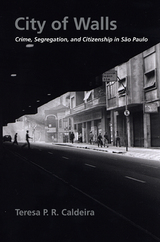
City of Walls by Teresa Caldeira

I have only been here a few days, but some things are already pretty clear. Brazil does not (yet) seem to be as obsessed by surveillance as the UK, but there is a noticeable concern with physical security. The Brazilian urbanist, Teresa Caldeira, called Sao Paulo the ¨City of Walls¨ in her excellent book of the same name, and whilst Curitiba may not be as divided as its bigger northern neighbour, the pervasiveness of defensive urban architecture is clear. Even fairly ordinary suburban houses have high walls, fences and gates,  and some boast razor wire or even electric fences on top. Shopping malls and banks have large numbers of private security guards who are not just hanging around doing nothing as they do in the UK, but seem alert and active. When I went to change some traveller´s cheques, the agency could only be accessed one person at a time, via two locked doors with intercoms and an intervening antechamber with a metal detector.

What is the source of the fear? Of course it is the poor, and in particular the favelados (the people who live in the favelas, the informal settlements that line the riverbanks). Even though in Curitiba, there are not so many favelas and they are not so extensive as in the larger cities of Brazil, the favelas are still no-go areas for non-favelados and I have been warned not even to think about entering. Of course I will be later in Rio, but I will have local help (I hope). Whether one thinks that these are people driven to desperation and crime, or as one contact here said, it is because the drug-runners chose to live amongst the favelados because the police will not follow them there, the division between the favelados and the rest of society is obvious. It is also blatantly racial. The favelados are generally darker, although in Curitiba, which is generally a more European and less African part of Brazil, there are also a significant number of favelados of eastern European descent, the families of immigrants who came to work in construction and were later left without work.

The engineering faculty of the Pontifical Catholic University of Parana, home to the Postgraduate School of Urban Management, where I am based for now, is right up against one of the favelas of Curitiba. The large windows at the back have had to have concrete shields fixed across them as some young guys from the favela had started to enjoy testing their guns out on the panes. There are still a few bullet holes visible in the walls! But don’t let me give you the impression that this is a war zone, or that everyone is paranoid and afraid of each other. It doesn’t seem that way either, and I don’t feel any less safe than I did in Washington DC in the early 90s…

CCTV is good for something… or is it?

MSNBC has some great footage of US Airways 1549 that crash-landed in the Hudson yesterday, taken from CCTV cameras on a nearby wharf.

However well this footage shows the undoubted skill of the pilot, I can’t help thinking every time I see this kind of use of CCTV footage that it must play a really important part in the process of normalisation. The fact that people can see footage from CCTV on the news adds to a largely mistaken impression that video surveillance ‘works’. It doesn’t matter whether the footage is of an amazing tale of heroism and survival, a crash or a crime prevented or committed, the images have a pre-rational power. They create a ‘demand’ for more cameras or the idea that they are necessary even though we may be watching something that nothing to do with the purpose of the cameras, and may even, as in the case of images of crime occurring, be witnessing the overt failure of the preventative purpose of CCTV.

Still, great video, isn’t it?

Obama inauguration security

2-inch glass surrounds Obama at his victory celebrations
2-inch glass surrounds Obama at his victory celebrations (Associated Press)

One of the things, I an my co-authors wrote a lot about in our new book is the increasing prevalence of  ‘island security’, the creation of temporary zones of exception around mega-events like the Olympics of the G-8 summits, or even smaller events like political party conferences. It looks like the inauguration of Barack Obama as President of the USA will be one of the biggest ever  island security operations, which a 3.5km exlcusion area, no-fly zone and thousands of police and military personnel on duty.

When it comes to many of these kinds of events, the security is often symbolic, or what we called ‘stage-set security’, but, rather like the new official presidential limousine (AKA ‘The Beast’), the security involved here is hardly likely to be quite so superficial. Nor, I think, do many of the usual advance objections to heavy-handed policing apply: I don’t think there has been a US president in recent history who has either sparked so much hope by so many in the USA or been quite so likely to be targeted for assassination by a few.

San Francisco CCTV (slight return)

The San Francisco Chronicle is reporting that a murder suspect was arrested as a result of CCTV footage. This comes hot on the heels of the critical report that I mentioned a few days ago. Is it a coincidence that we see these kinds of stories now? I think not. It seems that the SF police may be doing some spin-doctoring to counter any perception that the cameras ‘don’t work’. SF residents should expect more of the same over the next few weeks…