Blackberry and the London Riots

I’ve been in the papers and on radio and TV a bit in the last few days here in Canada, talking about the London Riots, both as a ‘token Brit’ and a surveillance expert. I’m happy to talk about my feelings as someone from Britain and I’ve made it clear to people that I am neither a technical nor a legal expert, but the conversation inevitably ends up in those domains and others which are really outside my expertise – and I’ve had to be careful what I say.

I’ve generally stuck to three lines:

1. That these riots don’t provide simple moral lessons, they are neither politically-motivated or just about ‘crime’, but they do have roots and implications which are profoundly political – this is about consumerism, class, inequality and exclusion.

2. That you can’t blame Blackberry. That’s like blaming the postal service for hate-mail. The problems for RIM here are twofold: bad public relations from being associated with rioting, and how much it is prepared to sacrifice the privacy of its users to help UK police in an effort to counter the bad PR.

3. That all the UK investment in video surveillance didn’t help stop these riots (see my previous posts).

People like Chris Parsons are the kinds of people that the media need to talk to about the technical issues, and there’s a really fantastic and detailed post from his blog here on Blackberry and security and privacy issues. On legal issues, there’s no-one better than Michael Geist on things like lawful access. His website is here. Michael writes a regular column for the Toronto Star and I was quite amused that when the Star called me yesterday, I had to remind them to talk to him about lawful access issues! The best sociological piece I have seen on the causes is from Zygmunt Bauman.

That said, here’s some links – There’s a podcast here on the Financial Post, which also has a good discussion with Tamir Israel of CPIC.

On the more social side here, syndicated in lots of local and regional papers.

And the usually strangely edited piece in my local paper, the Kingston Whig-Standard, here, also featuring my colleague, Vince Sacco.

Rio gets the Olympics – and now the poor will suffer

Most people will probably have heard the announcement that Rio de Janeiro has been awarded the 2016 Olympic Games. While I am pleased that Brazil has beaten the USA in particular in this race in the sense that it shows a slight shift in global power balances towards the global south, I am very concerned as to how the current right-wing administration of both the city and region of Rio will deal with the ‘security’ issues around this mega-event. The Pan-American Games, which Rio hosted in 2007 led to the violent occupation by military police of several particularly troubled favelas (informal settlements), and the new administration has already shown its authoritarian tendencies with the Giuliani- wannabe ‘choque de ordem’ (shock of order) policies that involve building demolition, crackdowns on illegal street vendors (i.e. the poor) and more recently, the building of walls around certain favelas, and most recently the unwelcome  imposition of CCTV cameras on favelas that were just starting to enjoy improvements in trust between police and community. The favelas that line the main highways into the city from the international airport were already slated for such ghettoization, and the Olympics will only make this more likely to happen and more quickly – just as has happened in South Africa, similarly afflicted by race and class-based social conflict, during the various international meetings and summits there in recent years. Foreign delegates and tourists don’t like to see all that nasty poverty, do they?

I will write more on this later (I am on the road right now…).

Community Safety in Arakawa

Far from the skyscrapers and bright lights of Shinjuku, where we had our last interview on community security and safety development (anzen anshin machizukuri), Arakawa-ku is a defiantly shitamachi (‘low-town’ or working class) area to the north-east of Tokyo just north of Ueno and outside the Yamanote-sen JR railway loop line that has for much of the last 40 years defined the boundaries of the richer parts of the city.

Bordering the Ara river and split by the Sumida river, it was traditionally a marshy place liable to flooding. It was also a place with a large buraku (outcaste) population and Minowa (in the north of the ward) contains the mournful Jokan-ji (or Nagekomi – ‘thrown-away’) temple, where prostitutes who died in the Yoshiwara pleasure district were cremated. The place has been hit hard by disaster. It was levelled twice in the the Twentieth Century, first by 1923 Kanto daishinsai (Great Kanto Earthquake) and then again by the firebombing in the last years of WW2.

Nevertheless, its rough, industrious, hardworking spirit has continued, and these days, despite the march of secure manshon (high-rise housing) down the post-war avenues, it remains a place full of small industrial units, especially recycling businesses and clothing wholesalers and manufacturers in Nippori, small bars and family restaurants, and lots of ordinary housing, even some of the last remaining dojunkai (early concrete public housing) constructed after the earthquake. It’s also the starting point of the last remaining tramway (streetcar line) in Tokyo, the Toden Arakawa-sen. I like it a lot and it’s where my wife and I have lived in Tokyo in the past, and where we still stay when we return (there will be more pictures in a later post).

It was natural then to turn our attention to the place as a case-study area, mainly because it is so different from Shinjuku and the other areas that have gained so much attention from the Tokyo Metropolitan Government’s recent initiatives. We met with three officials from the Community Safety section of the local administration: the boss and two guys who had been seconded from the city police and the fire service respectively. The boss was full of enthusiasm for the direction that Arakawa-ku has taken, which although they don’t use the term ‘machizukuri‘ is far more about real community involvement than some places that do.

The HQ of Arakawa community safety

Arakawa has no comprehensive CCTV strategy, although the police do consult with the developers of large new buildings on its installation. That’s not to say that they don’t have a certain degree of ‘CCTV envy’ of those places with the latest high-tech gadgets that Arakawa can’t afford, but they are not dazed by the glamour of cameras and are realistic about both the limitations of CCTV and the appropriateness of such systems for their city. Instead they concentrate on using and enhancing the natural surveillance capacities of the local communities. They make a great deal of use of volunteers, retired police officers and ordinary local people, who do their own patrols, including the delightful wan-wan (‘woof-woof’) patrol which, judging from the posters, involves mainly older female residents and very small dogs! Participation in the various community initiatives is encouraged through the use of techniques like professional rakugo (traditional comic monologue) performances in schools and community centres. They also run community patrols in miniature versions of police patoka (patrol cars), which not only look more friendly but unlike the US-style police cars can get through much narrower streets.

The cute community patrol cars

However these diverse community projects are being stitched together in quite an innovative way, with the use of small anzen anshin sutashion (security and safety stations), which are a bit like community versions of the police koban, the miniature two-person police boxes which dot the city. Indeed the officials referred to them as minkan koban (‘people’s koban’). These small help stations, staffed mainly by ex-police don’t just provide ‘security’ information, they also deal with social security in the broader sense, offering help for older people with benefits, for example. In almost all cases, they have replaced koban that were closed by the police. So one could argue that this is essentially the local authority being forced to pick up the bill for services that used to be provided by the police and at the same time is actually losing real police service. However, the strategy overall is a valiant attempt to make ‘community safety’ less an issue of exclusionary security and more one of inclusivity and community development, more a natural and intimate part of everyday life that does not involve new forms of external control.

Of course, crime isn’t really a massive issue here anyway. Arakawa has consistently had the second or third lowest crime rates of all the 23 Tokyo wards. But even since the introduction of these initiatives, crime has fallen still further from the relative high point it reached a few years ago. And hardly a CCTV camera in sight…

The Shock of Order: Building and Demolition in Rio de Janeiro

I may have been slightly worried about the most recent drugs war that was going on as I arrived, but as usual this appears to have been exaggerated by the press who largely serve the richer, middle-class community, and who appear to want to have their fears stoked on a regular basis. The ‘war’ is a trafficker conflict that involves traffickers based in the large favela of Rocinha, who belong to the Comando Vermelho (CV, Red Command) the oldest and largest of the prison-based umbrella groups of Rio drug traffickers, attacking another favela, Ladeira dos Tabajaras, whose traffickers are backed by the ‘Amigos Dos Amigos’ (ADA, ‘Friends of Friends’). This kind of thing is happening on and off all the time, but what made it a concern of the paranoid middle class in this case, was geography: in order to get to Ladeira dos Tabajaras, the Rocinha gang had to go through the rich high-rise area of Copacabana… to say that it is exaggerated is not to say that it is not dangerous: 8 people have so far been killed, but they are all traffickers and, I believe, all killed following police raids into the favelas.

It is probably no coincidence that this display of force by the Rocinha traffickers is happening just as the city government of Rio has started to implement a policy of the current Mayor, Eduardo Paes, known as ‘choque de ordem’ (the ‘shock of order’), which involves sorties into communities like Rocinha largely to enforce planning regulations by destroying recent illegally built constructions, which are pushing the favelas even further up into the hills. In the last few days, this policy has resulted in the demolition of one particular controversial building, the Minhocão in Rocinha. This was due to start on the 17th, but was halted by a judicial decision, before going ahead in recent days.

There is more than a degree of irony here. The purpose of these demolitions is supposedly to enforce urban planning regulations and ‘protect Rio’. The Secretary for Public Order, Rodrigo Bethlem, is quoted by O Dia as saying (in my translation):

“We cannot permit an entrepreneur to come into Rocinha to build and make easy money by exploiting people. We cannot allow Rio De Janeiro to be destroyed by speculators, who want to make money without following any rules and who aim only at profit.”

Yet, I only have to glance out of my window here to see the towers of the Centro, built by wealthy speculators, which have almost completely destroyed the beautiful Parisian-style boulevards and belle epoque architecture that used to be ‘Rio’. And turning the other way, the coastline it dominate by the secure condominiums long the beaches, which I am pretty sure were not constructed out of the kindheartedness of developers, and whose development no doubt involved corruption at higher levels of urban government. Looking uphill, I can see the often dubiously if not illegally-constructed houses of the rich that cut into the edges of the National Park.

Can we look forward to the demolition of all of these disfigurements of Rio? Of course not… and the reason is obvious. The demolitions in Rocinha are about power projection. Local state policy towards the favelas goes in waves that alternate between socio-economic solutions and violent authoritarianism. For all its negative aspects, many people who are concerned with social justice here recall with some nostalgia the progressive populism of Leonel Brizola who was mayor in the 1980s. His administrations installed infrastructure, built schools and improved houses in the poorest areas.

The current administration of Eduardo Paes is taking a very different and harder line, concentrating on law and order, a stance which was laid out clearly during the Pan-American Games when the police effectively occupied several of the favelas in an Israeli-style security operation. There would be nothing wrong with this if it were backed by some kind of progressive social imagination too – some favelas like Dona Marta, which I will be visiting later this week, have apparently been transformed through a combination of strong control and surveillance with real social improvements.

Instead there are apparently plans to further marginalise favela residents by building a wall along the major highway from the international airport into the city, so that all the city’s elite can feel so much more secure, and of course, visitors will not have to even see the favelas (some or Rio’s most miserable) which line the route… there’s more than a whiff of Israeli tactics about this too. Whether by building or by demolition, urban planning seems to be currently used as a weapon against the favelas and their inhabitants.

The downside of Brasilia

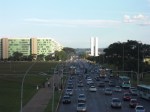
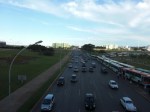
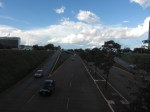
on foot, you are immediately confronted by the unpleasant reality of what is to the pedestrian effectively a huge expanse of carpark and highway separating the areas you might want to be. The functional split between the ‘zones’ only makes this worse.

Again, this is urbanism rather than surveillance, but here are some more musings and pictures on the urban form of Brasilia. Yesterday, I posted a lot of conventionally attractive shots of the buildings around the monumental axis of Brasilia. However, leaving aside the wider question of whether Brasilia outside of the planned centre functions as a city, there is a rather less beautiful side to the core.

This mainly has to do with the practical consequences of the philosophy behind the plan and particularly with functional separation and transport. As I noted when I first arrived, the city is dominated by roads. 5-lane highways run down either side of the monumental axis, and it is crossed by two major motorways in deep cuttings, with all the attendant slipways. These probably look very attractive as bold curving lines on a plan. They may even function if you are traveling by car (or bus). But on foot, you are immediately confronted by the unpleasant reality of what is to the pedestrian effectively a huge expanse of carpark and highway separating the areas you might want to be. The functional split between the ‘zones’ only makes this worse. Say you are in the hotel zone that I was staying in and you want to go out for a meal and a drink. Well, that’s 30-minutes walk to the nearest residential centre (where most of the evening options are located). Sure, you can take a taxi, but why should you have to? All the sports clubs are in separate ‘club zones’ even further away from either hotel, commercial or residential districts.

Now, okay, so the residential districts have most of their facilities (not including clubs) within walking distance – I said in my first impressions blog entry that I could actually imagine living here with a young family. And I still could. Natives of Brasilia are fanatical about the place. The residential districts work. You don’t really have to go anywhere near the soulless and secured shopping centres or take your chances running across massive motorways with uncaring drivers trying their best to ignore you. There is a simple metro system which runs between the districts and the centre (though it was largely closed for the building of new stations when I was there). You can walk around, between and under the blocks. They don’t appear to be totally obsessed with security in the manner of Sao Paulo or indeed most other large Brazilian cities. The blocks have concierges but not fences, walls and gates. Most of the windows do not even have bars.

But there is a reason and a price for this too. The residential zones are simply not socially mixed. Just about everyone who lives in the big blocks is a government or big corporate office employee. The ordinary workers and the poor live elsewhere entirely, in one of the satellite cities of Brasilia, and are bussed in and out via the busy central bus station every day. At the bus station, you find glimpses of the ‘ordinary Brazil’ – the cheap lanchonetes and pastelerias (in fact probably the best pasteleria I have found in Brazil so far)!, sidewalk vendors of DVDs and knock-off jewelry, the beggars, the hungry and the desperate. In many ways I felt more comfortable there than in the dry Le Corbusian dreamspaces of the government buildings.

Anyway, here’s some pictures of the ‘real Brasilia’ – or what it looks like if you stop focusing on the architecture and take a wider view!

Gentrification and Control in the Old Centre of Sao Paulo

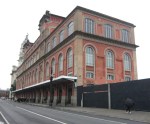
Yesterday, I met up with Brazilian surveillance researcher, Marta Kanashiro, and she showed me around the Luz area of the old centre of Sao Paulo, where she has been working. Luz was once a grand colonial district around the railway station designed by British architect, Charles Driver, in brick and iron, but it lost its importance in the mid-Twentieth Century as the station ceased to be the terminal for the coffee trade. The area acquired notoriety as home to a police headquarters where opponents of the dictatorship where tortured, and as a centre for prostitution, violence and drugs.

In more recent years there has been a real effort by the city authorities to reclaim the area which, despite being in many ways a laudable project, has been controversial both for its effects on the poor, and for its treatment of memory and the particular history of the place. On one side of Parque da Luz, the formal gardens in front of the station, is the Museum of Portuguese language, yet on other side of the station, all memory of the victims of police oppression and torture has been erased with the restoration of the police building.

In the park itself, the park authorities installed CCTV (the story of which can be read in Marta’s article in Surveillance & Society), but they haven’t tried to drive out the prostitutes, many of whom were still standing forlornly under the tall trees in the driving rain as we visited. However, according to Marta, they have tried to persuade the women to dress more respectably in keeping with the desired new image of the the neighbourhood! At one point the prostitute’s union was more involved in the management of the park, as were other community organisations, however the building in the centre of the park where these groups used to meet is now closed for refurbishment and it is unclear whether it will still be available in the same way afterwards. Another building in the corner of the part, next to the rather ramshackle security rooms, has already been restored, and where once the plans and documents about the park were on public display, now the place is prettier but empty.

The Luz regeneration has plenty in common with revanchist redevelopment in many other big cities around the world, and there are big questions about what happens to the already excluded population of the area as the regeneration spreads. There are two contrasting visions for the centre from two different but very similar-sounding organisations: Viva O Centro and Forum Centro Vivo. Both want regeneration – everyone does – but they have entirely different approaches to how it should be done. The former is an association of mainly businesses and police, similar to the Business Improvement Districts (BIDs) which are common in US and British city centres. It is behind a lot of the current redevelopment and has the ear of the city authorities. The latter is a group of academics and community activists who want a more democratic and participatory process, and who hold a lot of local events, cultural and political. They also accuse Viva O Centro of either actively or tacitly encouraging intimidation and violence (which has certainly taken place) against the poor population of the area. It is another reason why the attempt to erase of the memory of the brutality of the dictatorship is so important: it is a memory that needs to be constantly refreshed as the actions are echoed and repeated.

(A very big ‘thank-you’ to Marta Kanashiro for her time and patience! All mistakes in this account, as usual, are my own…)

Human Rights in Brazil

In Brazil, the almost universal perception amongst the middle and upper classes is that human rights defenders are simply defending criminals…

I spent some time yesterday talking to people from the justice program at Conectas, a collection of organisations that works on the unpopular issue of human rights in Brazil. Conectas also has a global south program that works more broadly in the developing world, and publishes the excellent journal, Sur.

ipbI say that human rights is unpopular, which may sound surprising, but talking to the valiant lawyers and organisers at the Instituto Pro Bono, which provides lawyers to those who can’t afford them, mainly prisoners, and Artigo 1o, which brings civil actions against the state on behalf of prisoners killed or injured by police and prison staff, I was immediately reminded of the depth of the social divisions, and the sheer mutual ignorance of people in different social classes here in Brazil.

In part, I was told, the gap has to do with the experience of the dictatorship that came to and end from 1985. Human rights had grown in opposition to the dictatorship, and once the end came, many wealthier people started to wonder why people still needed these apparently strange and special rights in a ‘free society’. The almost universal perception amongst the middle and upper classes is that human rights defenders are simply defending criminals, end of story. The Artigo 1o staff told me that they regularly receive hate-mail and threatening or angry telephone calls. The Instituto Pro Bono is still battling to have its lawyers even accepted in courts in many states in Brazil. Bar associations are opposing them on the grounds that they take business away from defence lawyers! Neither organisation gets any more than a tiny proportion of its income from Brazil; most comes from the European Union and the USA.

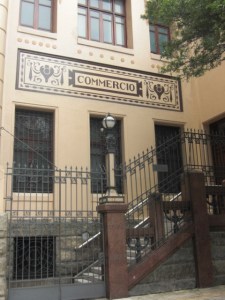
Everything you need to know about what drives Sao Paulo (Nineteenth Century Building in the heart of the city)
Almost everything you need to know about what drives Sao Paulo (Nineteenth Century business federation building in the heart of the city - the other side of the entrance says INDUSTRIA)

Partly too there is a partially Catholic Christian legacy of accepting one’s ‘natural’ social place and waiting for what one deserves after death. However there are also questions of geography. And sociospatial variety leads to different relationships and different attitudes by the ruling classes in different parts of the country. In Sao Paulo, the poorer areas, and the favelas – I was reminded of course that there are both and many, many very poor people are not living in illegal settlements – are largely peripheral. This means that they can be ignored by the rich. Sao Paulo is also a mercantile city absolutely dedicated to making money and many of the rich seem to regard the masses of poor as simply ‘failed entrepreneurs’ whose fate is their own fault. This contrasts with Rio, where rich and poor are thrust right up against each other, with favelas running right into the heart of the city. The poverty cannot be ignored, but instead it is crushed, repressed by the actions of groups like the Autodefesas Comunitárias, (illegal ‘community self-defence’ groups).

Welcome to Sao Paulo! ("REVENGE - Intruders will die" says the graffiti)
Welcome to the other Sao Paulo! ("REVENGE - Intruders will die" says the graffiti)

Of course such mass violence does occur in Sao Paulo too – Artigo 1o is currently looking for funding (not a lot in relative terms BTW – please contact me if you have about $6000 US to spare!) to publish their report into the mass battles between police and organisations of ex-prisoners and criminals, which resulted in the extra-legal execution of hundreds of people by the police. However, in general, the staff of Artigo 1o argued, the relationships are different.

(there was a lot more, but I will write about issues around security and surveillance later)

Privatising political policing in the UK?

Another good piece by Henry Porter on the Guardian’s Comment is Free website, against the influence of the Association of Chief Police Officers (ACPO), which despite being a private organisation with no public accountability, has a very large influence on policy. The particular concern is with reports that ACPO has set up a new Confidential Intelligence Unit (CIU), to monitor so-called ‘domestic extremists’ which will apparently be based at Scotland Yard. They are currently advertising for a Chief Executive.

According the Emergency Services News, the CIU will target environmental groups and those behind anti-Israel demonstrations and ” infiltrate neo-Nazi groups, animal liberation groups and organisations behind unlawful industrial action such as secondary picketing.” In other words we are back to the bad old days of defining everyone who doesn’t agree with the state as ‘subversives’ and putting them under surveillance. This is hardly new. I was one of a quite a large number of environmental protestors targeted by a private detective agency employed by the government back in the early 1990s, and in fact this kind of activity, far from being incidental to ordinary policing was at the heart of the ‘new police’ in Britain from their foundation in the Nineteenth Century. Statewatch founder, Tony Bunyan’s excellent history of The Political Police in Britain (Quartet, 1977) shows how the experience of colonial rule of India and Ireland was imported back to Britain. Targeting organised labour is hardly new either: immediately after the first world war, the British government introduced the Emergency Powers Act (1920) which was specifically targeted at strikes, and was used many times against striking workers. This was also always one of the major functions of MI5.

This isn’t the only recent story of this nature either. Last year The Guardian drew attention to the practice of ‘blacklisting’ workers, mainly those who are known as union activists or radicals. It was in reference to the new National Dismissal Register (NDR), which keeps a record of all workers who are dismissed from their jobs, supposedly for wrongdoing. The initiative was originally set up a joint venture between the Home Office and the British Retail Consortium through an organisation called Action Against Business Crime (AABC), although after revelations about its activities, the government rapidly withdrew leading to the announcement of its closure to new business on December 19th, 2008. However the website now seems to indicate its resurrection…

We have been here before too. Another product of the post-WW1 paranoia about organised labour was The Economic League, a right-wing anti-communist, anti-union organisation, that had attempted to prevent those it saw as dangerous subversives from gaining employment. (see: Arthur McIvor. 1988. ‘A Crusade for Capitalism’: The Economic League, 1919-39. Journal of Contemporary History 23(4): 631-655). The League was finally wound up in 1993, following the end of the Cold War, and more importantly the massive negative publicity it had endured. However, some of those involved went on to form CAPRiM, which continues to do much the same job of selling blacklists of workers to subscribing companies, and which may or may not be connected to the NDR.

The very significant point here though is that ACPO is an undemocratic, unaccountable, private organisation. Yet it is being allowed to operate a new private intelligence service from within New Scotland Yard, the headquarters of the Metropolitan Police, a publicly-funded and accountable body. This is effectively a kind of privatisation of MI5 functions. There are several questions here.

Firstly, what is the CIU’s relationship to the Metropolitan Police’s National Extremism Tactical Co-ordination Unit (NETCU), which sprung to prominence last year with much the same agenda and a disgraceful planted scare story in The Observer implying that environmental activists were terrorists? (the story has since been removed, but see my old blog for some details).

Secondly and more importantly, how can the Home Secretary possibly justify this outsourcing of anti-democratic internal security activities? It was unable to do so with the NDR, and it seems the only reasons for this new public-private initiative is to keep the CIU free from examination (and Freedom of Information requests) from the public and ‘off balance-sheet’ so not subject to National Audit Office or Parliamentary budgetary scrutiny. Yet in that case, how can its position within police headquarters be justified? If it is public, it should be subject to parliamentary and judicial oversight – as the Lords Constitution Committee on Surveillance recently demanded for all surveillance activities – and if it is private, it should not be allowed to benefit from public funds.

They can’t have it both ways.

Touchdown in Sao Paulo

The centre of Sao Paulo not a place for those who don’t like the scent of human beings together or being touched and jostled. The streets smell of piss and sweat and there are boys begging and running and men lying in boarded-up doorways or just on the sidewalks, with their dogs or without…

It’s hot and wet and I’m lying on a bed in a hotel which is a good 2 stars short of the 4 that it claims to have, in a neighbourhood in which the only stars you’ll see are if you’re lying in the gutter. And many are.

I’m sorry to go gonzo on y’all but on first impressions that is the way I will have to write it. Sao Paulo is the kind of city that seems to have that effect. I’ve only really come here to talk to a few social organisations and to see Rio’s great rival, but it’s hard to know what to make of it. Flying into Congohas, we cut through the low clouds to the spectacle of this endless sprawl of towers and factories and suburbs and favelas and highways thrown together with as little sense or plan as any place I’ve been in Asia. Like Tokyo or Mumbai it’s just too big to take in or apprehend even from the air, although you can’t avoid the scalar indicators of class divisions – both vertical and horizontal. The airport is one of those which has been drowned in this rising sea of humanity which makes the final descent pass with a feeling of rooftop-skimming alarm, which a slight sideways jolt on the infamously greasy runway surface – a plane skidded out of control here in July 2007, killing 187 people – does little to allay.

We make it safely down. As we are heading to the terminal I see my first helicopter, another reminder of the social extremes of this place where the super-rich just don’t let their feet be soiled by the streets any more and which has the largest private helicopter use outside of New York.A taxi to the centre – they tell me there aren’t any buses though I am sure there are, and I won’t be making that mistake again!. The highway that snakes deeper into the city is hemmed in with rotting stone and concrete and every space that hasn’t been walled off has been reclaimed and is packed tight with self-constructed dwellings in various stages from shack to house. Occasionally huge voids are opened up – precursors to a further gentrification, some new fortified tower condominium – and the archaeology of the city is laid bare: a splash of colonial colour, deco curves and the confident lines of Brazilian modernism, all cut neatly and disrespectfully for some tower block with a European name and not a hint of Indio or African heritage. Brazil might not be an overtly racist culture in many ways, but ‘whiteness’ remains the shade of aspiration…

Then a sharp left off the highway and we are in the old centre. The taxi driver knows the map but he doesn’t know the area, and out path is blocked by a Sunday market. I take a mental note – I’ll be back later. We get to the hotel, which pleasingly is not anything like the priggish image on the website and if it is ‘perfect for business’, it certainly doesn’t look like the kind of business you do with a briefcase… This turns out to be exactly what O Centro is all about. I get out and head back towards the market for a pastel com queijo and a cool caldo de cana com limao, and just to wander amongst the fruit and veg sellers. This place is much more obviously mixed than Curitiba. The faces of the vendors are a whole range of darker shades, the accents more varied, tougher and more incomprehensible!

The toughness isn’t just in the voices of the stallholders though. The is a brash, hard city. The centre of Sao Paulo not a place for those who don’t like the scent of human beings together or being touched and jostled. The streets smell of piss and sweat and there are boys begging and running and men lying in boarded-up doorways or just on the sidewalks, with their dogs or without. Sleeping, drunk, dead – who knows? The market is winding down, an at the ends of the street, amidst the sickly sweet decaying piles of vegetable leaves and squeezed sugarcane pulp, several middle-aged whores work the last few departing customers. They half-heartedly ask me if I want something. I just smile and politely say no thank-you very much, which seems to amuse them. I don’t suppose they get or expect much of that sort of interaction. This sets a theme. There are women working the car parks, women on the street, women trying to entice any likely-looking customers into a seedy-looking film theatre for ‘fantasia’. Turning a corner suddenly the street is full of younger men standing around with largely older guys passing by. It’s only after the second transvestite offers me something else that I realise I’ve entered another kind of business district, which happily filters into a much more ordinary a relaxed set of gay bars and pastelarias. There seems to be some kind of club open, with another very tall transvestite on the door, but the queue outside seems to be mostly teenagers. I’ve only been a few blocks and this isn’t even (apparently) the really lively part of SP…

Cutting back to the Praca da Republica, there’s another much bigger market winding down, this one more of a craft-type affair with lots of wiry men and women selling hats and carvings and a whole avenue of dealers in stones and minerals and, outside the entrance to the Metro, food stalls selling either Japanese yakisoba or cream cakes. Neither appeals, and as it looks like rain, I head into a bar. Sao Paulo against Botafogo is on the TV but not too loudly and no-one seems interested, the beer is cheap and the woman behind the bar is singing to herself so I stay and sip the cold lager and watch the rain come down and the passing beggars and freaks and drunks and I am thinking that I am just a few hundred yards from Parque da Luz where the city has installed public-space CCTV, and it might be the beer but just makes me want to laugh. It just seems so tiny, so pathetic a gesture, how can it possibly do anything to this roiling mass of humanity with its desires and suffering and joy and desperation.

I’ve touched down in Sao Paulo.

First impressions of Brazil

“whilst Curitiba may not be as divided as its bigger northern neighbour, the pervasiveness of defensive urban architecture is clear”

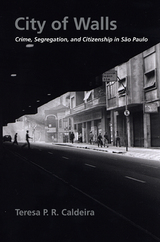
City of Walls by Teresa Caldeira

I have only been here a few days, but some things are already pretty clear. Brazil does not (yet) seem to be as obsessed by surveillance as the UK, but there is a noticeable concern with physical security. The Brazilian urbanist, Teresa Caldeira, called Sao Paulo the ¨City of Walls¨ in her excellent book of the same name, and whilst Curitiba may not be as divided as its bigger northern neighbour, the pervasiveness of defensive urban architecture is clear. Even fairly ordinary suburban houses have high walls, fences and gates,  and some boast razor wire or even electric fences on top. Shopping malls and banks have large numbers of private security guards who are not just hanging around doing nothing as they do in the UK, but seem alert and active. When I went to change some traveller´s cheques, the agency could only be accessed one person at a time, via two locked doors with intercoms and an intervening antechamber with a metal detector.

What is the source of the fear? Of course it is the poor, and in particular the favelados (the people who live in the favelas, the informal settlements that line the riverbanks). Even though in Curitiba, there are not so many favelas and they are not so extensive as in the larger cities of Brazil, the favelas are still no-go areas for non-favelados and I have been warned not even to think about entering. Of course I will be later in Rio, but I will have local help (I hope). Whether one thinks that these are people driven to desperation and crime, or as one contact here said, it is because the drug-runners chose to live amongst the favelados because the police will not follow them there, the division between the favelados and the rest of society is obvious. It is also blatantly racial. The favelados are generally darker, although in Curitiba, which is generally a more European and less African part of Brazil, there are also a significant number of favelados of eastern European descent, the families of immigrants who came to work in construction and were later left without work.

The engineering faculty of the Pontifical Catholic University of Parana, home to the Postgraduate School of Urban Management, where I am based for now, is right up against one of the favelas of Curitiba. The large windows at the back have had to have concrete shields fixed across them as some young guys from the favela had started to enjoy testing their guns out on the panes. There are still a few bullet holes visible in the walls! But don’t let me give you the impression that this is a war zone, or that everyone is paranoid and afraid of each other. It doesn’t seem that way either, and I don’t feel any less safe than I did in Washington DC in the early 90s…