India invests in surveillance drones

According to The Times of India, the Indian military is investing massively in boom military industry of the moment – Unmanned Aerial Vehicles (UAVs or drones).

An IAL Heron TP UAV in flight

The initial order is apparently for coastal protection and involves the purchase of Heron UAVs from Israel Aerospace Industries, a specialist in such technologies which produces everything from large payload drones to tiny micro-UAVs like the Mosquito, which can be launched by hand and is designed for “providing real-time imagery data in restricted urban areas.” The Indian Defence Research and Development Organisation (DRDO) and Aeronautical Development Establishment (ADE) have also been developing their own drones in conjunction with IAI, the latest being the Rustom MALE.

A Predator UAV equiped with Hellfire missile (USAF)

Herons are supposedly unarmed but armed versions were used in the 2006 invasion of Lebanon by Israeli armed forces. The ToI article also makes it clear that Indian forces will be buying more overtly aggressive drones such as the US Predator systems that have been used to such devastating effect against Al-Qaeda and the Taliban in the Pakistan-Afghanistan frontier regions. Far from easing up on the use of these remote-control killing machines, Obama’s administration has accelerated their use. They put fewer US troops in the firing line, and can attack remote areas, from where it is also very difficult to get an accurate independent view on their activities. However they are alleged to have been massively inaccurate, with the Pakistan government claiming that only 10 out of 60 missions between January 2006 and April 2009 had hit their targets, killing 14 Al-Qaeda leaders and 687 civilians, an appalling ratio.

With the advent of strategic bombing and then the ICBM, the Twentieth Century saw a massive increase of the role of remote surveillance in warfare, which was intimately linked to the growth in destructive power and the ability to not to understand the consequences in any direct or emotional way. Even with the tank and artillery ground warfare was not so remote, but now in the Twenty-first Century we are seeing surveillance-based, remote-control warfare becoming increasingly normalised. It is not surprising to see both hypocritical states like the USA and Israel intimately involved in the promotion of this form of conflict which looks cleaner and more ‘moral’ from the point of view of the user, but which in fact simply further isolates them from the consequences of their action. Real time surveillance turns everyday life in to a simulation, and drone-based warfare makes war into something like a game. And it’s a deadly and amoral game that increasing numbers of states, like India, are now playing.

US cameras to see the whole of the moon…

There’s been a story developing for a while now on the US-Canadian border. This used to be one of the most casual and friendly of borders, indeed there are families stretched across both sides and in many places the border meant only slight differences in the price of some goods…

But no more. There might be a new president, but Obama seems to be allowing the Bush-era plans for strengthening the border with Canada to continue. There are now CCTV towers being erected, Unmanned Aerial Vehicles (UAVs) patrolling, and new much stricter passport regulations and customs and immigration checks. As usual this seems to be being done with a kind of macho indifference to the opinions of the Canadians that is making the US actions doubly unpopular.

If this seems like some kind of sci-fi nightmare then then most crazy, Philip K. Dick-style element is to be found on the Michigan-Ontario border at Port Huron, where the Sierra Nevada Corporation, a US military aerospace company, has launched a tethered balloon camera (the company calls it an MAA (medium altitude airship) pointed at the town of Sarnia across the border. This isn’t even an official scheme, it’s a private company trying to sell this insanity to the Department of Homeland Security, and naturally the Mayor and citizens of Sarnia are angry about this international violation of their privacy, and many of both sides of this border think that this intensified security as an attack on the trust that exists between Americans and Canadians.

So what are Sarnians doing? They are giving the cameras something to look at, that’s what. More specifically they are planning to drop their pants for a mass ‘moon the balloon’, which in these days of ever more insane surveillance schemes seems just about the only possible response.

Community Safety in Arakawa

Far from the skyscrapers and bright lights of Shinjuku, where we had our last interview on community security and safety development (anzen anshin machizukuri), Arakawa-ku is a defiantly shitamachi (‘low-town’ or working class) area to the north-east of Tokyo just north of Ueno and outside the Yamanote-sen JR railway loop line that has for much of the last 40 years defined the boundaries of the richer parts of the city.

Bordering the Ara river and split by the Sumida river, it was traditionally a marshy place liable to flooding. It was also a place with a large buraku (outcaste) population and Minowa (in the north of the ward) contains the mournful Jokan-ji (or Nagekomi – ‘thrown-away’) temple, where prostitutes who died in the Yoshiwara pleasure district were cremated. The place has been hit hard by disaster. It was levelled twice in the the Twentieth Century, first by 1923 Kanto daishinsai (Great Kanto Earthquake) and then again by the firebombing in the last years of WW2.

Nevertheless, its rough, industrious, hardworking spirit has continued, and these days, despite the march of secure manshon (high-rise housing) down the post-war avenues, it remains a place full of small industrial units, especially recycling businesses and clothing wholesalers and manufacturers in Nippori, small bars and family restaurants, and lots of ordinary housing, even some of the last remaining dojunkai (early concrete public housing) constructed after the earthquake. It’s also the starting point of the last remaining tramway (streetcar line) in Tokyo, the Toden Arakawa-sen. I like it a lot and it’s where my wife and I have lived in Tokyo in the past, and where we still stay when we return (there will be more pictures in a later post).

It was natural then to turn our attention to the place as a case-study area, mainly because it is so different from Shinjuku and the other areas that have gained so much attention from the Tokyo Metropolitan Government’s recent initiatives. We met with three officials from the Community Safety section of the local administration: the boss and two guys who had been seconded from the city police and the fire service respectively. The boss was full of enthusiasm for the direction that Arakawa-ku has taken, which although they don’t use the term ‘machizukuri‘ is far more about real community involvement than some places that do.

The HQ of Arakawa community safety

Arakawa has no comprehensive CCTV strategy, although the police do consult with the developers of large new buildings on its installation. That’s not to say that they don’t have a certain degree of ‘CCTV envy’ of those places with the latest high-tech gadgets that Arakawa can’t afford, but they are not dazed by the glamour of cameras and are realistic about both the limitations of CCTV and the appropriateness of such systems for their city. Instead they concentrate on using and enhancing the natural surveillance capacities of the local communities. They make a great deal of use of volunteers, retired police officers and ordinary local people, who do their own patrols, including the delightful wan-wan (‘woof-woof’) patrol which, judging from the posters, involves mainly older female residents and very small dogs! Participation in the various community initiatives is encouraged through the use of techniques like professional rakugo (traditional comic monologue) performances in schools and community centres. They also run community patrols in miniature versions of police patoka (patrol cars), which not only look more friendly but unlike the US-style police cars can get through much narrower streets.

The cute community patrol cars

However these diverse community projects are being stitched together in quite an innovative way, with the use of small anzen anshin sutashion (security and safety stations), which are a bit like community versions of the police koban, the miniature two-person police boxes which dot the city. Indeed the officials referred to them as minkan koban (‘people’s koban’). These small help stations, staffed mainly by ex-police don’t just provide ‘security’ information, they also deal with social security in the broader sense, offering help for older people with benefits, for example. In almost all cases, they have replaced koban that were closed by the police. So one could argue that this is essentially the local authority being forced to pick up the bill for services that used to be provided by the police and at the same time is actually losing real police service. However, the strategy overall is a valiant attempt to make ‘community safety’ less an issue of exclusionary security and more one of inclusivity and community development, more a natural and intimate part of everyday life that does not involve new forms of external control.

Of course, crime isn’t really a massive issue here anyway. Arakawa has consistently had the second or third lowest crime rates of all the 23 Tokyo wards. But even since the introduction of these initiatives, crime has fallen still further from the relative high point it reached a few years ago. And hardly a CCTV camera in sight…

A juki-net footnote

I had a conversation yesterday (not a formal interview) with Midori Ogasawara, a freelance journalist and writer who used to report on privacy issues for the Asahi Shimbun newspaper. This was mainly to set up further interviews with those who are or were involved with campaigns on surveillance and privacy issues in Tokyo. However I also managed to clarify a few of my own questions about juki-net and the opposition which it attracted.

In short, there seem to have been several objections.

  1. First of all was the objection to the idea of a centralised database, which was able to link between other previously separate databases.
  2. Secondly, there was the fact that this was the national state asserting authority over both local government and citizens. Both Local Authorities and citizens groups had argued for ‘opt-in’ systems, whereby firstly, towns could adopt their own policies towards juki-net, and secondly and more fundamentally, individual citizens could decide whether they wanted their details to be shared.
  3. The third objection was to there being a register of addresses at all. Many people saw this simply as an unnecessary intrusion onto their private lives, and in any case, the administration of welfare, education and benefits worked perfectly well before this (from their point of view) so why was such a new uniform system introduced?
  4. Next there were objections based on what was being networked. The jyuminhyo (see my summary from the other day) is not actually a simple list of individuals and where they live, but is a household registry. It might not, like the koseki, place the individual in a family line, but is still a system based on patriarchal assumptions, with a designated ‘head’ of the household, and ‘dependents’ including wives and even adult children.
  5. Finally, there was the question of the construction of an identification infrastructure. Whether or not juki-net is considered as an identification system, and it does have a unique identifying number for each citizen, and has the potential to be built on to create exactly such a comprehensive system of national identification. Lasdec, who we talked to the other day, may not approve of this, or believe it will happen, but they are only technicians, they are not policymakers and don’t have the power or the access to know or decide such matters. And in the end, if they are required by law to run an ID system then they will have to run it.
  6. There were, as I already mentioned, objections to the potential loss or illicit sharing of personal information. I don’t think this is intrinsic to juki-net, or indeed to database systems, but of course both databases and networks make such things easier. People are also quite cynical about promises of secure systems. Lasdec may say that that juki-net is secure, but there have been enough incidences of government data leaks in the past for people not to accept such assertions.
  7. Finally, Juki-net connects to the border, passport and visa system. The reason that foreigners will finally be included on the jyuminhyo (and therefore juki-net) from 2012 is not therefore to respond to long-term foreign residents’ requests for equal treatment but in fact to make it even easier to sort out and find gaikokujin, check their status, and deal with unofficial and illegal migrants. Groups campaigning for the rights of foreign workers (mainly the exploited South-East Asian and Brazilian factory workers) have therefore been very much involved. Of course it also makes it possible to connect the overseas travel of Japanese people to a central address registry.

I’ll be meeting Midori again soon, I hope, along with other researchers and objectors. I am also still hoping to be able to talk to officials from the Homusho (Ministry of Justice) and the Somusho (Ministry of Public Management, Home Affairs, Posts & Telecommunications), but they are are currently passing around my request to different offices and generally delaying things in the best bureaucratic traditions!

Mega-events, Security and Surveillance

The connection between what are often called ‘mega-events’ (international summits, major sporting competitions etc.), securitization, and he intensification of surveillance is becoming a very interesting area and one which we wrote about in our recent book on urban resilience. I am writing some further stuff on this with Kiyoshi Abe on how mega-events have been managed in Japan.

It seems that in general, such events are either used as ‘test-beds’ for new technologies and procedures which are then either continued afterwards (as with The Olympic Games and CCTV in Greece in 2004 and The FIFA World Cup and video surveillance in Japan/Korea in 2002), or become ‘islands’ of temporary exemption where normal legal human rights protections are reduced or removed and whole areas of public space are often literally, fenced off (as in Rio de Janeiro for the Pan-American Games of 2007, whose model will apparently be extended to include walling off the poor favelas in time for the 2014 FIFA World Cup). There’s going to be a very interesting conference on The Surveillance Games later this year to tie in with the Vancouver Winter Olympics.

Now The Guardian newspaper is reporting that the London Olympics 2012 may make use of a proposal originally designed to stop the proliferation of unofficial commercial advertising near games venues in order to prevent protest. The legislation even allows police to enter private houses to seize material.

Of course the government say that they have no plans to use it in this way, but it’s interesting to see the way in which the ‘standards’ being imposed by such travelling cicuses of globalization tend to end up looking more like the authoritarian regime in Beijing (host of the highly securitized 2008 Olympics) than the supposedly liberal west, whilst at the same time promoting a very controlled but highly commercialized environment. Even the original purposes of the 2006 law (necessary for London to host the Games) are an interesting reflection of the massive corporate interests involved in the Olympics, for which they apparently need a captive and docile audience.

How Many CCTV Cameras are there in Britain? (Part 6)

BBC’s Newsnight current affairs programme has used the Freedom of Information Act to ask almost 100 Local Authorities in the UK how many video surveillance cameras they operate. There are some really nice graphics here, which demonstrate what a ridiculous number of cameras we have, and particularly the way in which CCTV is becoming seen as ‘normal’ in all areas, not just big cities.

This brings up the discussion we were having earlier in the year with David Aaronovitch of The Times and Paul Lewis of The Guardian (see here, here, here, here and here!), who claimed that members of Surveillance Studies Network had knowingly fabricated figures. In fact these were scenarios and broad guesstimates and never presented as anything more than that. Newsnight in common with most media doesn’t get this either and thinks that its survey means that “there are almost one million fewer CCTV cameras in the UK than previously thought.”

However there survey was only of Local Authorities. It did not cover private systems in public open space or quasi-public space like transport systems (railways, buses and the underground) and shopping malls, let along cameras in private space. The guesstimates made by Clive Norris and Mike McCahill way back in 2001 included all cameras in public space. Norris and Gary Armstrong’s little scenario of being spotted by up to 300 cameras a day most certainly included purely private ones too – as did a real life version of the same kind of scenario conducted by The Times earlier this year – in fact, private cameras covering public space were almost twice as numerous as state ones. So in fact there are probably many more CCTV cameras than “previously thought.” The important thing is that there is almost no control over their proliferation whether nominally ‘public’ or ‘private’ and, as I wrote the other day, almost nothing apart from conscience that seems to be stopping operators from using ‘augmented’ CCTV because extra functionality like audio comes as standard on camera units these days.

For me, of course, the really interesting figures are the international comparative ones: that there are more cameras operated by the average London borough than by the whole metropolis of Tokyo. Yet in other ways, the figures are probably closer – Tokyo is as comprehensively covered as London in terms of public transport. Nothing is quite as clear-cut as it seems if you restrict the research to one type of camera system. Still, thank-you very much to the Newsnight researchers for performing a useful public service!

Travel cards: Tokyo vs. London

NB: this post is largely incorrect… at least in the fact that actually the systems are much more similar and becoming even more so. I am not going to change the post (because being wrong is part of research and learning), but will direct you to a more recent post here.

Tokyo and London both have pre-paid smart card systems for travel on public transport. They look superficially similar but also have crucial differences.

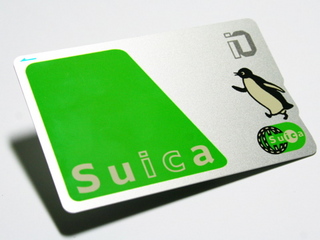
JR East's Suica card

In fact, first of all, there are several smart cards from different railway companies in Japan. Each of main privatised regional railway companies has one: the most common in Tokyo are the Suica card operated by JR Higashi (East Japan Railways) and the Pasmo card issued by a collection of smaller private railway companies as well as the TOEI subway, bus and Tokyo Metro systems. JR NIshi (JR West) and JR Toukai (JR Central) also have their own cards, ICOCA and TOICA respectively. They are all now pretty much interchangeable and Suica, which is the oldest system in operation since 2001, in particular can now be used for other kinds of payments in station shops and the ubiquitous Lawson chain of konbini (convenience stores) elsewhere in the city. It also now has a keitai denwa (mobile phone) enabled version in which the card is virtually present as a piece of phone software.

Great! It’s convenient, costs no more than buying tickets separately and if you forgot to bring any cash for your morning paper, you can use Suica for that too.

So, just like London’s Oyster card then?

Well, no.

TfL's Oyster card
TfL's Oyster card

The Oyster card, issued by Transport for London, looks pretty much the same and operates along similar technological lines, but because it also requires the user to register using a verifiable name, address and telephone number, with which the card is then associated, it is effectively also a tracking system, which is gradually producing an enormous database of movement surveillance. And of course this has not gone unnoticed to the UK’s police and security services who have reserved the right to mine this database for reasons of ‘national security’ and detection of crime. If you lose your card or have it stolen, then not only do you lose your £3 deposit, you’d better tell the authorities too or you might end up having some criminal activity associated with your name on the database.

Suica cards, on the other hand, can be bought from any ticket machine, require no deposit and no registration, and it doesn’t matter if you lose them, or leave the country, even for several years.

Tokyo and London’s transport systems have both experienced terrorist attacks so there’s no particular reason why Japan’s authorities shouldn’t have demanded a similar database (if you accept the UK’s reasoning). Tokyo also has a far more extensive, complex and multiply-owned transport infrastructure. Surely this must inevitably lead to an insecure and out-of-control system where disaster is inevitable.

So in which of the two cities does the transport system work far more efficiently? And where is that you are actually less likely to be a victim of crime, and feel safer?

I’ll give you a clue – it isn’t London.

USA builds massive new space surveillance system

My headline is a slightly more accurate version of the way that news of the new ‘Space Fence’ system has been headlined, for example here in Computerworld. The Space Fence system, whose first stage is a $30 Million US project for Northrop-Grumman, will replace a 1961 VHF radio infrastructure known as the Air Force Space Surveillance System built in 1961.

Although the spin is that the system is all about tracking space debris, this is actually part of the DoD’s satellite tracking operations – which certainly does cover debris, insofar as they are a threat to US satellites, but is also crucially to make sure that an accurate picture of the increasing number of smaller ‘micro-satellites’ from an every-expanding number of countries can be obtained. In that sense, this program is indeed a ‘fence’, a further attempt to enforce the notion that space is effectively US territory.

Met Police finally admit photography is not a crime

After protest and parliamentary questions, The Register reports this week that the London Metropolitan Police have finally got round to reminding their officers that it is not in fact a criminal offence for ordinary people to take photographs or video in public places, nor even to take pictures of police officers. The way that many Met officers had been acting over the past couple of years with harassment of photographers, even tourists in some cases, and arrests under the Terrorism Act,  there appeared to be a deliberate attempt to change or extend the meaning of the law by police policy. This was at the same time that the Met had been running campaigns stating that it was suspicious for anyone to be interested in CCTV. Part of this is also the fault of the Act (and others like it, including the recent Counter-Terrorism Act), which are very broadly drawn and easily subject to extreme interpretation by those who would want to abuse them to attack individual liberties.

This isn’t over yet however; there are many other police forces in the rest of the country and also quasi-police (community support officers, town centre managers etc.) as well as private security, who need to recognise that the public have a right to take photographs in public, and should not be harassed, assaulted or threatened with some non-existent sanction for a perfectly legal pastime.

MI5 in all kinds of trouble…

The British internal security service, MI5, has found itself in all kinds of trouble this week. First there was the report of the inquiry into the intelligence aspects of the 7/7 bombings in London. Although the report ‘cleared’ MI5 of wrongdoing (which was hardly unexpected!), it is clear that there was a catalogue of intelligence failures resulting from aspects as varied as a lack of funding, poor communication between MI5 and police, and simple mistake in judging the seriousness of the activities of those who came to the notice of MI5, particularly the two eventual bombers, Mohammed Sidique Khan and Shehzad Tanweer.

Then today, there have been serious allegations made in The Independent of the MI5 trying recruitment by blackmail on young British Muslims. Basically the modus operandi was to approach the potential informant and tell them that they were suspected of terrorist activities or terrorist sympathies, but that if they cooperated with MI5 then this would be overlooked. However if they refused then their ‘terrorist connections’ would be made more widely known.

All of this, as if it needed pointing out again, leads to the the clear conclusion that the security services need better and more transparent oversight, as well as clearer direction, and yes, perhaps more money (if they can behave themselves). The point is that properly controlled and justified targeted surveillance of genuine suspects (like Khan and Tanweer) is exactly what a security service should do, whereas mass preemptive surveillance (a la Met Police) or random blackmail is not. In fact the latter would tend to be counterproductive as in general, they will increase distrust in government and in particular, drive more young Muslims towards extremism.