Implants vs. Wearable devices

Printed Electronic Tattoo (Wired)

I’ve been thinking a lot recently about why it is that implanted tracking devices have never really taken off in humans. Just a few years ago, there were all kinds of people laying out rather teleological versions of technological trajectories that led inevitably to mass human implanantation – and not just the US Christian right, who saw RFID as the fulfilment of biblical prophecy.

I think there are many reasons, including negative public reaction (implants really are a step too far, even for the ‘nothing to hide, nothing to fear’ crowd) and the fact that a lot of the promotion of human RFID implants was actually the PR work of one very loud company (Verichip) and did not actually have a lot of basis in either social reality or market research. But the other major reason is to do with other technological developments, particularly in wearable computing and sensor networks. In most cases, implants solve a problem that doesn’t exist (the idea that people want to remove a tracking device that might be there for very good – although I am not saying, indisputably good – reasons, usually medical ones). And where there are no good reasons, there’s probably no case for tracking at all.

So devices like this – temporary, printed or stick-on and removable – are far more what is likely to become the solution to any actual problem of tracking or monitoring for medical reasons. And the relative ease with which it can be removed by the wearer does at least mean that there is some room for negotiation and consent at more than just one point in the process. Of course, such removable, wearable tracking are still not somehow free of ethical and political considerations – and some may argue that the very appearance of consent actually hints at the generation of a greater conformity and self-surveillance, but the issues are of a slightly different nature to those raised by implanted devices.

The Iconography of High Velocity DNA tagging

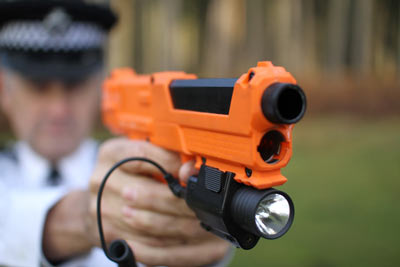
There’s been quite a lot of media coverage in the last few days about the ‘High Velocity DNA Tagging System‘, made by UK company Selectamark, and apparently in line to be purchased by several UK police forces. The system uses a kind of airgun that can fire “a uniquely-coded DNA pellet” for up to 30-40 metres, which “can be used to mark an individual so that they can be apprehended at a less confrontational time for officers.” Claims on the website include one that the microdots of artificial DNA can penetrate through clothing and mark the skin of individuals, and also that the artificial DNA used can result in ‘infinite number’ of unique numerical identifiers.

None of this is entirely new: Selectamark is a company who’s core business is anti-theft marking of equipment, and essentially what they have done is create a gun-based delivery system for an existing technology that was previously used to mark things, thus turning it into a system for identifying individual human beings, in much the same way as has been suggested would occur with RFID implants (but which has not yet really happened in any widespread fashion). Like RFID, the identification is not biometric, i.e. resulting from unique bodily characteristics, but what amounts to a high-tech form of instant temporary tattooing or paint-marking. The company is silent on how temporary this is – and whether the microdots – which are just visible, but show up better under UV light – can be easily removed or washed off by those tagged.

What’s also really interesting is the imagery deployed in the website. Of course there are the usual images of policemen with large guns (here complete with light source for night-time use). These guns, like tasers, have an interestingly toy-like quality to them with their bright orange plastic finish. Guns that aren’t really guns…

selectadna-high-velocity-pistol-400

However what’s more interesting are the background images used on the site. The targets of the tagging system are clearly depicted in one background image and will be recognisable to all British readers – ‘hoodies’ – the marginalized urban youth who were implicated in the rioting in London in 2011 (although there is also an inevitable pop culture association, especially with all that light-saber-y UV around, with the evil Sith from the Star Wars franchise).

slider2

The youths are depicted encircled in lines of UV-like light whose coils also reflect the image of DNA, which is used here as another background image.

slider

The late Dorothy Nelkin and M. Susan Lindee described DNA as a ‘cultural icon‘, and indeed, the never-really-explained ‘artificial DNA’ technology which underpins Selectamark’s product seems deliberate discursively confused with exisiting DNA identification technologies, or at least the association is clear: that DNA fingerprinting, which is already understood in media discouse as standing for absolute certainty as to identification, is ‘the same’ as this technology. And clearly this sounds better than associating it, as I did earlier, with tattooing – which has a much less wholesome image when it comes to the state’s usage (Nazi death camps etc.).

And then the lines of light that surround the youth also seem to beam out across and enclose the entire world, which is both a standard marketing trope (“we are a global company”) but also a shift in scale that reflects the way in which security and surveillance has moved, to encompass the globe. The world is also depicted as dark with the suggestion of a coming sunrise (fitting in with the overall ‘crime lurks in the darkness and Selectamark will shine a (UV) light in it” theme) and almost entirely urban:

slider3

But then what is the value in this global world, which Selectamark (and the police) are seeking to protect? What is the source of the light? Well, the answer, in the final background image, will surprise no-one. It isn’t those who need justice, the poor, the downtrodden, the huddled masses, it’s big companies:

slider4

The corporate sector is depicted as icons streaming information-superhighway style from the light along grid patterns: rational, clean and bright and filling, overcoming, the darkness beyond, in a corporate version of the creation story in the Book of Genesis. We are saved! Thank-you, Selectamark and your High Velocity DNA Tagging!

GPS tracking goes mainstream

There is increasing evidence that US police forces are now using GPS tracking devices regularly and with impunity. Following court rulings at different levels which have left the legal situation unclear with only the Supreme Court left (this coming week), police forces across the country have been slapping GPS trackers on thousands of private vehicles, without warrants, and until recently, without the knowledge of those being tracked.

However, Wired‘s Threat Level blog has been reporting on the growing numbers of cases of Americans who have discovered GPS trackers on their cars, and in one particularly bizarre case, a device that was replaced by undercover officers while the Wired reporters were in the vicinity, having just removed and photographed the original device!

There are many pictures and manufacturers’ detail on Threat Level. Here are a couple…

GPS tracker in place:

GPS tracker disassembled showing souped-up longlife battery, including manufacturer’s details:

One of the more perplexing things about the use of these devices is what recourse the US citizen has when they discover them. If they are placed ‘legally’, do you have the right to remove or indeed to disassemble them? What would be done if they are removed? The experience of Wired would suggest that the device would be replaced, but how many times could this go on? At what point would the state take some kind of legal action to attempt to prevent the removal of a device? In the case of location tracking devices that are known about but unable to be legally removed, surely you have a situation that becomes equivalent not to simple (if it is even simple) unwarranted surveillance, but to electronic tagging.

Chipping Pre-School Kids in the USA

ACLU is reporting that nursery schools kids in Richmond, California are being issued with jerseys embedded with RFID chips. GPS-enabled and/or RFID-chipped clothing has been available for a while now, and there have also been (pre-)schools in other countries that have issued tracking devices to kids, notably in Yokohama in Japan, but this appears to be the first time in the USA. RFID is a very simple, insecure technology, and this type of initiative gives a false sense of security and is about at once raising and appeasing social anxiety and parental paranoia about the incredibly rare instances of child kidnapping. ACLU note correctly that this is just likely to make stalking and kidnapping easier as harder, but really all this does is enable the school to know where the jersey is – like left on the back of a bus, swapped with a friend or thrown in a ditch. It’s more pointless security theater, but at a more intimate level than the kind we are used to at airports and public buildings.

Pigs subvert surveillance

It is not just human beings who are subjects of surveillance. Animals are increasingly under surveillance too, indeed there are techniques of surveillance and tracking used on animals that are designed to achieve levels of control that (for the most part) would not be tolerated for human beings. Animals are tagged, filmed, implanted, tracked, and even used and adapted for surveillance (see Amber Marks’s book, Headspace, for example) for all kinds of reasons from the economic to the environmental. However, this great story from a BBC kids’ news program demonstrates that some animals can ‘fight back’ in ways that are inventive and heartening.

Many farms now limit the food consumption of individual pigs through the use of electronic Radio-frequency Identification (RFID) collars and gates: once the pig has gone through the gate, the collar communicates with a computerised food distribution system which will provide the pig with what is deemed ‘enough’ for the pig. When the pig has eaten and left the feed stall, it cannot get back in for more because the system knows which collar has already been through the gate.

However, apparently pigs in several locations have independently learnt how to get round this surveillance system. Some pigs hate the collars so much that they rip them off. These pigs then don’t get to eat of course, but other pigs have learnt that if they pick up the collars they can go through the gate a second time – and they have even taught other pigs how to this…

Never mind ‘Big Brother’ and Nineteen Eighty-Four, it’s another Orwell phrase (from Animal Farm) that comes to mind here: “Four legs good, two legs bad”…!

(Thanks to Aaron Martin for this)

The paranoid bubble of Offender Locator

TechCrunch reports that one of the Top 10 current iPhone apps in the USA is something called ‘Offender Locator’. This is a little mash-up that overlays the location of those on registries of sex offenders onto google maps, so you can check where sex offenders live whilst you are on the move.

This is such a world of wrongness, its hard to know where to start.

Let’s begin with the categorisation. The category of ‘sex offender’ varies from jurisdiction to jurisdiction. This app is clearly targeted at parents worried about paedophiles, yet depending on the state, offender registers can include people convicted of innocuous things like public nudity, public urination and simple underage sex (and please don’t try to tell me that a 17-year old kid who has consensual sex with a 15 year-old kid is a technically a paedophile, that’s just normal, whatever the laws of some backwards states may say).

The second thing is that even the US Department of Justice says that such registers cannot be guaranteed to be accurate. So now these non-guaranteed lists are available to you mapped out on your iPhone. Does that somehow make them more accurate? No, but all those red arrows on a map do look much very ‘real’ and scary though, don’t they?

Which brings me to the third point. What are you supposed to do with this ‘information’? It’s hardly empowering, in fact it creates a false view of the world based on fear. Will you not let your kids out within several miles of any red marker on the map, will you take a detour to avoid neighbourhoods with high concentrations of offenders when you are driving, or of course, in contrast, will you deliberately go to such places with a baseball bat to show those sex offenders who’s boss?

Finally, of course, this information isn’t ‘live’. It shows you where sex offenders live, but they aren’t chipped yet, so not where they actually are at any one moment in time. It provides at once a false sense of reassurance and the nagging feeling of doubt that they could really be right behind that tree over there, or in the shadows. And what do ‘they’ look like? That man over there with the 5 o’clock shadow at 11 in the morning sure looks like a sex offender… and there’s definitely some in this neighbourhood, your iPhone says so!

Apps like this, policies like this, also increase the pressure for more ‘comprehensive’ solutions – especially this app. Because it isn’t ‘live’, they’ll be people asking ‘why not?’ Why not tag these people for the rest of their lives with GPS cuffs, or implant them with RFID chips?

Finally, the thinking behind this app is just wrong in terms of what we know about sex offenses. Most real sexual violence and sexual abuse of children takes place within the home and within ‘normal’ family relationships (and ‘normal’ schools and nurseries too). That’s what Mr or Mrs iPhone doesn’t want to hear. ‘It couldn’t be my husband, okay he gets angry with the kids sometimes, but he’s under a lot of pressure at work and I know he loves us…’ Far easier to externalize the ‘threat’, to cast it ‘out there’ amongst the red arrow markers on the streets of some other neighbourhood…

Surveillance isn’t necessarily the same thing as paranoia but when surveillance becomes pathological, paranoia is the result. Some paranoia is about surveillance, some is expressed in surveillance. This kind of apparently democratic, freedom of information app, demonstrates the worst and most pathological places that a society of ubiquitous surveillance can start to go. It creates defensive bubbles of individualized, desocialized paranoia, of protecting ‘the kiddies’ against the threats from the ‘Other’, outside. Perhaps you should just stay inside and buy everything from amazon.com and make your kids live in some virtual world where only those nice marketers can prey on them…

(thanks to Aaron Martin for pointing this snippet of news out to me)

The rise of personal surveillance

Personal surveillance is only going to get harder to regulate as things like ‘smart dust’ and micro-UAVs come down in price and are more easily available…

CBS News in the USA is reporting on the rise of stalking and in particular the use of more powerful, smaller and cheaper surveillance devices: embedded hidden cameras, GPS trackers and so on. They discuss in particular the case of Michael Strahan, a sportsman who seems to be obsessed with keeping watch on family and friends. But the bigger pictures is that stalking is something that apparently affects around 3.4 million US citizens. That’s more than one in a hundred, an astonishing figure if it’s anywhere near ‘right’.

Stalking and personal surveillance are an integral part of the culture of any state in which order in ensured through surveillance. We are creating unhealthy societies in which personal relationships between people are increasingly characterised by the same fear and distrust as states have of their people.

Smart Dust chips (Dust Networks)

ravenThis is only going to get harder to regulate as things like ‘smart dust’ and micro-UAVs come down in price and are more easily available. And already surveillance equipment like head-mounted cameras for cyclists, is marketed as ‘toys’… regulation is only half the answer. The other half has to be in working out how to shift away from this mistrustful, fearful, risk-obsessed culture. Part of this has to be down to government: the more that surveillance is part of every solution they come up with to any problem, the worse the social malaise will become.
Transport Surveillance in Brazil (1) SINIAV

One of the items reported on in Privacy International´s assessment of privacy in Brazil was that ¨in November 2006, the Brazilian National Road Traffic Council approved a Resolution adopting a Radio Frequency Identification (RFID) tags in all licensed vehicles across the country.¨ The Conselho Nacional de Trânsito (CONTRAN) is part of the Departemento Nacional de Trânsito (DENATRAN), itself part of the massive new Ministério das Cidades (Ministry of Cities), the product of Lula´s major ministerial reforms designed to shift emphasis and power away from the large rural landowners to the growing numbers of increasingly populous cities.

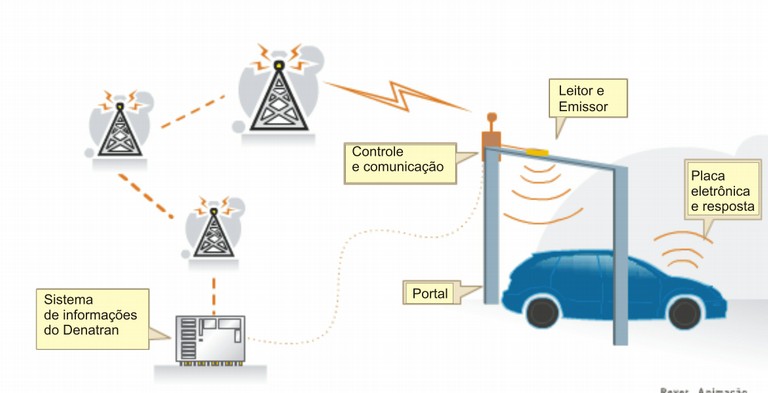
brazao_siniav1The new scheme is called the Sistema Nacional de Identificação Automática de Veículos (SINIAV, or National System for the Automatic Identification of Vehicles). Basically it will put an RFID-tag in every vehicle license plate, in a gradual process. Much like the new ID scheme for people, SINIAV is based on a unique number. In Annex II, Paragraph 3, the resolution provides a breakdown of exactly what will be contained in the tiny 1024-bit chip as follows. The unique serial number (64), and a manufacturer´s code (32), will be programmed in at the factory, leaving a total of 928 programmable bits. The programmable area contains two main sections. The first contains all the personal and vehicular information: place of registration (32), registration number of seller (32) application ate (16), license plate number (88), chassis number (128), vehicle tax number (RENAVAM) (36), vehicle make and model code (16) and finally 164 bits for ´governmental applications´. The remaining 384 bits are split into 6 blocks for unamed ´private initiatives.´

SINIAV system diagram (DENATRAN)

Privacy International note that there is no more than a mention of conformity to constitutional rules on privacy (of which more later). However there is much more that is of concern here. The resolution claims that the data will be encrypted between plate and reader, but the technical specifications are not given to any level of detail (*though there is more information from the Interministerial Working Group on SINIAV, which I haven´t examined in any detail yet). We all know already how easy it is to clone RFID chips. This scheme is supposed to be about security for drivers, but it could easily result in the same kind of identity fraud and consequent necessity of disproving the assumption of guilt created by automated detection systems for car-drivers as for credit cardholders. Could you always prove that it wasn´t your car which was the gettaway vehicle in a robbery in Saõ Paulo, or you driving it, when your actual car was in a car park in Curitiba? Widespread cloning of chips would also render the whole system valueless to government.

RFID chip
RFID chip

Then there is the question of function creep. The chip has spare capacity, and assigned space for unamed functions, state and private. Brazil already has a system of state toll roads (pay-for-use highways), and these chips could certainly be used as part of an automated charging system. That might be very convenient. However what other functions could be thought up, and how might safeguards be built in? As I have already noted, Brazil has no body for protecting privacy or data/information rights so it would be very easy for new more intrusive functionality to be added.

Combining the problems of a movement towards automated fines or changes, and criminality, another major issue would be the one recently revealed in Italy, where a automated red-light camera system was found to have been fixed in order to generate income from fines for corrupt police and a multitude of others.

The final question of course is whether this will all happen as planned or at all. The system would supposedly be complete by 2011. I know of a trial scheme in Saõ Paulo, but on a quick (and very unscientific) straw poll of people who I encountered today at the university here in Curitiba, there is to be no-one who has an RFID license plate or knows someone who does, and there is practically zero awareness even amongst educated professionals. Like the National ID-card scheme, people just don´t think it will go to plan or timetable. That may however, just reflect a (middle-class) Brazilian view of the abilities of the state.

Still, as the Frost and Sullivan market assessment states, all of this turns Brazil into a ‘highly attractive market for RFID suppliers’ which was probably the main motivation and will be the only real outcome.

Electronic Tagging for Kids

img2_big
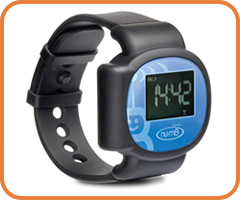
Lok8U's tag (sorry... watch)

Another day, another ridiculous device that plays on fear… British company Lok8U (urgh…) has produced a digital watch that can be used to track the wearer through GPS. Now there are plenty of these types of devices about from Bladerunner’s GPS-enabled jackets to services for tracking another person’s mobile phone. 

But there is something rather more ominous about this one. It’s not just a friendly tracking device. It is, so the makers’ claim, “the world’s first GPS locator that locates your child… not just the device.” In other words, the watch is designed so that it cannot be removed by the wearer. Never mind prisoners on probation, or offenders on behaviour orders, this is basically DIY electronic tagging for your kids. Of course it won’t stop any actual harm coming to the little darlings (and in any case it will probably be as easily removed as electronic tags are) but it might just make both you and they even more afraid of the world than you are already.