Finding my feet and losing my head in Sao Paulo

It is my firm belief, yet to be disproved, that any urbanist worthy of the name can find a decent bar within 24 hours of their arrival in any city on the world, and preferably less. Read Ernest Hemingway’s Paris: A Moveable Feast. It’s Chapter 1. No-one knew bars like Hemingway. In Sao Paulo, as in Paris even today, it would be impossible to fail this challenge. I found mine this evening right next to a more famous bar at the corner of Sao Joao and Ipiranga which has started to believe its own mythology and therefore lost everything that once made it a bar worth celebrating in song, and I settled in to watch and learn.

I’ve already got so used to joking with barmen and concierges about my poor Portuguese that it’s almost like an icebreaker. The bar was haphazard, white tiles, and giant freezers which got the beer down to an appreciably glacial degree of cool, decent salgados and two grades of chili source to accompany them (hot and really hot – no-one has the first choice, of course).

Bars are human sociality at their most basic, their most primate-like. I once worked on a zoological expedition studying monkeys in Kalimantan, and there is very little I’ve seen in bars that I haven’t seem being done by other primates (apart from the serving of cold beers, which explains most of what happens in bars that you don’t see in monkey groups). The forced-together bonhomie, the silence amongst the mostly male clientele as some particularly fine example of the female of the species walks by (and that happens an awful lot in Brazil), the arguments about sport and politics, the group-dominance by alpha-males – at least in the absence of any alpha-females – it’s all there and it’s all – excepting the beer and the salgados – monkey.

It makes one depressed and optimistic at the same time. You know that anywhere that humans go, somewhere in the universe, there’s going to be a bar just like this. And yet, it makes you wonder whether we will ever manage to solve the enigma of cities, a solution that will bring in those shadowy figures who lurk just beyond the reach of the bright lights of the bar – the stick-thin figure of the beggar-woman who passed me twice this evening, the guy selling lottery tickets at the last minute, the prostitutes and thieves who have been driven to these ends because of the city, because their existence and the existence of the city don’t quite seem to coincide in the same way, the same spacetime. There’s a reason good urbanists need to find a good bar. It isn’t always for the same reasons as everyone else.

Sao Paulo Surveillance and Security

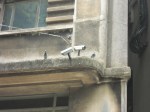
Nor surprisingly there is very little surveillance in the area around the hotel, except the old fashioned kind and you better be sure that people are watching you from the little shops and street corners. However when you head down the Av. Sao Joao into the financial district, it’s a different story. I was cautious about taking obvious pictures of police and security guards, let alone the serious security inside the bank entrances (metal detectors, scanners, guards etc.) because I just don’t know what kind of trouble that would bring, but here’s a flavour.

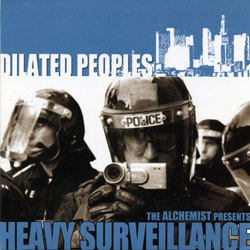
Hip Hop Cops

Alchemist album from 2003

An interesting article entitled ‘Watching Rap’ by Eric Nielson on police surveillance of hip-hop artists in the USA. It’s worth a read and has some nice analysis of the response in rap lyrics, which is a pleasant change from the concentration on mainstream film and fiction that you tend to get in Surveillance Studies. However, it is unfortunately illustrated with a lot of rather irrelevent cliched images of CCTV cameras, Banksy etc. and is rather lacking in a deeper political context. It is not as if rappers are the first group of popular cultural figures, or the first African Americans to be put under surveillance by the US state: he should perhaps have looked back at least to the Black Panthers and the FBI’s COINTELPRO program of the 1960s. This isn’t just a cultural connection: Nielson starts off with the rumours around the shooting of Tupac Shakur, whose mother was, of course, deeply involved in the Panthers… but a very worthwhile piece nevertheless.

UK travel database

Lots of media outlets today and yesterday reporting on the UK government’s e-Borders initiative. I’m not quite sure why particularly now: we’ve known about the e-Borders program – which is based around the new RFID-chipped passports – for some time. Of course the system involves collecting vast amounts of data, including rather more personal information than seems in any way necessary, like for example, travel companions – as if terrorists and criminals will obediently identify themselves by booking and traveling together!

For that is the justification for all this. On the Politics.co.uk website, Phil Woolas, the Minister of State for Borders and Immigration – another barrel-scraping appointment by a government that doesn’t really have many options for ministers now – said that this is is just about allowing ‘us to count all passengers in and out of the UK.’  But this isn’t just counting. What was a system derived in a combination of bowing to US demands after 9/11 and embarrassment over the government’s total inability to counter opposition criticism over immigration with any real facts has expanded its functionality (as with all of these systems) into something rather more comprehensive.

Woolas goes on to say that it ‘targets those who aren’t willing to play by our rules’ – tough talk, but it with the ever increasing numbers of trivial, silly and sometimes plain bad rules introduced by the current government, it’s hard to know what playing by the rules means anymore. This is a major problem for those who just accept all of this with a shrug and argue ‘nothing to hide nothing to fear’. I also wonder how long it will be before this database is hacked or details get left on a train or the whole thing is ‘lost’. Maybe I will start paying attention to Phil Woolas’s idea of the rules when his government starts paying attention to the European Convention on Human Rights, introduces some proper accountability and oversight for all these new surveillance initiatives as the House or Lords recommended, and stops losing our data and pandering to fear. Accountability, competence, ethics and rationality: it’s not much to ask from a government is it?

Touchdown in Sao Paulo

The centre of Sao Paulo not a place for those who don’t like the scent of human beings together or being touched and jostled. The streets smell of piss and sweat and there are boys begging and running and men lying in boarded-up doorways or just on the sidewalks, with their dogs or without…

It’s hot and wet and I’m lying on a bed in a hotel which is a good 2 stars short of the 4 that it claims to have, in a neighbourhood in which the only stars you’ll see are if you’re lying in the gutter. And many are.

I’m sorry to go gonzo on y’all but on first impressions that is the way I will have to write it. Sao Paulo is the kind of city that seems to have that effect. I’ve only really come here to talk to a few social organisations and to see Rio’s great rival, but it’s hard to know what to make of it. Flying into Congohas, we cut through the low clouds to the spectacle of this endless sprawl of towers and factories and suburbs and favelas and highways thrown together with as little sense or plan as any place I’ve been in Asia. Like Tokyo or Mumbai it’s just too big to take in or apprehend even from the air, although you can’t avoid the scalar indicators of class divisions – both vertical and horizontal. The airport is one of those which has been drowned in this rising sea of humanity which makes the final descent pass with a feeling of rooftop-skimming alarm, which a slight sideways jolt on the infamously greasy runway surface – a plane skidded out of control here in July 2007, killing 187 people – does little to allay.

We make it safely down. As we are heading to the terminal I see my first helicopter, another reminder of the social extremes of this place where the super-rich just don’t let their feet be soiled by the streets any more and which has the largest private helicopter use outside of New York.A taxi to the centre – they tell me there aren’t any buses though I am sure there are, and I won’t be making that mistake again!. The highway that snakes deeper into the city is hemmed in with rotting stone and concrete and every space that hasn’t been walled off has been reclaimed and is packed tight with self-constructed dwellings in various stages from shack to house. Occasionally huge voids are opened up – precursors to a further gentrification, some new fortified tower condominium – and the archaeology of the city is laid bare: a splash of colonial colour, deco curves and the confident lines of Brazilian modernism, all cut neatly and disrespectfully for some tower block with a European name and not a hint of Indio or African heritage. Brazil might not be an overtly racist culture in many ways, but ‘whiteness’ remains the shade of aspiration…

Then a sharp left off the highway and we are in the old centre. The taxi driver knows the map but he doesn’t know the area, and out path is blocked by a Sunday market. I take a mental note – I’ll be back later. We get to the hotel, which pleasingly is not anything like the priggish image on the website and if it is ‘perfect for business’, it certainly doesn’t look like the kind of business you do with a briefcase… This turns out to be exactly what O Centro is all about. I get out and head back towards the market for a pastel com queijo and a cool caldo de cana com limao, and just to wander amongst the fruit and veg sellers. This place is much more obviously mixed than Curitiba. The faces of the vendors are a whole range of darker shades, the accents more varied, tougher and more incomprehensible!

The toughness isn’t just in the voices of the stallholders though. The is a brash, hard city. The centre of Sao Paulo not a place for those who don’t like the scent of human beings together or being touched and jostled. The streets smell of piss and sweat and there are boys begging and running and men lying in boarded-up doorways or just on the sidewalks, with their dogs or without. Sleeping, drunk, dead – who knows? The market is winding down, an at the ends of the street, amidst the sickly sweet decaying piles of vegetable leaves and squeezed sugarcane pulp, several middle-aged whores work the last few departing customers. They half-heartedly ask me if I want something. I just smile and politely say no thank-you very much, which seems to amuse them. I don’t suppose they get or expect much of that sort of interaction. This sets a theme. There are women working the car parks, women on the street, women trying to entice any likely-looking customers into a seedy-looking film theatre for ‘fantasia’. Turning a corner suddenly the street is full of younger men standing around with largely older guys passing by. It’s only after the second transvestite offers me something else that I realise I’ve entered another kind of business district, which happily filters into a much more ordinary a relaxed set of gay bars and pastelarias. There seems to be some kind of club open, with another very tall transvestite on the door, but the queue outside seems to be mostly teenagers. I’ve only been a few blocks and this isn’t even (apparently) the really lively part of SP…

Cutting back to the Praca da Republica, there’s another much bigger market winding down, this one more of a craft-type affair with lots of wiry men and women selling hats and carvings and a whole avenue of dealers in stones and minerals and, outside the entrance to the Metro, food stalls selling either Japanese yakisoba or cream cakes. Neither appeals, and as it looks like rain, I head into a bar. Sao Paulo against Botafogo is on the TV but not too loudly and no-one seems interested, the beer is cheap and the woman behind the bar is singing to herself so I stay and sip the cold lager and watch the rain come down and the passing beggars and freaks and drunks and I am thinking that I am just a few hundred yards from Parque da Luz where the city has installed public-space CCTV, and it might be the beer but just makes me want to laugh. It just seems so tiny, so pathetic a gesture, how can it possibly do anything to this roiling mass of humanity with its desires and suffering and joy and desperation.

I’ve touched down in Sao Paulo.

Surveillance and the Recession

In the editorial of the latest issue of Surveillance & Society, I speculated that that the global recession would lead to surveillance and security coming up against the demands of capital to flow (i.e. as margins get squeezed, things like complex border controls and expensive monitoring equipment become more obvious costs). This was prompted by news that in the UK, some Local Authorities were laying off staff employed to monitor cameras and leaving their control rooms empty.

However an article in the Boston Globe today says different. The piece in the business section claims that – at least in its area of coverage – the recession is proving to be good business for surveillance firms, especially high tech ones. The reasons are basically that both crime and the costs of dealing with it become comparatively larger in lean periods. The article doesn’t entirely contradict my reasoning: organisations in the USA are also starting to wonder about the costs of human monitoring within the organisation, but instead they are installing automated software monitoring or are outsourcing the monitoring to more sophisticated control rooms provided by security companies elsewhere.

Shouting cameras in the UK (The Register)

They also note that human patrols are in some case being replaced (or at least they can be replaced – it’s unclear exactly how much of the article is PR for the companies involved and how much is factual reporting) by ‘video patrols’, i.e.: remote monitoring combined with reassuring (or instructive) disembodied voices from speakers attached to cameras. Now, we’ve seen this before in the UK as part of New Labour’s rather ridiculous ‘Respect Zones’ plan, but the calming voice of authority from a camera, now what famous novel does that sound like? Actually if it’s not Nineteen Eighty-Four, it is also rather reminiscent of the ubiquitous voice of Edgar Friendly in that odd (but actually rather effective) combination of action movie and Philip K. Dickian future, Demolition Man. The point is that this is what Bruce Schneier has called the ‘security show’. It doesn’t provide any real security, merely the impression that there might be.

How long will it be before people – not least criminals – start to get cynical about the disembodied voice of authority? This then has the potential to undermine more general confidence in CCTV and technological solutions to crime and fear of crime, and could end by increasing both.

Britain is a surveillance society and it must change: detailed anaysis of the Lords Constitution Committee report

This is probably the best parliamentary report on surveillance I have ever read, and if only half of the recommendations are given any attention by the government, then Britain will be a much better place.

It’s 3.00am here in Brazil, and I have just spent the last four hours reading, analyzing and writing about the House of Lords Constitution Committee Report Surveillance: Citizens and the State. My expectations of the work of the committee have generally not been disappointed. This is probably the best parliamentary report on surveillance I have ever read, and if only half of the recommendations are given any attention by the government, then Britain will be a much better place. However it is not only relevant to Britain. The UK seems to have come to be regarded as some kind of model for other democracies to follow in terms of surveillance and security – at least by governments. Reading this report should serve to disabuse others of any notion that Britain is a good example.

Here’s the detailed analysis. It is long and there are no pictures! But this is serious stuff. I have gone through the whole report and thought about all the recommendations. It is worth remembering first of all what the Committee was asked to do. Here are the questions they started out with:

  • Have increased surveillance and data collection by the state fundamentally altered the way it relates to its citizens?
  • What forms of surveillance and data collection might be considered constitutionally proper or improper? Is there a line that should not be crossed? How could it be identified?
  • What effect do public and private sector surveillance and data collection have on a citizen’s liberty and privacy?
  • How have surveillance and data collection altered the nature of citizenship in the 21st century, especially in terms of citizens’ relationship with the state?
  • Is the Data Protection Act 1998 sufficient to protect citizens? Is there a need for additional constitutional protection for citizens in relation to surveillance and the collection of data?

The answers to the first and last questions are, in short ‘yes’ and ‘no’ respectively. Their basic conclusion is that increasing surveillance by the state is the greatest change to the nature of the relationship between state and individual in Britain since the end of the second world war. In opposition to the House of Commons Home Affairs Committee report from last year, and largely in support of our Report on the Surveillance Society form 2006 and that of the Royal Academy of Engineers from 2007, they show that Britain is a surveillance society, and that this must change. They do not go so far as to recommend an Information Act to bring all legislation in this area together, as I have been arguing, but they do advocate significant new legal / constitutional measures to rebalance the state-individual relationship in favour of the individual.

There are 8 chapters of consideration of all of the evidence given, which is treated in a very careful and even-handed way. The Home Office, the police and the Surveillance Commissioners for example, all come in for a telling-off at various points, but at the same time, some of the current government’s initiatives on openness are quite rightly praised (although of course they don’t go far enough in tackling the culture of secrecy that has plagued British government for far too long).

Who comes out of it well? First of all, the Information Commissioner, Richard Thomas and his office (the ICO). This is entirely right. None of this debate would have happened without him and he continues to push the agenda forward in an activist manner that many campaigners should look to as an example. Secondly, the media. The Lords seem to be very aware of the role of investigative journalists in holding the government to account. People are too willing these days to make blanket generalisations about the media as if they were all superficial and obsessed with celebrity. In the case of surveillance, the BBC and The Guardian in particular have done a great job. Thirdly academics and campaigners alike come across as far more informed and sensible about this than the state, which leads the Lords to recommend that the government pay us far more attention. On a personal note, it is a bit disconcerting to see myself, Surveillance Studies Network and other people and organizations with whom I work mentioned (approvingly) quite so much in such an important document…

The Committee place the two values of privacy and freedom as the foundations of its recommendations. The Lords argue that privacy and the restraint of state powers are at the heart of liberty, and that they should be taken into account at all times. There is, I am very pleased to see no mention of ‘trade-offs’ between freedom and security and it seems that they accepted my argument (they do quote me on this) that when claims to protect fundamental freedoms by increasing security are actually eroding those freedoms, the tacit agreement that binds people and state is broken. They stress that all organisations involved in surveillance and date handling need to give far more attention to privacy at all stage, indeed that it should be built in.

There are many individual recommendations.The first concern the Information Commissioner. Basically, the Lords argue that he should be given more extensive powers and more resources, specifically:

  • to have a role in assessing the effect on any new surveillance measure on public trust;
  • to be able to monitor the human rights (Article 8, ECHR) effects of government and private surveillance practices on the public;
  • to be consulted by the government at the earliest stages of policy development – they specifically attack the government for not doing thus far; to extend the ICO’s power of inspection to private companies (again something I am quoted on) – they don’t note that the power of inspection over government departments was only granted in a rush by Gordon Brown following the revelations of disastrous losses of data by various state bodies;
  • to speed up the implementation of the ICO’s new power to fine bodies that break the rule on data protection and freedom of information;
  • to be a statutory consultee on all surveillance and data processing laws and for the ICO to report to Parliament on this;
  • for the government and the ICO to undertake a review of the law governing citizens’ consent to use of their personal data – there is quite a lot of interesting discussion in the body of the report on how consent might operate, and I am very pleased that they haven’t, unlike the government, given up on the importance of consent;
  • for the government to work with the ICO on raising public awareness as it should already be doing but has failed to do;
  • and finally, and this is really important – for the Data Protection Act to be amended to mandate a Privacy Impact Assessments (PIA) “prior to the adoption of any new surveillance, data collection or processing scheme, including new arrangements for data sharing” with a role for the ICO in overseeing these. The government will probably try to ignore this, but this is the most crucial recommendation for future policy.

On the various other commissions – of which there are too many in my opinion – they merely recommend that the Surveillance and Communications Commissioner work together better and seek the advice of the ICO, especially with regard to the misuse of powers under the Regulations of Investigatory Powers Act (RIPA), and that the Investigatory Powers Tribunal stops hiding from the public. These are weak recommendations. Later they are rather more robust about the problems of having too many ineffectual regulators of RIPA, but despite a brief mention, any recommendations regarding the regulation of the Intelligence Services get quietly dropped along the way (not surprisingly). I would have thought that recommending at the very least that the offices of the Surveillance and Communications Commissioners are brought under the control of the ICO, if not completely absorbed into the ICO, would have been a much better long-term move.

They also have a number of other recommendations on the egregious RIPA, firstly that the (inadequate) administrative procedures are reviewed and secondly that the government should think again about the whole business of allowing Local Authorities police powers, and that in any case, these powers” should only be available for the investigation of serious criminal offences which would attract a custodial sentence of at least two years.” In my opinion, this effectively amounts to saying ‘repeal RIPA’ without saying so directly. The use of intense targeted surveillance powers to deal with minor infractions is what a lot of RIPA is all about whether that was the intention or not. It is an ill-thought out and badly worded law, like so many in this area.

The Lords recognize this deficiency in detail and specificity and argue as a general point, following the Human Rights Committee, that “the Government’s powers should be set out in primary legislation.” Crucially they also note that the government has not seemed very concerned with what happens after legislation is passed or how it works. They recommend the formation of a new Joint Committee in parliament on surveillance and data powers that would have post-legislative scrutiny as one of its key functions.

There are several measures concerning particular technologies. Their coverage of technologies of surveillance and data-collections is not too bad. I gave a seminar to the Committee on the range of surveillance technologies before they started their hearings, and I was beginning to despair at the levels of knowledge – “can they really do that?” was a common cry – and yet here they consider everything from CCTV to ubiquitous computing / ambient intelligence. There are still major deficiencies however. Although they take my point that government needs to get ahead of the technological game in order to regulate effectively, they still have not. They don’t recommend anything specific about the use of scanners in public places, location tracking, about the increasing dependence on RFID, or about the new flexibility, mobility, decrease in size and bodily intrusiveness of surveillance technologies and what this means for regulation. Mind you that is all in our report to the ICO that inspired all this (see Paragraph 4!)

They recommend that:

  • the Government comply fully with the recent ruling from the European Court of Human Rights that DNA profiles of innocent people are no longer kept indefinitely on the National DNA Database (NDNAD) – they also rule out a complete national database on both liberty and cost grounds, and argue that there should be a single, clear law governing the NDNAD and better transparency all-round.
  • On CCTV, they recommend more research on “the effectiveness of CCTV in preventing, detecting and investigating crime”, and more importantly that the government finally put CCTV on a proper statutory basis, with clear regulations, and systems of complaint and redress.
  • The report is at its weakest on the proposed new National Identity Register (NIR) and ID card. No2ID will not be happy, as all that they say is that “the Government’s development of identification systems should give priority to citizen-oriented considerations.” This is practically meaningless.Considering that this is the Constitution Committee report, and that the NIR and ID card are at the heart of how the government sees the information relationship between state and individual, this is also an unacceptable and compromised omission. No doubt it is evidence of a key area of disagreement amongst members, but the Chair should have banged some heads together on this one!
  • Although it is treated as a legislative measure, the Lords recommend mandatory encryption of personal data “in some circumstances.” This should have been stronger – bear in mind that most of the data lost by the state over the last few years was not encrypted
  • They also recommend that the government incorporate ‘design solutions’ in particular Privacy-Enhancing Technologies (PETs) in all new schemes. This is good as a minimum – we have to make sure that the government doesn’t use PETs as a way of claiming to have dealt with the problem – ooh, look: technology!

In other general measures for the whole of government, the Lords return to their central themes, specifically:

  • that Government should instruct government agencies and private organisations involved in surveillance and data use on compliance with Article 8 ECHR and in particular the legal meanings of necessity and proportionality. They also recommend legal aid should be available for challenges under Article 8.
  • a system of judicial oversight for surveillance carried out by public authorities, with compensation “to those subject to unlawful surveillance by the police, intelligence services, or other public bodies” acting under RIPA. This would be a severe blow the ad-hoc and effectively extra-legal expansion of surveillance powers under the present government. It would be great if it happens, but I am not going to hold my breath until it does…
  • increasing the stature and power of the data protection minister
  • lots of general blah about improving safeguards and restrictions on data handling and implementing standards and training, and education, to improve public confidence. But the thing is, public confidence isn’t really the main issue. Public confidence is low because the government and its private sector contractors have been time and again demonstrated to be incompetent.
  • there are also several paragraphs of recommendations which basically amount to saying ‘listen to the public’ and particularly, pay attention to pressure groups and research in this area because they know what they are talking about. They are right, you know – we do! They also want more research to get better information on public opinion in this area. We can do that too!

Despite this slight degeneration into well-meaning generality at the end, and despite the glaring hole when it comes to the NIR and ID cards, the principles advocated by this report, if implemented, would transform the direction of government in Britain. Many of the individual recommendations are things that I and others have been arguing for, for some time.

So what was the government’s first response? Well, the thoroughly useless Home Secretary, Jacqui Smith, according to the BBC has “rejected claims of a surveillance society as “not for one moment” true and called for “common sense” guidelines on CCTV and DNA.” When she has read the report she will realize that such guidelines are right in front of her – indeed, she got ‘common sense’ from the European Court on the DNA database some time ago and her department still does not know what to do with it!

As I said, if even half of this reported is acted on, Britain’s ways of dealing with surveillance will be transformed. I am not paying much attention to the Conservatives – in opposition you can say anything and they will beat the government with the liberty stick one day and the security stick the next. The question is, are New Labour brave enough to admit that their approach to surveillance has been almost entirely wrong?

We will soon find out.

Quiet in the Library! Controlling the Internet

For many supposedly liberal politicians and bureaucrats the Internet is just a library of information, and we all know that libraries must be quiet and orderly, used responsibly and under the supervision of trained librarians…

Just a quick one: Boing Boing covered the story of an Australian EFF information rights campaigner, Geordie Guy, who has received a death threat from supporters of the government´s plan to control the Internet – just like so many other states around the world.

Surveillance cameras in Dajuyuan, Shenzhen (Rolling Stone)

It is no accident that the EFF campaign in Australia makes reference to their government´s plan as a ‘great wall’.  The first government to do this was, of course, China with its jīndùn gōngchéng (‘Golden Shield’) system which was exposed by Greg Walton.

As Naomi Klein´s more recent investigations have shown, it seems that western governments and companies are not only deeply involved with supplying equipment and expertise to China´s new surveillance state, but also see the development of the combined physical and virtual surveillance infrastructure being built by the authoritarian Chinese government as some kind of model for their own supposedly more liberal nations.

The Internet seems to worry all sorts of otherwise level-headed and well-meaning people. I was invited to speak at a recent conference in Finland on security in the Baltic states, and I got into a small argument with the rapporteur of one of the working groups, who said that one of their conclusions was that ‘we’ must stamp out hate-speech on the Internet. I asked the rapporteur how they would intend to do this without destroying the structures which enabled the creativity and freedom of the Net, and the response was that stamping out hate-speech was too important and just must be done. I suspect this is how a lot of supposedly liberal politicians and bureaucrats are thinking. For them the Internet is just a library of information, and we all know that libraries must be quiet and orderly, used responsibly and under the supervision of trained librarians. If enforcing order destroys everything that makes the Internet so revolutionary and so important, so what? Order must be maintained. There must be quiet in the library!

My plans

Today there probably won´t be that much new here as I am concentrating on preparing for interviews for the next two weeks in Saõ Paulo and Brasília. I will be talking to various NGOs (mainly concerned with urban violence and security), academics, parliamentarians and representatives for the federal police and government ministers. I am also meeting Danilo Doneda later today, who is the leading Brazilian legal expert on privacy and data protection, and a member of the Habeus Data network, which campaigns for information rights in Latin American.

(My netbook has also decided not to work today, so if I can´t get that fixed there might not be much here at all for the next two weeks! Why do these things always happen just when it is least convenient?)

Google Latitude: no place to hide?

the mixture of assumptions seems dangerous: a lack of genuine understanding combined with categorical friendship (analogous to categorical suspicion, the basis of profiling in policing) and technologies that unless actively adjusted all the time for all of those massive number of connections, allow you to be utterly exposed…

I’ve just seen that Google has launched its Latitude service, which allows you (once you register and add your phone number) to be tracked by all your ‘friends’, and correspondingly, for you so see your ‘friends’ – if they have signed up. I put the words friends in inverted commas with some sadness because the word seems to have become increasingly meaningless in the age of Facebook when accumulating ‘friends’ seems to have become a competitive sport. This is not entirely irrelevant to Latitude for reasons we will come to in a minute.

There are various questions about this.

A colleague comments that like many other tracking services, the way it is set up he assumed you could access the project if you just had access to someone else’s phone and a computer (or WAP/3G phone) at the same time. Perfect for a over-protective or suspicious parent, a suspicious, husband, wife, boyfriend, girlfriend – or anyone else for that matter.

The privacy policies are a mixture of Google’s standard (and already questionable) privacy statement and a new set of policies on ‘location privacy’, which state that:

“Google does not share an individual person’s location with third parties without explicit permission. Before someone can view your location, you must either send a location request by adding them as a friend or accept their location request and choose to share back your location.”

You can also change settings so that your location can be automatically tracked, manually selected, or hidden. If you are signed out of the service, you will not be on any map either. You can also change settings for specific friends, including hiding your location from them, share only the city you are in, or removing them from your Latitude list.

Now this all sounds very good, even fun – although it could be a recipe for all kinds of suspicions and jealousies – but it all depends on what the nature of ‘friendship’ means to the person using the service. Friendship no longer seems to require personal knowledge but simply matching categories. I was writing earlier about the loss of trust in South Korea, but the reformation of trust that occurs through social networking seems not to require the dense networks of interdependence in real life that traditional forms of social trust were built on. It doesn’t seem like a substitute, the mixture of assumptions seems dangerous: a lack of genuine understanding combined with categorical friendship (analogous to categorical suspicion, the basis of profiling in policing) and technologies that unless actively adjusted all the time for all of those massive number of connections, allow you to be utterly exposed, laid bare in time and space.

The most extreme examples of this personal surveillance are not in the relatively comfortable worlds that tech enthusiasts inhabit but firstly, in conflict zones – after all ‘I know where you live’ has always been one of the most terrifying and chilling expressions you can hear in such circumstances (see Nils Zurawski’s article on Northern Ireland in Surveillance & Society) and now it could be in real time; and secondly, in authoritarian, or even just paranoid countries. Here, real-time location data could be a goldmine for intelligence services, and it is not as if Google and Yahoo and others have bravely resisted the attempt of, for example, the Chinese government to suborn them to its illiberal requirements.

Now, perhaps this makes me sound very conservative. I’ve never joined a single social networking service – like, how Twentieth Century is that?! – but I am also sure that this service will be both used and abused in all kinds of ways, some that we expect and some that we don’t. It might be a tool for overprotective parents, for jealous lovers, for stalkers and even for killers; but it will also be a tool for new forms of creativity, deception, performance and play.

Or it could be just utterly pointless and no-one will bother using it at all.

(thanks to simon for the heads up. As it happens, Surveillance & Society currently has a call for papers out on ‘Performance, New Media and Surveillance’, to be edited by John McGrath and Bill Sweeney)