
First impressions of Brazil

“whilst Curitiba may not be as divided as its bigger northern neighbour, the pervasiveness of defensive urban architecture is clear”

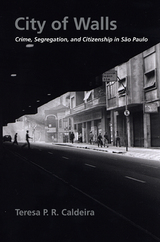
City of Walls by Teresa Caldeira

I have only been here a few days, but some things are already pretty clear. Brazil does not (yet) seem to be as obsessed by surveillance as the UK, but there is a noticeable concern with physical security. The Brazilian urbanist, Teresa Caldeira, called Sao Paulo the ¨City of Walls¨ in her excellent book of the same name, and whilst Curitiba may not be as divided as its bigger northern neighbour, the pervasiveness of defensive urban architecture is clear. Even fairly ordinary suburban houses have high walls, fences and gates,  and some boast razor wire or even electric fences on top. Shopping malls and banks have large numbers of private security guards who are not just hanging around doing nothing as they do in the UK, but seem alert and active. When I went to change some traveller´s cheques, the agency could only be accessed one person at a time, via two locked doors with intercoms and an intervening antechamber with a metal detector.

What is the source of the fear? Of course it is the poor, and in particular the favelados (the people who live in the favelas, the informal settlements that line the riverbanks). Even though in Curitiba, there are not so many favelas and they are not so extensive as in the larger cities of Brazil, the favelas are still no-go areas for non-favelados and I have been warned not even to think about entering. Of course I will be later in Rio, but I will have local help (I hope). Whether one thinks that these are people driven to desperation and crime, or as one contact here said, it is because the drug-runners chose to live amongst the favelados because the police will not follow them there, the division between the favelados and the rest of society is obvious. It is also blatantly racial. The favelados are generally darker, although in Curitiba, which is generally a more European and less African part of Brazil, there are also a significant number of favelados of eastern European descent, the families of immigrants who came to work in construction and were later left without work.

The engineering faculty of the Pontifical Catholic University of Parana, home to the Postgraduate School of Urban Management, where I am based for now, is right up against one of the favelas of Curitiba. The large windows at the back have had to have concrete shields fixed across them as some young guys from the favela had started to enjoy testing their guns out on the panes. There are still a few bullet holes visible in the walls! But don’t let me give you the impression that this is a war zone, or that everyone is paranoid and afraid of each other. It doesn’t seem that way either, and I don’t feel any less safe than I did in Washington DC in the early 90s…

CCTV is good for something… or is it?

MSNBC has some great footage of US Airways 1549 that crash-landed in the Hudson yesterday, taken from CCTV cameras on a nearby wharf.

However well this footage shows the undoubted skill of the pilot, I can’t help thinking every time I see this kind of use of CCTV footage that it must play a really important part in the process of normalisation. The fact that people can see footage from CCTV on the news adds to a largely mistaken impression that video surveillance ‘works’. It doesn’t matter whether the footage is of an amazing tale of heroism and survival, a crash or a crime prevented or committed, the images have a pre-rational power. They create a ‘demand’ for more cameras or the idea that they are necessary even though we may be watching something that nothing to do with the purpose of the cameras, and may even, as in the case of images of crime occurring, be witnessing the overt failure of the preventative purpose of CCTV.

Still, great video, isn’t it?

Obama inauguration security

2-inch glass surrounds Obama at his victory celebrations
2-inch glass surrounds Obama at his victory celebrations (Associated Press)

One of the things, I an my co-authors wrote a lot about in our new book is the increasing prevalence of  ‘island security’, the creation of temporary zones of exception around mega-events like the Olympics of the G-8 summits, or even smaller events like political party conferences. It looks like the inauguration of Barack Obama as President of the USA will be one of the biggest ever  island security operations, which a 3.5km exlcusion area, no-fly zone and thousands of police and military personnel on duty.

When it comes to many of these kinds of events, the security is often symbolic, or what we called ‘stage-set security’, but, rather like the new official presidential limousine (AKA ‘The Beast’), the security involved here is hardly likely to be quite so superficial. Nor, I think, do many of the usual advance objections to heavy-handed policing apply: I don’t think there has been a US president in recent history who has either sparked so much hope by so many in the USA or been quite so likely to be targeted for assassination by a few.

San Francisco CCTV (slight return)

The San Francisco Chronicle is reporting that a murder suspect was arrested as a result of CCTV footage. This comes hot on the heels of the critical report that I mentioned a few days ago. Is it a coincidence that we see these kinds of stories now? I think not. It seems that the SF police may be doing some spin-doctoring to counter any perception that the cameras ‘don’t work’. SF residents should expect more of the same over the next few weeks…

Brazilian surveillance research 1

On the subject of Brazilian Internet surveillance, I would just like to draw people’s attention to some of the other surveillance studies scholars with whom I will be working with here, starting with Fernanda Bruno. Fernanda is a Professor in the Postgraduate Programme in Communication at the Federal University of Rio de Janeiro. She has a blog on surveillance issues here. I first came across Fernanda when we published a really interesting piece she wrote with Paulo Vaz on self-surveillance back in the ‘Foucault and Panopticism Revisited’ special issue of Surveillance & Society back in 2003.

Internet Surveillance in Brazil

At the same time as the UK government is pressing ahead with its plans for a massive database of all communications (that even the European Commission doesn’t like), and the US Federal Intelligence Surveillance Court of Review has ruled that warrantless Internet surveillance is constitutional, Brazilian lawmakers are also attempting to restrict Internet liberties in the name of security.

In particular Senator Eduardo Azeredo last year pushed a ‘cybercrime’ bill through the upper house of parliament, that includes measures to create fixed identities for ISPs and IP numbers – see this blog post from my host, Rodrigo Firmino back in October when this first came to light. The struggle over this bill has been going on since 2006 and there are a whole host of other controversial measures particularly around cracking mobile phones which also seem to be not much more than ways of putting more money in the pockets of telecoms companies… there are more details,links to legal analyses, and a translation of the law into English here.

The Brazilian anti-Internet Surveillnce Campaign
The Brazilian anti-Internet Surveillance Campaign

Whatever the justifications or political objections – and there is a widespread campaign now ongoing as the bill still has not cleared the other chamber of parliament here – this would seem to be technically difficult, could effectively destroy the productive and collaborative use of the Internet in Brazil, but would also be very expensive with little actual benefit. I will be trying to arrange an interview with Senator Azeredo while I am here – as well as talking to the objectors.

Surveillance, Security and Social Control in Latin America Symposium

Some people are probably wondering what I am actually doing here. I sometimes feel like am not quite sure myself, but I will write more on my research over the next few days. One thing my hosts and I are doing is organising the first gathering of surveillance studies scholars in Brazil, the symposium on Surveillance, Security and Social Control in Latin America here at the Pontifical Catholic University of Parana, Curitiba. Hopefully this will form the nucleus of the Surveillance Studies Network in Latin America. We’ve selected 46 papers for presentation, although actually we could do with some more Spanish language contributions… we may issue another extended call soon.

European Parliament Agrees to Biometric Passports

The European Union’s plan to introduce biometric passports (with fingerprint images) will go ahead from the end of June after the European Parliament finally agreed to the proposal. This means that all states of the EU will now have to construct new databases of fingerprints for the entire population (including the UK and Ireland who, although outside the Schengen agreement on internal borders, voluntarily follow the same passport standards).

The Parliament did manage to introduce one major ammendment which rejected the European Commission’s plan to have children under 12 years-old fingerprinted as well – although some countries already do this. However, this vote was a rubber-stamping exercise by a ineffectual body.

The unreliability of fingerprint identification, which is mentioned in this report by PC Worldremains a major issue. Having talked to European Commission people at many different events, my general opinion of them  is that, whilst well-meaning, they are seriously lacking technological expertise and knowledge of the research in the area, and generally fail to listen to those who know except where they will confirm their existing opinions. Like most governments.

Winnipeg gets CCTV

Well, another city authority is apparently paying no attention to the continuous stream of assessments of CCTV systems in practice. This time, it’s Winnipeg in Canada. The cheif of police is hopeful that the small 10-camera system will work and is already saying he hopes it will be extended… before we know whether it will or won’t work. As usual the story is nothing but boosterism and contains no contrary view at all. I can predict a stream of (police) anecdotes about crimes ‘solved’ by the cameras for a few months and how much safer the town is, and then a couple of years down the line, a report showing that nothing much has changed in reality…

In Brazil

Just a quick post to say that I’ve arrived in Curitiba safely – the Brazilians seem to have the nice kind of border controls that now seem long gone in the UK. It is raining incredibly hard now, and we already had a massive electrical storm that knocked out power in our neighborhood for a couple of hours.

Note: this post was interrupted by another power cut last night!