Ever fancied global domination?

The always interesting Very Short List draws my attention to a neat bit of web design cum surveillance art installation: the Henchman’s Helper. Designed by Joel Friesen, it is a window onto some deranged mind bent on global domination, showing a retro atompunkish console on which are displayed over 40 feeds from satellite mapping applications, webcams and weather channels. What’s more, the code is Creative Commons-licensed so anyone can adapt it to their own evil purposes!

This is all good fun but it also brings to mind something I reported on last year, so-called ‘surveillance in a box’ products (see the article in New Scientist), integrated data-fusion systems, combining automated searching and cross-matching of data from multiple sources, such as Siemens and Nokia’s joint venture into so-called ‘Lawful Interception’ Intelligence Platforms. This could lead to powerful multifunctional surveillance, including things like telephone monitoring being available to nations with dubious human rights records, private corporations and even wealthy individuals as the cost of such packages comes down. This will make what Greg Elmer calls ‘personal information economies’ into private intelligence services for some…

'Lawful Inerception' by Siemens / Nokia

“Harpooning fish from an airplane”: NSA surveillance of US citizens

If the NSA can put this down to a period of bad leadership and bad policy, it might be allowed to get on with what it does relatively unhindered in the Obama era.

Boingboing has a link to a ten-miunte long MSNBC inerview with Russell Tice, an ex-National Security Agency (NSA) employee who is the latest in the long line of NSA whistleblowers after the likes of Wayne Madsen and Magaret Newsham. Tice’s revelations concern the NSA’s monitoring of internal communications in the USA after 9/11. According to Tice, the NSA both swept all US communications and also targeted specific groups, including journalists, for more comprehensive collection.

I have no idea how genuine Tice is and in many ways, despite the occasional choice phrase to describe SIGINT operations like the one with which I titled this post, he is a lot less interesting than Madsen or Newsham in that he’s not really telling us anything we didn’t know already. There is also a rather naive attitude from mainstream organisations like MSNBC that this is all down to the evil President Bush. This seems to suggest a lack of knowledge of history – do they really not remember the massive scandal over the very same use of watchlists by the NSA on behalf of the FBI in the 1960s? The huge inquiry led by Senator Frank Church in the 1970s? Can they continue to pretend that this is all totally new and that we can forget about ECHELON and the fact that this kind of surveillance is pervasive and systematic and becomes more so as technologies of collection, archiving and analysis improve? That is and always has been, what the NSA does in conjunction with its UKUSA network of largely subordinate allies and helpers (see this nice summary from Le Monde).

Of course this could be another explanation of Tice’s role, and the reason why he is being allowed to do the rounds of the newspapers and TV stations. Far from being simply a disaffected employee, he might be either a knowing or unknowing part of a media strategy by the NSA. If the NSA can put this down to a period of bad leadership and bad policy, it might be allowed to get on with what it does relatively unhindered in the Obama era. We shall see… or rather, we probably won’t!

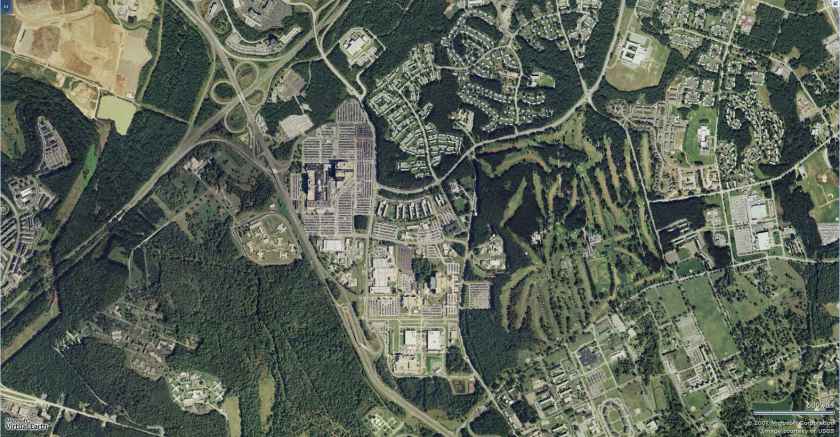
NB: I wrote my PhD thesis on the networks of NSA-related bases around the world, including Menwith Hill, not far from where I live. It is worth checking out Cryptome’s Eyeball series of aerial views of NSA and other secret sites.

Fort George C. Meade, Maryland, Headquarters of the NSA

Identity and Identification in Brazil

My host and colleague here at PUCPR, Rodrigo Firmino, and I are working on a small bit of research and a paper for The Second Multidisciplinary Workshop on Identity in the Information Society (IDIS 09), at the the London School of Economics, on June 9th this year.

Our paper is based around a case of identity theft, which is endemic in Brazil, which we use to open up the laws, practices and technologies of identification here. One thing that is already clear is that Brazil is a highly bureaucratic state – for example, the forms you need to fill in just to get a mobile phone are incredible in their detail – yet the forms of identification which one needs for every transaction with the state and many private organisations too, are highly insecure.

One example is that every personal cheque has printed on it not only the usual information (bank name and address, bank sort code, account holder name and account number), but also has the 11-digit Cadastro de Pessoas Fisicas (CPF) (a taxpayer’s card) number and the 9-digit Registro Geral (RG) (the national ID card) number. This must be a utter joy to fraudsters and identity thieves!

What’s more, all these are not just numbers in a database somewhere but physical documents in their own right, and on each there is a lot of this cross-identification: the CPF card also has the name and date of birth, the CPF number is ubiquitous, appearing also on the RG card and the driving licence. The latter has its own 11-digit registration number, but also has the RG number, name, and place and date of birth. What is even more interesting is that the RG card not only contains a photo and a thumbprint (the state database contains prints of all 10 fingers and thumbs), but also the names of both parents. This means it can be related more easily to the birth certificate. It reminds me a little of the Japanese system which still prioritises the family above the individual in some ways, but there is no actual equivalent of the koseki, the Japanese family register.

Now, in the name of security and “para integrar os bancos de dados de diversos órgãos dos sistemas de identificação do Brasil” (to inegrate the databases of the diverse organisations of identification systems in Brazil), the Ministry of Justice is proposing to merge some of these – the RG, CPF, Driving Licence and Electoria Regisirtation, into a new, smart, Registro de Identidade Civil (RIC) card based on a unique number. Whilst this will have many of the same problems as new smart ID systems everywhere else, at the very least it might stop Brazilian citizens carrying around multiple documents that list almost everything thieves and fraudsters need and can access without any sophisticated equipment. The process is due to start now, and run until 2017, so we will be taking a look at this as it proceeds.

I’ll put some pictures up with explanations later today…

New study on social networking and surveillance

One of our collaborators on the new Living in Surveillance Societies (LiSS) project, Christian Fuchs, from the eTheory Research Group of the ICT&S Center – Advanced Studies and Research in Information and Communication Technologies & Society at the University of Salzburg in Austria, has an interesting-looking new study out on social networking and surveillance. You can also find more information about the study here.

Just like me, Christian also has a blog on wordpress – although he hasn’t updated it much recently (I know that feeling!) – and runs an open access online journal, tripleC (cognition, communication and cooperation). Check them out…

CCTV is good for something… or is it?

MSNBC has some great footage of US Airways 1549 that crash-landed in the Hudson yesterday, taken from CCTV cameras on a nearby wharf.

However well this footage shows the undoubted skill of the pilot, I can’t help thinking every time I see this kind of use of CCTV footage that it must play a really important part in the process of normalisation. The fact that people can see footage from CCTV on the news adds to a largely mistaken impression that video surveillance ‘works’. It doesn’t matter whether the footage is of an amazing tale of heroism and survival, a crash or a crime prevented or committed, the images have a pre-rational power. They create a ‘demand’ for more cameras or the idea that they are necessary even though we may be watching something that nothing to do with the purpose of the cameras, and may even, as in the case of images of crime occurring, be witnessing the overt failure of the preventative purpose of CCTV.

Still, great video, isn’t it?

San Francisco CCTV (slight return)

The San Francisco Chronicle is reporting that a murder suspect was arrested as a result of CCTV footage. This comes hot on the heels of the critical report that I mentioned a few days ago. Is it a coincidence that we see these kinds of stories now? I think not. It seems that the SF police may be doing some spin-doctoring to counter any perception that the cameras ‘don’t work’. SF residents should expect more of the same over the next few weeks…

Brazilian surveillance research 1

On the subject of Brazilian Internet surveillance, I would just like to draw people’s attention to some of the other surveillance studies scholars with whom I will be working with here, starting with Fernanda Bruno. Fernanda is a Professor in the Postgraduate Programme in Communication at the Federal University of Rio de Janeiro. She has a blog on surveillance issues here. I first came across Fernanda when we published a really interesting piece she wrote with Paulo Vaz on self-surveillance back in the ‘Foucault and Panopticism Revisited’ special issue of Surveillance & Society back in 2003.

Internet Surveillance in Brazil

At the same time as the UK government is pressing ahead with its plans for a massive database of all communications (that even the European Commission doesn’t like), and the US Federal Intelligence Surveillance Court of Review has ruled that warrantless Internet surveillance is constitutional, Brazilian lawmakers are also attempting to restrict Internet liberties in the name of security.

In particular Senator Eduardo Azeredo last year pushed a ‘cybercrime’ bill through the upper house of parliament, that includes measures to create fixed identities for ISPs and IP numbers – see this blog post from my host, Rodrigo Firmino back in October when this first came to light. The struggle over this bill has been going on since 2006 and there are a whole host of other controversial measures particularly around cracking mobile phones which also seem to be not much more than ways of putting more money in the pockets of telecoms companies… there are more details,links to legal analyses, and a translation of the law into English here.

The Brazilian anti-Internet Surveillnce Campaign
The Brazilian anti-Internet Surveillance Campaign

Whatever the justifications or political objections – and there is a widespread campaign now ongoing as the bill still has not cleared the other chamber of parliament here – this would seem to be technically difficult, could effectively destroy the productive and collaborative use of the Internet in Brazil, but would also be very expensive with little actual benefit. I will be trying to arrange an interview with Senator Azeredo while I am here – as well as talking to the objectors.

Surveillance, Security and Social Control in Latin America Symposium

Some people are probably wondering what I am actually doing here. I sometimes feel like am not quite sure myself, but I will write more on my research over the next few days. One thing my hosts and I are doing is organising the first gathering of surveillance studies scholars in Brazil, the symposium on Surveillance, Security and Social Control in Latin America here at the Pontifical Catholic University of Parana, Curitiba. Hopefully this will form the nucleus of the Surveillance Studies Network in Latin America. We’ve selected 46 papers for presentation, although actually we could do with some more Spanish language contributions… we may issue another extended call soon.