UN Human Rights Committee Finds Discrimination in Racial Profiling

I received the following message from James A. Goldston, Executive Director of the Open Society Justice Initiative, on a very important finding on racial profiling by the UN Human Rights Committee. I reprint he message in full, as it speaks for itself.

On July 30, 2009, the United Nations Human Rights Committee became the first international tribunal to declare that police identity checks that are motivated by race or ethnicity run counter to the international human right to non-discrimination. The committee issued its views concerning the Rosalind Williams v. Spain communication, originally filed by the Justice Initiative and Women’s Link Worldwide in 2006.

Williams’ case began 17 years ago, when she, a naturalized Spanish citizen, was stopped by a National Police officer in the Valladolid, Spain rail station. Of all the people on the train platform, she was the only one to be stopped and asked for her identity documents. She was also the only black person on the platform. Williams soon launched a legal challenge to the identity check, claiming she was targeted because of her race. In 2001, the Spanish Constitutional Tribunal approved the practice of relying on specific physical or racial characteristics as “reasonable indicators of the non-national origin of the person who possesses them,” arguing that racial criteria are “merely indicative of the greater probability that the interested party not Spanish.” The court’s endorsement lent legitimacy to a pervasive discriminatory policy of ethnic profiling that had for years been widely documented by human rights monitoring bodies.

In finding a violation of the International Covenant on Civil and Political Rights the UN Human Rights Committee concluded that while identity checks might be permitted for protecting public safety, the prevention of crime, or to control illegal immigration, “the physical or ethnic characteristics of the persons targeted should not be considered as indicative of their possibly illegal situation in the country. Nor should identity checks be carried out so that only people with certain physical characteristics or ethnic backgrounds are targeted. This would not only adversely affect the dignity of those affected, but also contribute to the spread of xenophobic attitudes among the general population; it would also be inconsistent with an effective policy to combat racial discrimination.”

The committee found that while there was no written policy to conduct police identity checks on the basis of skin color, “…it does appear that the police officer did act according to such a criterion — something that was justified by the courts that heard the case. The responsibility of the State party is clearly compromised.”

“… the Committee can only conclude that the petitioner was singled out only because of her racial characteristics, and this was the decisive factor for suspecting unlawful conduct. The Committee recalls its jurisprudence that not all differential treatment constitutes discrimination if the criteria for differentiation are reasonable and objective and if the goal is legitimate under the Covenant. In this case, the Committee finds that the criteria of reasonableness and objectivity were not met.”

The implications of the UN Human Rights Committee’s judgment extend far beyond Spain, where ethnicity-based police stops are still a common practice, to wider Europe, where years of monitoring have revealed a persistent and damaging pattern of ethnic profiling of minorities and immigrants in police stops and searches without explanation and without clear or effective purpose. The Justice Initiative has documented the prevalence and harms of this impermissible practice in reports such as “I Can Stop and Search Whoever I Want” — Police Stops of Ethnic Minorities in Bulgaria, Hungary and Spain and Ethnic Profiling in the European Union: Pervasive, Ineffective, and Discriminatory!, and has long advocated for operational, policy, and legal reforms before national and regional actors.

Although previous regional human rights tribunals have touched upon the issue of ethnic profiling — most notably the European Court of Human Rights in its 2005 Timishev v. Russia judgment, which held that the applicant had been unjustifiably subjected to differential treatment in relation to his right to liberty of movement “solely” due to his ethnic origin — Williams v. Spain is the first case to explicitly challenge ethnic profiling as a practice, and the UN Human Rights Committee the first international tribunal to issue a ruling prohibiting race- and ethnicity-based police stops.

Following this landmark judgment, the Justice Initiative will continue to work with government representatives and law enforcement agencies in Spain and other EU Member States, as well as with EU institutions in Brussels, to make sure that the policy and practice changes in line with the principles established by the UN Human Rights Committee are adopted and implemented.

Click here for further information on the Justice Initiative’s work challenging ethnic profiling.

UK ID cards to be abolished?

(Ironically, my last post in the UK, a couple of weeks ago was about Canada, and my first here in Canada will be about the UK…)

The Guardian newspaper’s headline today seems to indicate that the UK government is considering scrapping the controversial National Identity Register and card program, along with the Trident nuclear submarine upgrade. This is based on a speech that the increasingly influential Chancellor of the Exchequer, Peter Mandelson, gave to the centrist Progress think-tank. However, reading the whole article, it is much less clear that any such radical move will take place. Mandelson hedges his bets and says when asked about cost savings from the mooted cancellations:

“I have seen some rather different figures relating to the savings that would arise from cancelling those projects which don’t make the contributions that some people imagine.”

But at the same time, he said “it would be foolish to rule out anything.”

He’s right in many ways. Contracts have been signed. Money has been committed and legal costs could be very high if the government tries to wiggle out of those contracts now. As David Lyon’s new book on ID makes it very clear, ID cards schemes are a global industry with powerful corporate forces involved.

In any case, the real reason the scheme should be scrapped or significantly reduced in ambition, is because it is based on flawed premises and is massively intrusive and controlling. The fact that it also costs a ridiculous amount of money (and will of course, escalate in costs still further, as every state computer project inevitably does), is simply a contingent factor.

Facebook forced to grow up by Canadians

Wel, Facebook has finally been forced to grow up  and develop a sensible approach to personal data. Previously, as I have documented elsewhere, the US-based social networking site had pretty much assumed ownership of all personal data in perpetuity. However it has now promised to develop new privacy and consent rules and ways of allowing site users to chose which data they will allow to be shared with third parties.

So why the sudden change of heart? Well, it’s all down to those pesky Canucks. Yes, where the USA couldn’t bothered and where the EU didn’t even try, the Canadian Privacy Commissioner, Jennifer Stoddart, had declared Facebook to be in violation of Canada’s privacy laws. And it turns out that in complying it was just easier for Facebook to make wholesale changes for all customers rather than trying to apply different rules to different jurisdictions.

This suggests an interesting new phenomenon. Instead of transnational corporations being able to always seek out a country with the lowest standards as a basis for compliance on issues like privacy and data protection, a nation with higher standards and an activist regulator has shown itself able to force such a company to adjust its global operations to its much higher standard. This is good news for net users worldwide.

However, we shouldn’t rejoice too much: as Google and Yahoo have shown in the case of China, in the absense of any meaningful internal ethical standards, a big enough market can still impose distinct and separate policies that are far more harmful to the interests of individual users in those nations.

Moving on

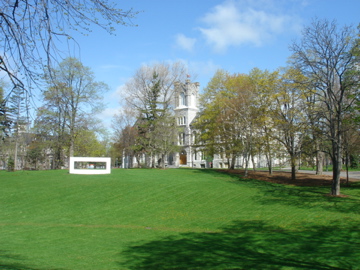
Queen's University, Ontario

I’ve just got back from a very productive research trip to Japan and it’s only a couple of days to go until I leave again, this time permanently, which means I should at last say something about my new job. It also means I won’t be posting here much over the next week.

From September 1st, I will be Canada Research Chair (Tier 2) Associate Professor of Surveillance Studies in the Department of Sociology at Queen’s University in Kingston, Ontario, Canada. My new boss will be a longtime colleague and one of the people I admire most in the world of surveillance studies, David Lyon.

It’s a big move and probably, for both personal and professional reasons, the last big move I will make. I have been in various parts of Newcastle University in the UK since my Masters back in 1996-7. I originally moved to the School of Architecture, Planning and Landscape (APL) to work with the brilliant Professor Steve Graham who was running the innovative Centre for Urban Technology (CUT). I didn’t realise then that CUT was already on the verge of disappearing and was soon merged into the new, larger Global Urban Research Unit (GURU), and that Steve would leave to take up a Chair in Human Geography at Durham. However, that did mean that, having finished my postdoc, I could take over his teaching, which eventually led to a permanent lectureship. I’d wanted to move to Canada for a while though, and having got married to Kayo (that’s where the ‘Murakami’ comes from…), who also wanted the same things, we started looking and waiting for the right opportunities. It’s a bit odd leaving just after I’ve got the promotion I’d wanted, but you have to take the opportunities when they arise. It’s no judgement on Newcastle as a university or as a city (there isn’t a better one in England), but a life decision. My time at Newcastle has been great and there’s a number of people from the University I would like to thank in person and in public here:

Phillip Lowe from the Centre for Rural Economy, and Neil Ward (now Dean of Social Sciences at UEA) for giving me a break right at the start;

Rachel Woodward, previously of CRE and now in Geography, who was the perfect PhD supervisor;

Ella Ritchie from Politics, who gave me a job when I needed one in what was then the Department of Politics;

Steve Graham for mentoring me through a difficult period;

Geoff Vigar for being a great friend and latterly also, a most supportive Director of GURU;

and all the friends and colleagues in GURU, APL, and beyond, with whom I’ve shared both good times and intellectual stimulation over the years, in particular Alex Aurigi (who’ll soon be the new Head of the School of Architecture and Design at Plymouth), Andrew Ballantyne, Carlos Calderon, Stuart Cameron, Jon Coaffee (just appointed Chair of Spatial Planning at Birmingham!), Nathaniel Coleman, Lorna Dargan (now in the Careers Service), Anne Fry, David Haney, Jean Hillier, Marian Kyte, Rose Gilroy, Sara Gonzalez (now at Leeds Geography), Zan Gunn, Claire Haggett (now at Edinburgh Geography), Patsy Healey, Peter Kellett, Andy Law, Kim McCartney (the best administrator it has ever been my pleasure to work with), Ali Madanipour, Abid Mehmood, Frank Moulaert (now in Leuven), John Pendlebury, Neil Powe, Maggie Roe, Tim Shaw (now retired), Mark Shucksmith (OBE!), both Suzanne and Lucy Speak, Bill Tavernor, Ian Thompson, Graham Tipple, Tim Townshend, Bernadette Williams and Ken Willis. There’s others who I never got to know as well as I would have liked to have got to know better but there just hasn’t been the time – in particular, both Paolas, Martyn, and Armelle and Daniel. And apologies if there’s anyone else I’ve missed.

Finally, and most importantly of all, I’d like to thank our best friends and future godparents to our baby boy who’s due in December: Andrew Donaldson and Jane Midgley. Andrew, in particular, has been the person with whom I have probably shared most since we shared an office during our PhDs, and is in no small part responsible for any intellectual and personal progress I’ve made since that time.

Kabukicho Renaissance?

Kabukicho is a place that is hard to love. A seedy, crime-infested dive full of ‘massage parlours’, ‘aesthetic salons’, ‘image bars’ and other thinly-disguised forms of brothel. Tokyo has had red-light disticts since the Edo period, of course, and the Yoshiwara was only the most famous. Shinjuku was always one of them, and since the failure of the threatre initiative that gave the neighbourhood its name, Kabukicho has been the best known. Kabukicho is interesting though for many reasons. It had a radical political and cultural history in the 60s and 70s. It was the epicentre of changes that occurred in organised crime in the 80s and 90s, with Chinese gangs replacing the Yakuza as the biggest ‘threat’. And it is now the centre of efforts by the Shinjuku authorities to clean up its image, with the Kabukicho Renaissance policy, and the new Town Manager, and by Tokyo police to crack down on illegal immigration.

Controlling the outsiders

One of the most interesting meetings we had in our last week here in Japan was with two representatives from the Japan Civil Liberties Union (JCLU) and the association to defend the rights of foreign migrant workers. One thing that has always been clear to me from being a gaikokujin (or more casually, just gaijin – foreigner) in Japan is how distinct is this status. I’m a white, western European and therefore at the top of the list of acceptability in foreigners in Japan, but even so I’ve had some interesting experiences, including having two police squad cars and 5 officers deal with the matter of my ‘suspicious’ bicycle (an experience that practically all resident foreigners have had at one time or another), and just the other day I was stopped at the train station by two plain-clothes police officers, who started off quite strong, but then backed down and started mumbling apologies about ‘looking for someone’ when they realised my (Japanese) wife was just behind me. It was pretty obvious that they were conducting an immigration sweep – i.e. just stopping anyone who ‘looked foreign’ to check their immigration status.

This gave me just a tiny taste of what life can be like here for those whose immigration status is problematic. And, as the campaigners told us, this is an increasing number of people who have come to Japan because of the wealth and opportunities and because, whisper it, Japan needs immigrants. Like so many advanced industrial nations, Japan is a hyper-ageing society, with an increasingly unbalanced population pyramid. There are not enough working age Japanese people to support the increasing number of retirees, and government schemes to encourage people to have more children simply haven’t worked. The problem is that successive Japanese governments have refused to recognise the implications. The rules now make provision for ‘skilled’ immigrants, but not for those who are ‘unskilled’ and it is actually those in this latter category that Japan needs. In practice this is demonstrated by the increasing numbers of foreign delivery and construction workers in Tokyo as well as those working in the shadier areas of the ‘night economy’ – doormen, bar staff, masseurs, prostitutes etc.. The same politicians who deny the need for immigrants are probably having their personal ‘needs’ serviced by Filipino or Vietnamese women and this hypocrisy colours all the mainstream political debate about the place of foreigners in Japan, especially in Tokyo where Mayor Ishihara has never disguised his nationalist views in this area.

So, whilst the politicians refuse to deal with reality, the police are enforcing the law as it is. We have spent some time, whilst we are here (and I have gathered data on previous visits) in the night city of Kabukicho in Shinjuku. This time I was taken out to bars in the old post-war neighbourhood of Golden Gai by Professor Tonoma, who formerly led both Shinjuku-ku and Tokyo city planning bodies, and we also talked to Shinjuku community safety officers, and to the Kabukicho Town Manager, who runs the day-to-day operations of the body trying to improve Kabukicho’s image, Kabukicho Renaissance.

Kabukicho of course is famous as the first place that the Tokyo police installed CCTV, ostensibly to deal with Chinese gangs, but according to what we learned from these visits and from talking to the campaigners, as crime has declined (as it has nationally – it’s probably nothing to do with the cameras), the cameras and intensive policing (raids etc.) have been used largely to curb illegal migrant workers. And the authorities seem to make no distinction between the gangsters and the mainly South-east Asian women who work in the bars and massage parlours. They are all visa-overstayers. There is no attempt to treat the women as people in need of help and support at all. Of course this all inflates the crime figures and makes it easy to paint what the police always term ‘foreign crime’ (whatever the exact nature or seriousness of the crime) as a growing threat, as it becomes proportionally a larger part of shrinking crime rates (which were already low by global standards to begin with).

Now there is a new threat to this already massively targeted population. The inclusion of foreigners on the jyuminhyo (residents’ registry), combined with the digitisation and networking of this registry through juki-net, means that the authorities will be able to correlate residency and immigration status much more easily – the residency information for foreigners will be linked to the Houmusho (Ministry of Justice), which has entry records, and now fingerprints and facial photos too, following post-9/11 reforms. Of course, resident skilled foreigners wanted to be in the residents’ registry. They argued that not being on it was itself a form of discrimination and meant further difficulties in terms of things like buying property. However the inclusion of foreigners now opens up new forms of discriminatory practice against those who are already the most disadvantaged in Japanese society, the kinds of foreigners who more high-status ‘official’ foreigners do not generally recognise as kin to them at all.

Japan’s surveillance society, like most, is therefore a profoundly uneven one. Every society has its Others, and surveillance is deployed both to distinguish those Others and to control them. In each of the cities I have been studying the Others are different populations. In London, the Others are (at the moment) the resident Muslim community (or more particularly, ‘radicalised’ young Muslims). Here the surveillance combines repression and ‘caring’ programs to bring the disaffected back into the mainstream. In Rio de Janeiro, the Others are the urban poor, the favelados. They are largely simply excluded – walls protect the rich in their homes, and now walls are being built around the poor communities. In Tokyo, the Others are foreigners, but there are gradations of Otherness, and effectively still aping the western ‘scientific racism’ that it acquired during the Meiji period modernisation at the end of the nineteenth century, Japan’s Others are poor Blacks and Asians (for many on the right here, the Japanese are not ‘Asian’ at all, but something unique). Just as the British state is struggling with the legacy of its particular colonial and post-colonial approach to immigration, and the Brazilian state with a history of years of differentiated citizenship, the Japanese state has still not yet really come to terms with the prospect of the mixing of people at all.

We are all libertarians now?

A rather telling little piece on The Guardian‘s ‘Comment is Free’ site today by UK Labour MP, Diane Abbot. First she takes a cheap shot at the Conservative shadow-cabinet minister, Damien Green, for having been successful in getting his details removed from the UK police National DNA Database (NDNAD). She then says that, well, she is doing much more to help by holding clinics for her young, black, constituents to help them with their complaints against the NDNAD. This is excellent, of course.

However two things spring to mind immediately. Firstly, is this Diane Abbot the same New Labour loyalist who voted in favour of the original bill to set up the NDNAD and made no attempt to amend it to prevent the kind of racially-biased abuses of which she is no complaining? I think it is. And now, why is she not also condemning the former Home Secretary, Jacqui Smith’s rather pathetic and weaselly response the judgement of the European Court that condemned the NDNAD, which was essentially to try to avoid doing anything fundamental at all?

This is not an issue on which anyone in New Labour can really make any political capital unless they take a rather stronger moral stance. Basically, and in addition to the stance that there should be no state retention of DNA data at all, there are only two ‘fair’ ways to maintain a police DNA database, and those are to keep the DNA of the guilty, or to keep the DNA of everyone. Which you prefer depends largely on your attitude to surveillance and your trust in the accountability of the state, but politicians like Abbot are hedging and avoiding making any serious attempt to put pressure on their own government to reform the law we have.

The end of the war on photographers?

The UK Home Office has finally issued a circular on Photography and Counter-Terrorism (012/2009) in response to the widespread complaints about police harassment of both professional and amateur photographers in the name of ‘anti-terrorism’ – which I covered here and here. The circular advises police of can and cannot be done under three separate parts of the Terrorism Act 2000: Sections 43 on searches, 44 on authorised area searches and 58A on eliciting and publishing information on members of the police, armed forces or intelligence services, which was introduced as part of the Counter-Terrorism Act 2008. This is of course to be welcomed, even if it is rather late in the day.

On Section 43, they make is clear that the Act “does not prohibit the taking of photographs, film or digital images in a public place and members of the public and the press should not be prevented from doing so in exercise of the powers conferred by section” and that it is the suspicion of being a terrorist that gives the justification for any search, not the fact of taking photographs.

On Section 44, they remind the police that neither the Press nor public can be prevented from taking pictures in an area defined as an ‘authorised area’ by the police, and that officers have no powers to delete pictures or seize film. And finally, on Section 58a, they remind officers that ‘reasonable excuses’ for taking pictures, even of subjects considered sensitive, include tourism, sight-seeing and journalism. Interestingly, however, they do not actually give academic research as an example of reasonable excuse!

Of course, all of this serves to remind us that the Terrorism Act was drawn way too vaguely and widely and gave too much discretion to individual police forces and officers in its interpretation. Earlier this year, Jack Straw promised at several meetings that the government was to review all of the legislation on terrorism and counter-terrorism – perhaps this guidance is a result but it is only about interpretation and does not make or propose any change to the law itself.

Community Safety in Suginami

Following our meeting with the Mayor the other day, we went back to Suginami-ku to talk to the community safety people, who are part of the Disaster Management section. Suginami is interesting because, as far back as 2004, it was the first Local Authority in Japan to introduce a special bohan kamera jourei (security camera ordinance) which is based in part at least on principles of data protection and privacy. And until neighbouring Setegaya-ku introduced their own ordinance last year, they were, so far as I know, the only such authority. The ordinance followed public consultation which showed that although people generally thought CCTV was effective (95%), a significant minority of 34% were concerned about privacy, and 72% thought that regulation was needed. These figures seem to be significantly more in favour of privacy and regulation of CCTV than the nationwide survey done by Hino Kimihiro, however he asked different questions leading to answers that are not directly comparable.

Suginami is one of the areas of Tokyo that has the other kind of CCTV system introduced by the Tokyo Metropolitan Police after 2002, help points where people press a button if they feel in danger and speak to someone from the police. The help points have both CCTV camera and an alarm / red flashing light if the caller says it is an emergency.

However the Suginami community safety officers said that these cameras have not proved very effective and in fact they cause a lot of problems, because children tend to press the button for fun, and run away – meaning that there are many false alarms.

Suginami has some of the same kind of array of ‘blue-light’ volunteer patrols as Arakawa-ku. In Suginami, there is a fleet of mini-patoka (mini patrol cars) and motorbikes, used by 15 retired police officers. These are mainly about visibility leading to deterrence and increased community confidence, as the volunteers ex-officers have no special powers nor do they carry side-arms or handcuffs or any other conventional ‘police’ equipment. Suginami does not have the small community safety stations like Arakawa-ku, although they do also have the same problem of local koban (police boxes) being closed. However where Suginami really stands out is in the sheer number of volunteers they have involved in their community patrols, organised through the local PTAs, shoutenkai (shopkeepers’ associations) and choukai (community associations). There are 140 groups with 9600 people actively involved in one way or another in community safety just in Suginami.

Suginami is a relatively wealthy ward and the kinds of problems that concern Arakawa (mainly minor street crime and snatch-thefts) are not such big issues here.  The main concern in this ward seems to be burglary and furikomi – the practice of gangsters and other criminals calling old people and pretending to be a relative or representative of a relative and persuading them to transfer money to a particular ATM (which you can do in Japan – it would be impossible in the UK). Furikomi is a very interesting phenomenon in that it seems to be a product of family, social and technological changes. Many older people who would have lived with family in traditional Japanese society are now living alone. They are lonely and miss the intimacy of family contact, so they tend to welcome unexpected calls from relatives who may now be living almost anywhere in Japan. These older people are also technologically literate and able to use mobile phones, ATMs and computers. The combination of this technological skill, dispersed families, and psychological vulnerability makes for a ripe target for fraudsters, and Suginami estimate that 40% of all crime in the ward is some form of furikomi.

In many ways, increasing concern for privacy is also a product of this change in lifestyles and family structure, as well as building techniques – western-style walls and better sound insulation mean that you can’t always know what is going on in the next room anymore, let alone in your neighbours’ apartments or houses. This also makes burglary rather easier, as once the thief has got past the initial walls or doors, no-one can hear or see very much. The intense and intimate ‘natural surveillance’ that used to characterise ordinary Japanese communities is disappearing. But the Suginami community safety officers see the possibility of revitalising such natural surveillance, and protecting privacy, without going down the route of impersonal, technologically-mediated surveillance. In many ways, this is quite heartening – if, of course, you are of a communitarian mindset. Such supportive, mutually monitored and very inward-looking communities can be stifling to those who do not fit and exclusionary to those from outside… and, not coincidentally, one of our last interviews was with a leading support group for foreign migrants in Japan, who have a very different perspective on all of these developments. That will be in my next post, which may not be until Saturday as we’re going off to Kansai for a couple of days…

(Thank-you to the Disaster Management section for their time and patience).

Hille Koskela’s new book

pelkoTop Finnish surveillance studies academic, Hille Koskela, has a new book out, Pelkokierre – pelon politiikka, turvamarkkinat ja kamppailu kaupunkitilasta (‘The Spiral of Fear. Politics of Fear, Security Business, and the Struggle over Urban Space’). It looks like a fine addition to the literature on fear, security and surveillance, but unfortunately I can’t read it – as it’s in Suomi. Great cover though!

It should of course be translated into English and made available by an English-language publisher, but I doubt this will happen. Publishers don’t like to take what they consider to be a risk by publishing academic work from foreign countries, so unless the author is very famous or dead (or preferably both) it doesn’t happen. We tried very hard to get Michalis Lianos’s very important French book on control society published by an English-language publisher, with many supporting letters and so on, but there was no real interest.

Anyway, Hille has sent me a translation of the table of contents, which are:

1. The paradoxes of security

2. Birth of the security society
Relevant theories in sociology, social policy, geography, architecture, media studies, law and IR

3. The ontology of fear
The social production of fear, the spatial and temporal patterns, fear  as a commodity, streetwise semiotics

4. Fear in everyday life
Housing, workplaces, SUVs, public transport, tourism, child rearing,  ‘threatening’ teenagers, high school massacres

5. The architecture of fear
The classic ideas of Jacobs and Newman, contemporary architecture in public and private spaces, gating, surveillance

6. The politics of fear
Legislation (the public order act etc.), national and local security strategies, urban security politics, ‘the war’ on graffiti

7. The economy of fear
Security services, technology and other security products, images of place, crime and fear in the media

8. Towards a culture of tolerance